Yule – The Winter Solstice
Yule at a Glance
Date: Around 20–23 June in the Southern Hemisphere
Wheel Position: Winter Solstice — one of the four solar or minor Sabbats
Season: Midwinter
Themes: Rest, renewal, returning light, hope, warmth, reflection, home and hearth, stillness, resilience and new beginnings
Yule marks the Winter Solstice, the longest night and shortest day of the year. It is the deepest point of winter and an important turning point on the Wheel of the Year. From here, almost imperceptibly at first, the days begin to lengthen and the light slowly returns.
There is something beautifully quiet about Yule. Unlike celebrations centred around abundance, growth or harvest, this is a season that asks very little of us. The natural world has drawn inward. Growth has slowed, nights are long, and life seems to be resting beneath the surface.
Yet Yule is not simply about darkness. It is about the light that exists within it.
The Winter Solstice reminds us that even at the darkest point of the year, change has already begun. We may not be able to see it yet, but the Wheel has turned. The sun begins its gradual return, carrying with it the promise of warmth, growth and another season to come.
Yule invites us to slow down, create warmth where we can, appreciate the comfort of home and the people we share it with, and allow ourselves a season of genuine rest. It is a time for candles and fires, nourishing food, quiet reflection, storytelling, gathering together and finding small pockets of brightness in the winter dark.
It is also a lovely time to consider what we want to carry with us as the light returns. Not necessarily big resolutions or dramatic changes, but the small hopes, intentions and possibilities we would like to gently nurture through the second half of the year.
Yule in the Southern Hemisphere
In the Southern Hemisphere, Yule falls around 20–23 June, at the Winter Solstice. While much of the imagery associated with Yule comes from the Northern Hemisphere, here the festival belongs firmly to our own winter — cooler days, long evenings, bare branches and winter-flowering plants, crisp mornings, earlier sunsets and the particular kind of stillness that settles over the colder months.
Depending on where you live in Australia, winter can look very different. Some of us experience frost, icy mornings and even snow, while others have mild sunny days followed by noticeably cooler nights. In subtropical and tropical areas, winter may be less about cold and more about the change in light, lower humidity and a gentler shift in the landscape. There is no single Australian version of winter, and Yule doesn’t need one.
What we all share is the astronomical turning point. At the Winter Solstice, our part of the Earth is tilted furthest from the sun, giving us our shortest period of daylight and longest night of the year. After the solstice, the days gradually begin to lengthen again.
This makes Yule particularly lovely to celebrate by paying attention to what is actually happening outside our own doors. Rather than trying to recreate a snowy Northern Hemisphere midwinter, we can notice the winter that surrounds us — the plants flowering locally, the birds visiting our gardens, the foods that are in season, the quality of the afternoon light and the ways our homes and daily rhythms change at this time of year.
Some traditional Yule imagery still fits beautifully. Fire, candles, evergreens, warm food, shared meals and bringing greenery into the home all speak to the themes of warmth, life and light during the darker part of the year. Other traditions can simply be adapted to reflect the place where we live.
Celebrating Yule in the Southern Hemisphere isn’t about reproducing someone else’s winter. It is about recognising our own place on the Wheel — standing in the longest night, noticing the season around us and welcoming the slow return of the light.

The Story of Yule
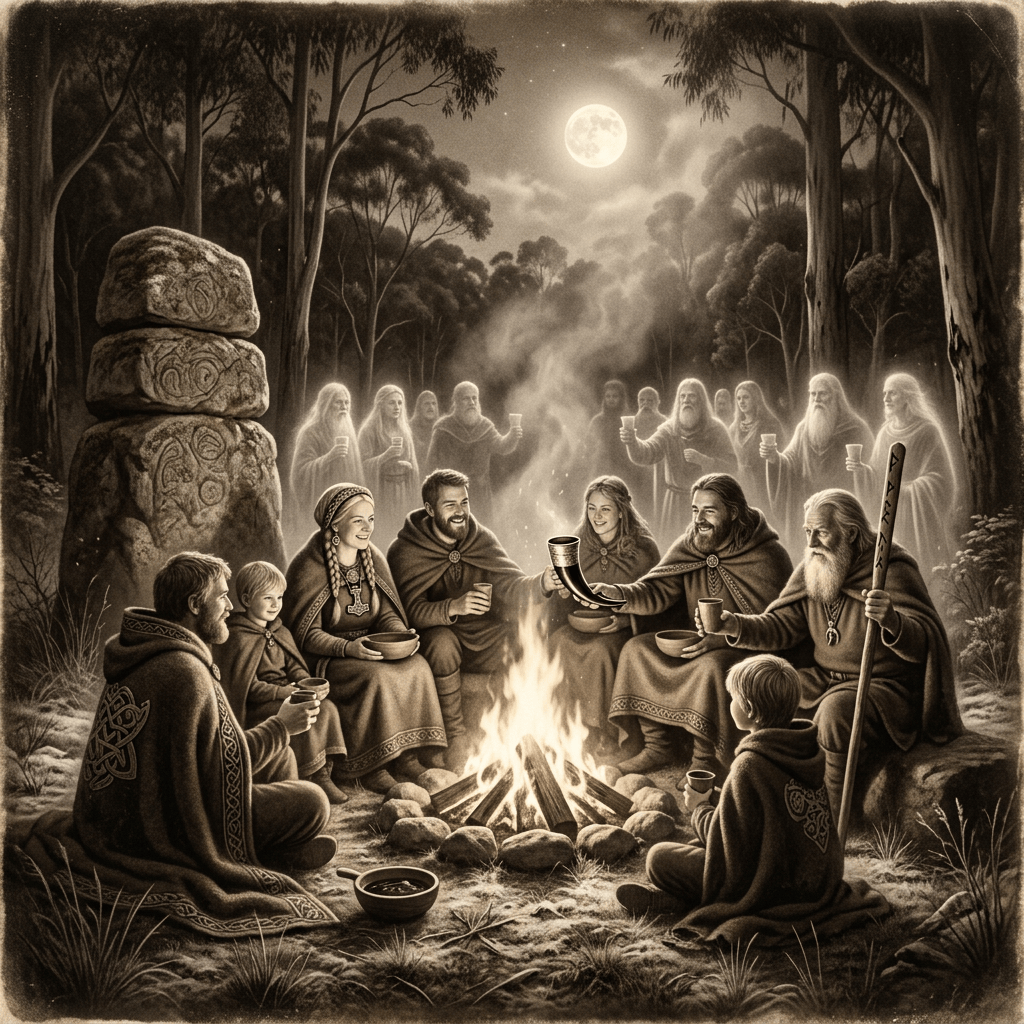
Yule has a long and layered history, and unlike some of the festivals on the modern Wheel of the Year, its name can be traced back to the winter celebrations of the Germanic and Norse peoples of northern Europe. The Old Norse jól referred to a midwinter festival or period of celebration, although exactly how and when it was observed changed across different places and periods.
Midwinter was an important time. The days were short, the nights were long, food and fuel needed to last, and communities relied heavily on one another. Feasting, drinking, gathering around the fire and honouring gods and ancestors were all associated with the wider Yule season. Evergreens also became powerful symbols of life continuing through winter, remaining green while much of the surrounding landscape appeared dormant.
The Winter Solstice itself has been recognised by cultures far beyond the Germanic and Norse world. Across different times and places, people observed the changing position of the sun and marked the longest and shortest days of the year. Ancient monuments aligned with the solstices remind us that these turning points in the solar year were being noticed thousands of years before the modern Wheel of the Year existed.
As Christianity spread through Europe, older midwinter customs did not simply disappear. Traditions changed, merged and took on new meanings. Feasting, fires, greenery, gift-giving and other winter customs became woven into Christmas celebrations in different regions. This long history of traditions influencing one another is one reason Yule and Christmas still share so much familiar imagery today.
The Yule celebrated by many modern Pagans is therefore not an unchanged ancient festival handed down exactly as we practise it now. The modern Wheel of the Year developed during the twentieth century, bringing together seasonal festivals from different cultural traditions into the eight-Sabbat cycle familiar to many Pagans today. Yule became the celebration of the Winter Solstice within that Wheel.
At its heart, however, the meaning feels timeless. Yule occurs at the darkest point of the solar year, when the sun appears to stand still before beginning its gradual journey back towards longer days. This natural turning point gave rise to one of Yule’s most enduring themes: the return of the light.
That does not mean winter is over. In fact, some of the coldest weeks may still lie ahead. The change begins almost unnoticed. Each day simply holds a little more light than the one before it.
Perhaps that is part of what has made the Winter Solstice meaningful for so many people across so many generations. Yule reminds us that darkness and light are not opposites battling for our attention, but parts of the same cycle. There is a time for growth and a time for rest, a time to be outward and a time to draw close to home.
At the longest night, the Wheel turns again. The darkness remains, but somewhere within it, the light has already begun to return.
What We Notice Here
By Yule, winter has properly settled in. The mornings are cooler, the evenings arrive early, and the change in daylight is impossible to miss. Shadows stretch longer through the afternoon, the sun sits lower in the sky, and there is a different quality to the light at this time of year.
Across Australia, what we notice will depend enormously on where we live. In some places there are frosty lawns, bare deciduous trees, misty mornings and the possibility of snow. Elsewhere, winter means clear blue skies, dry days and pleasantly cool evenings. In warmer parts of the country, the seasonal shift can be subtle, but it is still there if we pay attention.
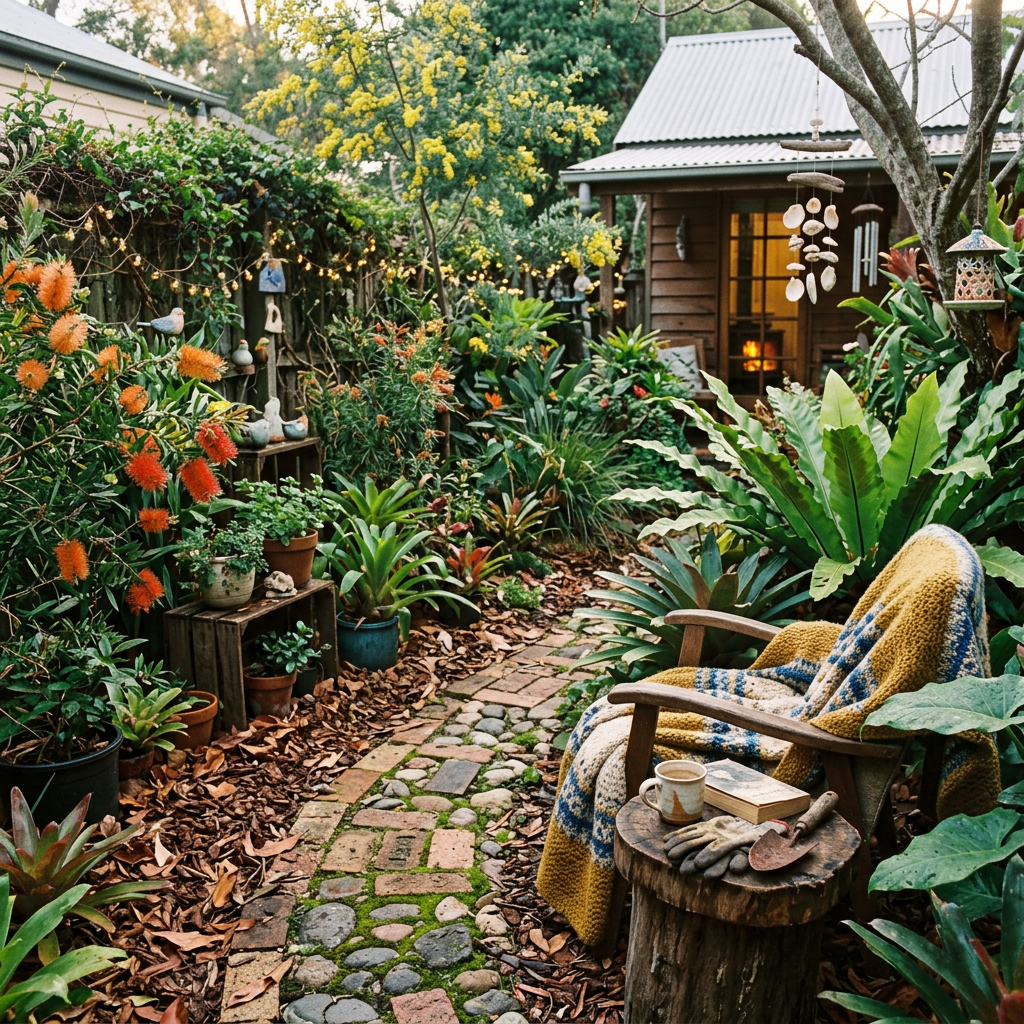
Gardens change too. Growth slows, some plants retreat while others come into their own, and winter-flowering natives provide important food for birds and insects. Wattles begin flowering in some areas, while banksias, grevilleas and other local natives can bring unexpected colour to the cooler landscape. Birdlife can become especially noticeable as honeyeaters, lorikeets and other visitors move between flowering trees and shrubs.
Inside our homes, our rhythms begin to change with the season. We reach for warmer clothes and blankets, cook heavier and more comforting meals, make more cups of tea, light candles earlier and find ourselves spending a little more time indoors. Even in places where winter is mild, there is often a natural inclination to slow down and settle in as darkness arrives.
The Winter Solstice is also a lovely time to deliberately notice the light. Watch where the sun rises and sets. Notice how early dusk arrives. Step outside as the evening begins or wake early enough to see the winter sunrise. These small observations connect us to the Solstice far more directly than any list of traditional correspondences ever could.
Yule reminds us that the Wheel of the Year is happening around us whether or not we formally celebrate it. We only need to notice.
This is the season of long shadows and cool earth, winter flowers and early evenings, warm kitchens and quiet nights. The light has reached its lowest point, the Wheel is turning once more, and from here the days will slowly begin to grow longer.
Themes of the Season
Yule carries themes of stillness, renewal, hope, warmth, reflection and the gradual return of light. It sits at a quiet turning point on the Wheel, where one part of the seasonal cycle reaches its fullest expression and another begins.
Stillness and Rest
Winter is a natural period of slowing down. Growth is less visible, the days are shorter and much of the natural world conserves its energy. Yule honours this quieter part of the cycle and reminds us that rest has its own value.
Light and Darkness
Yule holds light and darkness together rather than treating one as good and the other as something to escape. Darkness offers stillness, privacy and space for reflection, while the returning light represents movement, possibility and change.
Hope
The shift after the Winter Solstice is almost imperceptible at first, making hope an especially fitting theme for Yule. Not every change begins with something dramatic or immediately visible. Sometimes simply knowing that things are moving is enough.
Home and Hearth
Warmth, shelter and home have long held particular importance during winter. The hearth represents more than physical warmth; it can also symbolise comfort, belonging, hospitality and the people and places that make us feel safe and grounded.
Reflection
The quieter pace of the season encourages us to turn our attention inward. Reflection at Yule is less about judging what we have or haven’t achieved and more about noticing where we are, what we have learned and what still matters to us.
Renewal
Yule is a beginning, but a very quiet one. Nothing in the landscape suddenly changes when the Solstice passes. Renewal begins beneath the surface, reminding us that new beginnings can exist long before we are ready to see their results.
Connection and Community
Gathering together during winter has practical and emotional roots stretching back through generations. Sharing food, warmth, stories and company brings another dimension to Yule: the reminder that we do not move through every season alone.
Together, these themes give Yule its particular character — not quite an ending and not yet a new beginning in full bloom, but the quiet point between the two.
Seasonal Invitation
Yule invites us to live a little more gently for a while.
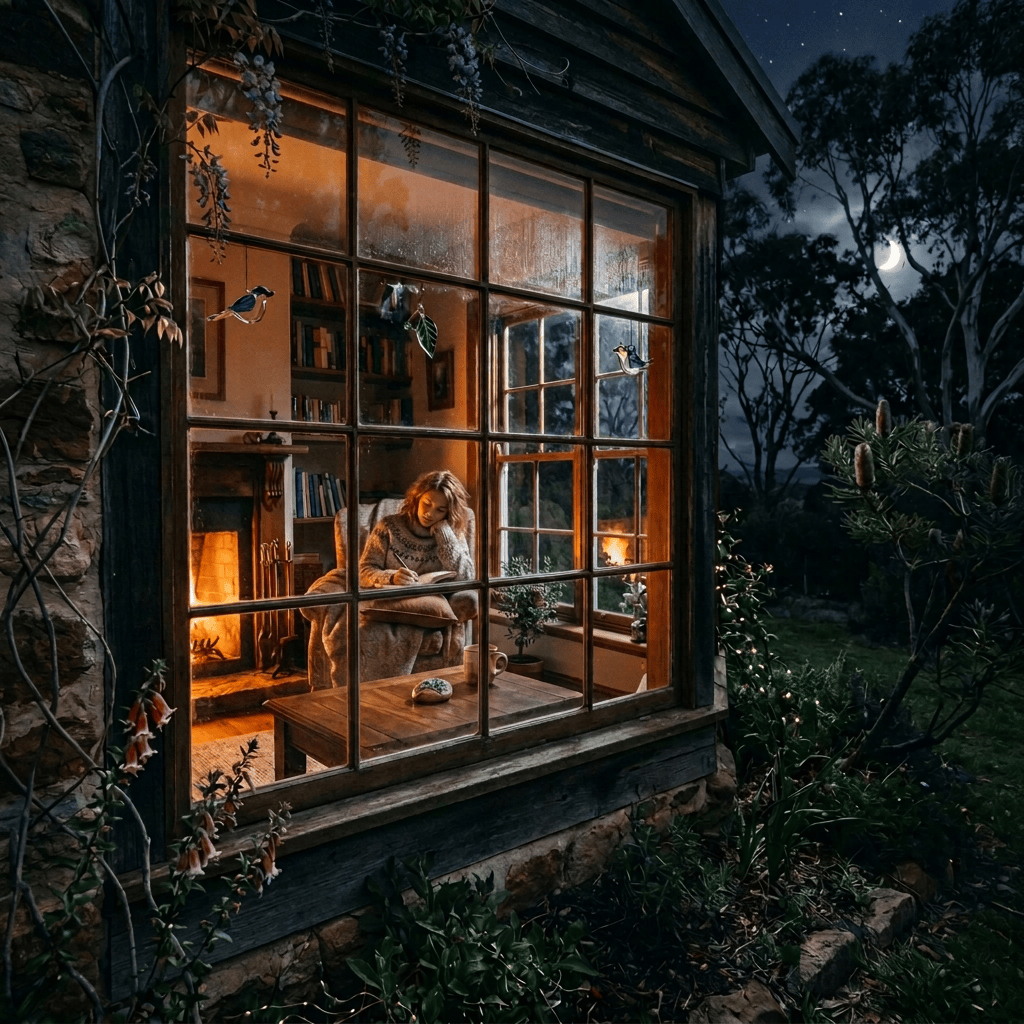
Winter does not need to be filled simply because there is space. We can leave an evening unplanned, spend longer over dinner, go to bed earlier, read under a blanket, sit outside with a warm drink or let a quiet weekend remain quiet. There is something valuable in allowing life to be less busy without immediately looking for something to replace the activity.
This season also invites us to pay attention to what brings genuine warmth into our lives. That might be a comfortable home, a meal shared around the table, time with people we love, making something with our hands, tending the garden on a cool afternoon or having a little time entirely to ourselves.
There is room here for looking inward too. We can notice what has been taking more from us than it gives, what we have been holding onto out of habit, and what we would like to make more space for as the year continues. We do not necessarily need to fix or change any of it yet. Sometimes noticing is enough.
Yule can also be an invitation to appreciate what is already here. The people who consistently show up. The home we have created. The small routines that make ordinary days easier. The things we have learned, survived, changed or quietly become better at without ever stopping to acknowledge them.
So rather than asking what you should do for Yule, perhaps begin with something simpler:
What would it feel like to meet this season exactly as it is?
Make some room for quiet. Enjoy the warmth where you find it. Notice what matters. Let winter be winter.
Yule Correspondences
Yule correspondences draw strongly on the Winter Solstice, midwinter traditions and the symbolism of warmth, endurance, protection and returning light. Traditional correspondences largely come from Northern European winter traditions, so not every plant, animal or seasonal food will naturally fit an Australian winter. Where appropriate, Australian alternatives can help bring the celebration closer to the season happening around us.
Colours & Candles
Gold — the sun, warmth, vitality, abundance and returning light
Red — fire, warmth, strength, vitality and protection
Green — endurance, life through winter, renewal and evergreen growth
White — clarity, peace, cleansing and new beginnings
Silver — winter light, reflection, intuition and the moon
Deep Blue — winter skies, stillness, contemplation and inner wisdom
For candles, gold, red, green and white are particularly suited to Yule. A single gold or white candle can also be used simply to represent the returning sun.
Crystals & Stones
Garnet — warmth, vitality, courage and grounding
Clear Quartz — clarity, intention and amplification
Snowflake Obsidian — balance, reflection, grounding and finding light within darker periods
Black Obsidian — protection, release and introspection
Bloodstone — resilience, courage and vitality
Smoky Quartz — grounding, stability and letting go
Sunstone — optimism, warmth, confidence and solar energy
Carnelian — motivation, creativity, warmth and renewed energy
Ruby — passion, vitality, courage and the symbolic warmth of fire
Traditional Herbs, Plants, Flowers & Trees
Many familiar Yule plants come from European midwinter traditions, where evergreen plants became especially significant because they remained green while much of the surrounding landscape appeared dormant.
Holly — protection, resilience and enduring life
Ivy — endurance, connection and perseverance
Mistletoe — peace, protection, fertility and blessing
Pine — cleansing, protection, resilience and renewal
Fir — strength, endurance and evergreen life
Spruce — protection, resilience and vitality
Juniper — cleansing and protection
Oak — strength, endurance, wisdom and the returning sun
Rosemary — remembrance, protection and cleansing
Cinnamon — warmth, abundance, prosperity and solar energy
Clove — protection, warmth and prosperity
Orange — joy, abundance, warmth and the sun
Australian Herbs, Plants, Flowers & Trees
Australian Yule correspondences can be drawn from plants that are flowering, evergreen or particularly noticeable during our winter months. What is seasonal will vary considerably depending on where you live.
Wattle — resilience, optimism, renewal and golden solar energy
Banksia — strength, regeneration and endurance
Grevillea — vitality, connection and resilience
Eucalyptus — cleansing, protection, healing and renewal
Tea Tree — cleansing, protection and restoration
Bottlebrush — vitality, renewal and adaptability
Native Rosemary — cleansing, protection and remembrance
Sheoak — grounding, endurance and connection to place
Rather than feeling that every Yule altar or arrangement needs traditional European evergreens, using a fallen branch, leaves or winter flowers gathered responsibly from your own garden can make the season feel much more connected to where you actually live.
Animals
Stag and Deer — strength, renewal, wildness and the cycles of nature
Bear — rest, introspection, protection and winter retreat
Wolf — instinct, endurance, loyalty and community
Owl — wisdom, darkness, observation and intuition
Robin — winter, hope and returning light in European folklore and seasonal imagery
Wren — winter folklore, resilience and transformation
For an Australian Yule, local winter birdlife can be just as meaningful. Magpies, kookaburras, cockatoos, lorikeets and honeyeaters can all become part of our personal seasonal observations, particularly when we begin noticing which birds are active or feeding around our own homes at this time of year.
Essential Oils
Frankincense — reflection, grounding and spiritual practice
Cedarwood — grounding, warmth and stability
Pine — freshness, cleansing and traditional evergreen symbolism
Juniper Berry — cleansing and protection
Sweet Orange — warmth, joy and solar energy
Cinnamon — warmth, energy and abundance
Clove — warmth, protection and comfort
Ginger — warmth, energy and motivation
Rosemary — clarity, remembrance and cleansing
Essential oils should always be used appropriately and diluted when required. Some oils are unsuitable for certain people, pets or methods of use, so it is worth checking the safety information for the individual oil rather than assuming that natural automatically means harmless.
Food & Drinks
Yule foods are traditionally warming, rich and suited to sharing during the colder months.
Roasted root vegetables — grounding, nourishment and the earth
Apples and pears — abundance, nourishment and seasonal sweetness
Citrus — the sun, brightness and vitality
Nuts — abundance, wisdom and stored potential
Dried fruits — preservation, abundance and sweetness
Bread — nourishment, home and community
Soups and stews — warmth, comfort and sharing
Spiced cakes and biscuits — celebration, warmth and hospitality
Cinnamon, cloves, nutmeg and ginger — warmth and traditional winter spice
Mulled apple juice or cider — warmth, celebration and abundance
Tea, chai, hot chocolate and other warm drinks — comfort, warmth and gathering
Seasonal Australian produce can make a Yule meal feel much more natural than trying to reproduce a European winter feast. Citrus, apples, pears, brassicas, potatoes, pumpkin and other locally available winter produce are simple places to begin.
Symbols
The Sun — returning light and the solar cycle
Candles — warmth, hope and light within darkness
Fire and the Hearth — warmth, protection, home and community
The Yule Log — fire, continuity, blessing and the return of the sun
Evergreens — endurance and life continuing through winter
Wreaths — cycles, continuity and the turning Wheel
Stars — guidance, light and the winter night sky
Bells — celebration, cleansing and the marking of a transition
Pinecones — potential, renewal and new growth
Sun Wheels — the solar cycle and the turning of the year
Tarot
The Sun — light, vitality, optimism and renewal
The Hermit — introspection, wisdom, solitude and inner guidance
The Star — hope, renewal and trust in what lies ahead
Four of Swords — rest, restoration and retreat
Ace of Wands — the first spark of energy, inspiration and new beginnings
Judgement — reflection, awakening and answering the call to move forward
Moon Phases
Yule is a solar festival, so it is not tied to a particular phase of the moon. However, the moon phase occurring around the Winter Solstice can add another layer to personal reflection or ritual.
New Moon — beginnings, intentions and potential
Waxing Moon — growth, momentum and building energy
Full Moon — illumination, completion and heightened awareness
Waning Moon — release, reflection and letting go
Dark Moon — rest, stillness and inward reflection
There is no need to wait for a particular lunar phase to celebrate Yule. The Solstice itself is the seasonal marker.
Deities of Yule
Yule is most strongly connected with deities associated with the sun, winter, renewal, hearth and the turning of the seasonal cycle. Some have historical connections with Germanic or Norse midwinter traditions, while others resonate with the themes of the modern Yule celebration rather than belonging specifically to Yule itself.
Odin
In Norse and Germanic traditions, Odin has strong associations with the wider Yule season. He is connected with wisdom, magic, poetry, the dead and the Wild Hunt, making him one of the most historically relevant deities to explore at this time of year.
Frigg
The Norse goddess Frigg is associated with home, family, motherhood, foresight and domestic life. Her connection with hearth and household makes her particularly fitting for the quieter, home-centred aspects of Yule.
Sunna / Sól
Sól is the personification of the sun in Norse mythology, making her a natural deity to honour at the Winter Solstice. She can represent the returning sunlight, warmth, hope and the continuation of the solar cycle.
The Holly King and Oak King
These figures appear in modern Pagan traditions rather than ancient mythology. In a popular modern interpretation, the Holly King rules the darkening half of the year until the Winter Solstice, when the Oak King begins his reign as the light increases once again. Their symbolic battle represents the continual movement between darkness and light across the year.
Brigid
Brigid is an Irish goddess associated with fire, poetry, healing, smithcraft and inspiration. Although she is much more strongly associated with Imbolc than Yule, her connection with sacred flame and renewal can also resonate with the Winter Solstice.
Other Deities That May Resonate
Hestia — Greek goddess of the hearth and home, suited to Yule’s focus on warmth, family and the household.
Vesta — Roman goddess of the hearth and sacred flame, representing home, continuity and the tending of the inner fire.
Baldur — Norse god associated with light, beauty and goodness whose mythology can resonate with themes of light, loss and renewal.
Demeter — Greek goddess of agriculture and the seasonal cycle, particularly relevant to the quieter, dormant period of the earth.
Persephone — Greek goddess whose descent and return form part of a larger mythology of seasonal change, darkness and eventual renewal.
You do not need to work with a deity to celebrate Yule. For many people, the Solstice itself — the sun, the season, the land and the turning of the Wheel — is more than enough.
Ways to Celebrate Yule
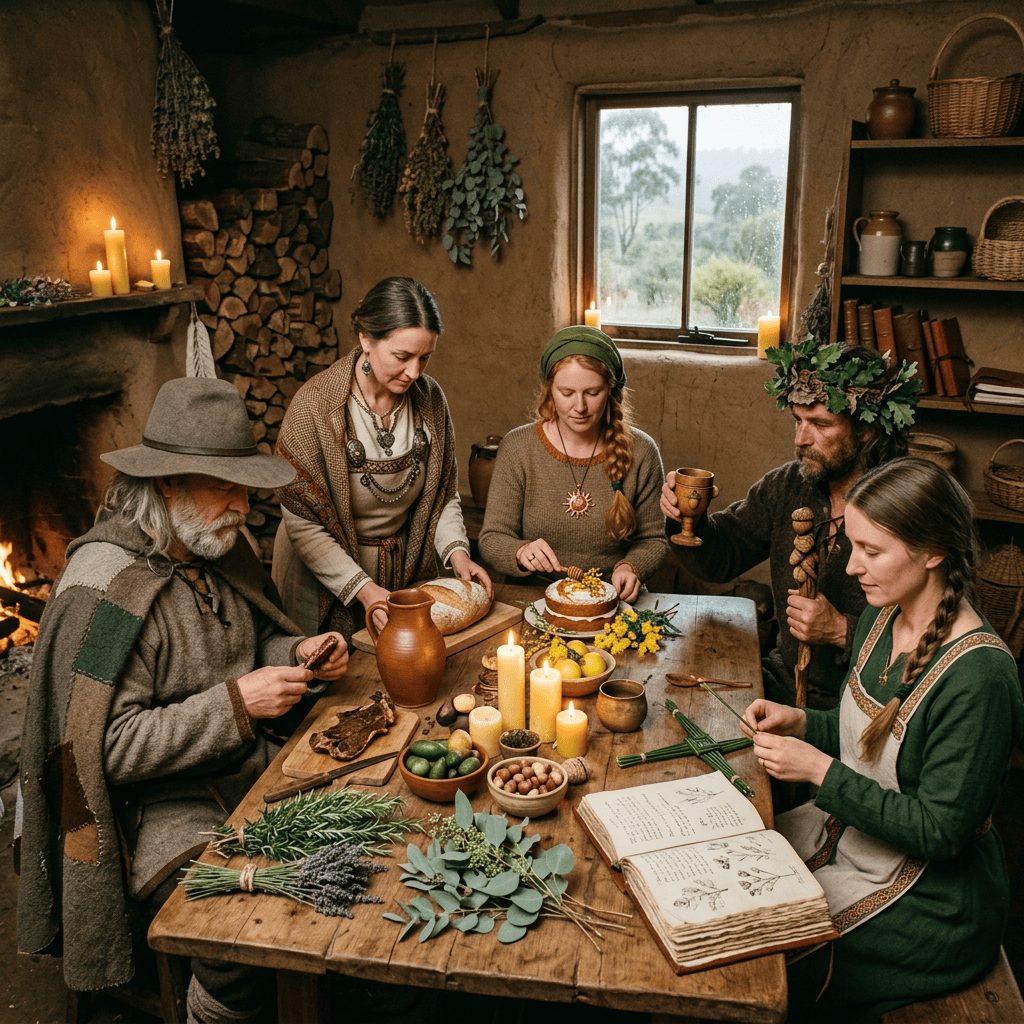
Celebrating Yule does not need to be elaborate. It can be as simple as acknowledging the Winter Solstice, spending time with people you love or doing something that helps you enjoy the season you are actually living in.
Watch the Winter Sunrise or Sunset
Take a few minutes to watch the sun rise or set around the Solstice. You might simply stand outside with a warm drink and notice the light, the temperature and the winter sky.
Light a Candle at Dusk
Light a candle as evening arrives to mark the Solstice. Place it somewhere you will see it throughout the evening and let it be a simple reminder of warmth and light during the darker months.
Share a Midwinter Meal
Prepare something warm and comforting and gather around the table. It does not need to be a traditional Yule feast — soup with fresh bread, a roast dinner, baked vegetables or a favourite family meal can be just as meaningful.
Bring Winter Greenery Indoors
Decorate with greenery, branches, seedpods or winter flowers from your own garden. Australian natives can be particularly beautiful at this time of year and help make your Yule celebration feel connected to the landscape around you.
Spend an Evening by the Fire
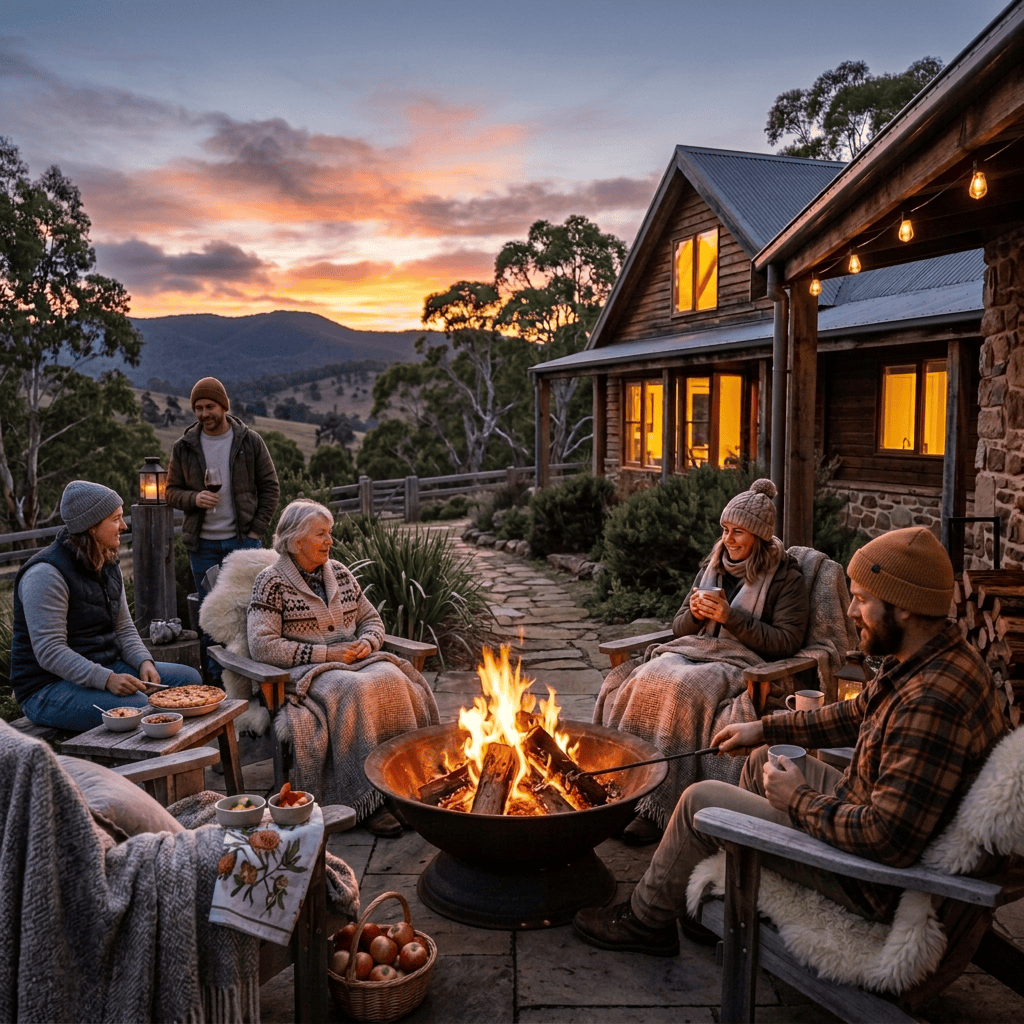
If you have a fireplace or outdoor firepit, spend some time enjoying it without needing to turn the evening into an organised event. Make a warm drink, toast marshmallows, talk, read or simply sit and watch the flames.
Make Something by Hand
Winter is a lovely time for slower creative activities. Knit, crochet, bake, paint, make candles, create a wreath, press winter flowers or work on a project you have been meaning to return to.
Take a Winter Walk
Go for a walk somewhere familiar and deliberately look for signs of the season. Notice what is flowering, which trees have changed, what birds you hear and how the landscape feels different from a few months ago.
Gather for a Winter Evening
Invite family or friends over for dinner, dessert, games or drinks. Yule can be less about hosting something impressive and more about creating an excuse to spend a cold evening together.
Create a Little Winter Comfort
Fresh sheets, warm blankets, clean pyjamas, a favourite book, a bath, a cup of tea or an early night can all be ways of acknowledging the slower rhythm of the season.
There is no correct way to celebrate Yule. Choose what feels natural, use what you already have and allow your traditions to develop over time. The simplest celebrations are often the ones that eventually become part of the way your family remembers the season.

Bringing the Season Home
Bringing Yule into the home can be simple, natural and inexpensive. Winter already encourages us indoors, so small changes to our surroundings can help the season feel intentional without turning the house into a themed display.
Seasonal Display Ideas
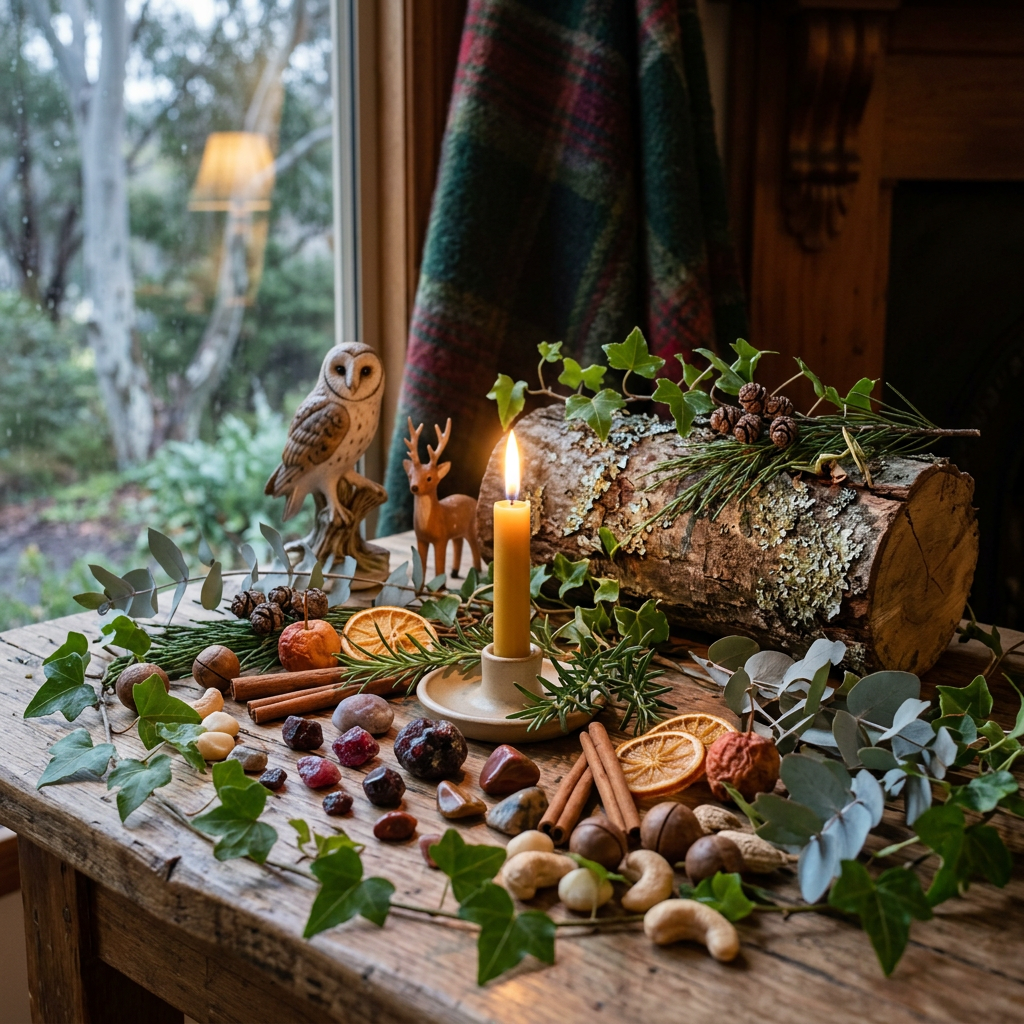
A Yule display can begin with things gathered from your own garden or local surroundings. Eucalyptus leaves, sheoak branches, seedpods, interesting pieces of bark, winter flowers and fallen branches can be arranged with candles, stones or other natural objects.
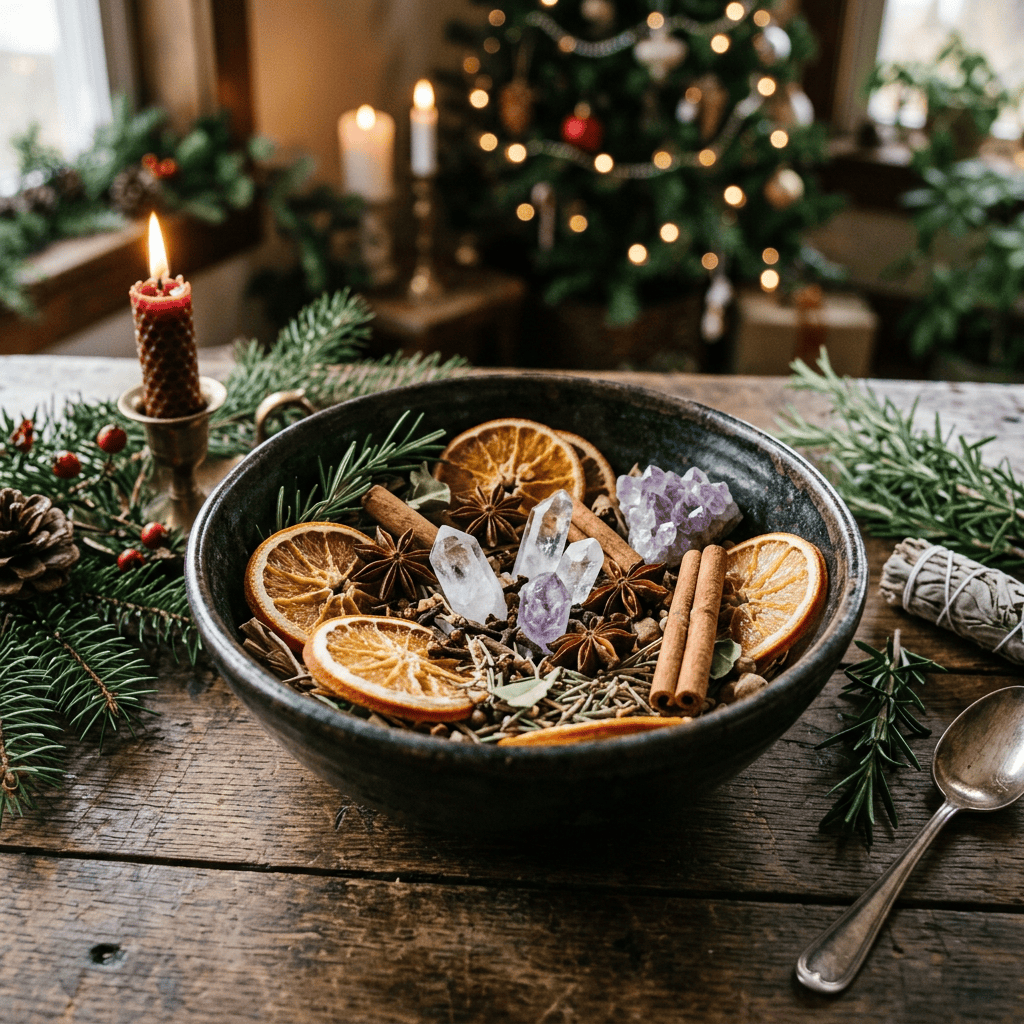
Gold, deep green, red, white and touches of silver work beautifully at this time of year. You might add a bowl of nuts, dried citrus, cinnamon sticks, pinecones or a few crystals from your collection. Candles or small warm lights can bring the whole display together, particularly as the afternoon begins to darken.
A wreath is another lovely option, but it does not need to look like a traditional Northern Hemisphere Christmas wreath. Try using eucalyptus, native foliage, dried flowers, seedpods or whatever is growing around you. A simple arrangement of winter greenery in a vase can be just as effective.
Your seasonal display can also change gradually. Add something found on a winter walk, a drawing made by one of the children, a photograph, a handmade decoration or something that simply reminds you of this particular winter. Over time, these small additions can become part of your family’s own Yule traditions.
Creating a Seasonal Atmosphere
Creating a Yule atmosphere is less about decorating every corner and more about making home feel warm and welcoming during the darker part of the year.
Bring out the blankets, cushions and anything else that makes the rooms you use most feel comfortable. Light candles in the evening, use lamps instead of bright overhead lighting when practical, and make the most of a fireplace or outdoor fire if you have one.
Scent can add another layer to the season. Simmer citrus peel, cinnamon, cloves and other winter spices on the stove, bake something fragrant or use essential oils safely to bring warm, woody or citrus scents into the home.
Music, food and everyday routines can create atmosphere just as easily as decorations. Put on a favourite playlist while dinner cooks, make a pot of tea to share, bake on a cold afternoon or have an evening where everyone settles into the same room with books, games, craft or a movie.
The aim is not to make the house look like Yule. It is to make it feel like winter belongs there — warm, lived-in, comfortable and connected to the season outside.
Seasonal Activities
Yule is a lovely season for activities that bring a little warmth, creativity and connection into the colder months. Choose a few that appeal to you, adapt them to what you have available, or simply use them as inspiration for creating your own winter traditions.
Make
- Create a Yule wreath using eucalyptus, native foliage, dried flowers, seedpods and ribbon.
- Dry orange or other citrus slices to use in garlands and decorations.
- Make simple candle holders from recycled jars.
- Bake spiced biscuits, gingerbread, fruit bread or another favourite winter treat.
- Create a winter garland using dried citrus, cinnamon sticks, leaves or handmade decorations.
- Make a simmer-pot mix with citrus peel, cinnamon, cloves and rosemary.
- Create handmade sun decorations to represent the returning light.
- Make bird feeders or simple feeding stations for visiting winter birds.
- Press winter flowers and leaves for later craft projects.
- Knit, crochet, sew or begin another cosy winter project.
- Make a batch of soup, stew, bread or something else that fills the kitchen with warmth.
- Create simple Yule cards or handwritten midwinter notes for people you care about.
Do
- Watch the Winter Solstice sunrise or sunset.
- Take a winter nature walk and notice what is flowering, growing or changing locally.
- Spend an evening by the fire or around an outdoor firepit.
- Visit a local garden, forest, bushland or nature reserve during winter.
- Go stargazing on a clear winter night.
- Have a candlelit dinner at home.
- Spend an afternoon baking while listening to music.
- Have a winter movie, book or games night.
- Photograph the same place around the Winter Solstice each year and watch how the season changes over time.
- Start a winter puzzle, craft or project that can be worked on slowly throughout the season.
- Spend some time gardening and noticing which plants are thriving during the cooler months.
- Have a screen-free evening with candles, books, music, conversation or games.
Share
- Invite friends or family for a relaxed midwinter meal.
- Make a large pot of soup, stew or curry and share some with someone else.
- Bake extra biscuits, bread or cake and deliver some to a neighbour, friend or family member.
- Host a simple soup-and-bread night where everyone brings something to the table.
- Gather around a firepit for warm drinks, conversation and toasted marshmallows.
- Swap books, puzzles, craft supplies or winter recipes with friends.
- Share cuttings, seeds or produce from the garden.
- Create a small winter care package for someone who could use a little kindness.
- Have a family cooking afternoon and make something everyone can enjoy together.
- Share stories and memories around the dinner table, particularly stories that might otherwise be forgotten.
- Donate warm clothing, blankets or useful winter items to a local organisation that needs them.
- Check in on someone who may be spending more time alone during winter.
There is no need to work through the whole list. Pick what suits your home, your family, your climate and the time you actually have. Yule activities should add something enjoyable to the season, not become another list of things that need to be done.
Rituals & Seasonal Magic
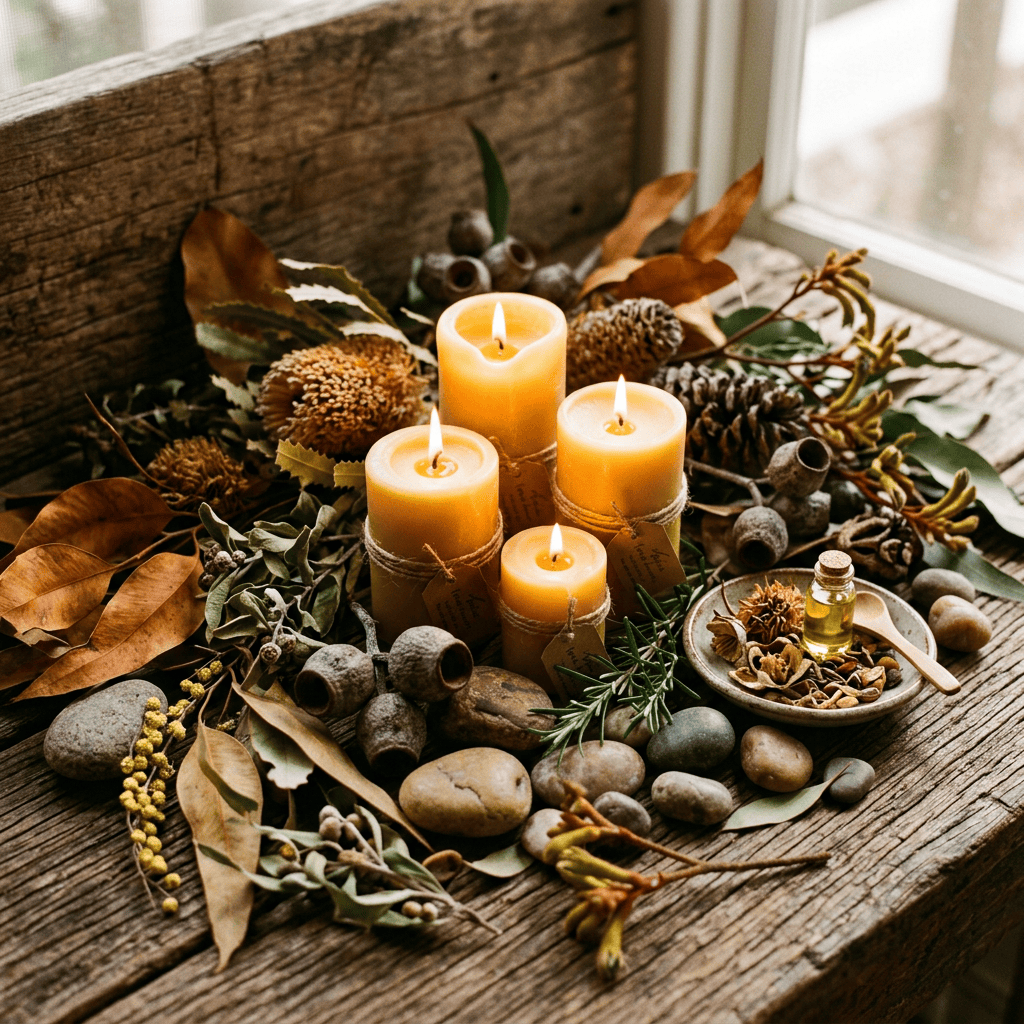
Yule magic can be quiet and simple. At the Winter Solstice, rituals often centre on acknowledging the darkness, welcoming the returning light and deciding what we would like to gently carry forward as the Wheel begins to turn again.
A Simple Yule Candle Ritual
For this ritual, you will need a gold, white or yellow candle, a small piece of paper and a pen.
Find a quiet place and dim the lights if you can. Sit for a moment with the candle unlit and think about the past season. You do not need to analyse everything that has happened; simply acknowledge where you are now.
On your piece of paper, write one thing you would like to welcome more of as the days begin to lengthen. It might be confidence, creativity, connection, patience, energy, joy or something entirely your own.
Light the candle and take a few moments to watch the flame.
Say quietly:
As the light returns, I welcome ______ into my life.
Fill the space with the word you have chosen.
Fold the paper and keep it somewhere meaningful until Imbolc, when you can return to it and notice whether that intention has begun to take shape.
Let the candle burn for a little while as you sit quietly, then extinguish it safely.
A Simple Returning Light Spell
You will need a small jar or bowl, a piece of dried orange or citrus peel, a cinnamon stick or pinch of cinnamon, a little rosemary and a small piece of clear quartz or sunstone if you have one.
Place each item into the jar or bowl slowly.
Add the citrus for light and optimism.
Add the cinnamon for warmth and energy.
Add the rosemary for clarity and remembrance.
Add the crystal for your intention for the season ahead.
Hold the jar or bowl in both hands and think about one small thing you would like to nurture between now and spring.
Say:
The Wheel has turned,
the light returns.
Slowly, gently,
may this intention grow.
Place your Yule spell somewhere you will see it during winter — on your seasonal display, beside a candle or somewhere quiet in your home. Keep it there as the season unfolds, allowing it to represent the intention you are carrying towards the brighter months ahead.
Yule Reflections
Yule offers a natural point for reflection. At the darkest point of the seasonal year, before the days begin their gradual lengthening, we can look at where we have been, what is sustaining us now and what we hope to carry into the months ahead.
Journal Prompts
- What has the first half of this year taught me about myself?
- Where in my life am I being asked to slow down or conserve my energy?
- What currently brings warmth, comfort or a sense of belonging into my life?
- What am I ready to leave in the darker half of the year?
- What would I like to gently nurture as the light begins to return?
Yule Tarot Spread — The Returning Light
This five-card spread follows the movement of the Winter Solstice from darkness towards returning light.
Card One — The Longest Night
What am I being invited to acknowledge within myself right now?
Card Two — The Hearth
What is supporting and sustaining me through this season?
Card Three — The Spark
What new possibility is beginning to emerge?
Card Four — The Returning Light
Where is growth or movement beginning to return to my life?
Card Five — The Road to Spring
What should I carry with me into the next turn of the Wheel?
A Yule Blessing
May there be warmth within your home
and comfort in the quiet.
May the longest night bring rest,
and the returning sun bring hope.
May you recognise the light that already surrounds you,
even when it appears small.
May you carry forward what strengthens you,
leave behind what has grown heavy,
and make room for what is beginning.
As the Wheel turns and the days slowly lengthen,
may you move with them —
rested, hopeful and ready for whatever comes next.
Blessed Yule.
Seasonal Self-Care
Winter Facial Steam
Winter air, indoor heating and cold winds can leave skin feeling dry and tired. A gentle facial steam is a simple Yule self-care ritual that brings warmth to the face while creating a few quiet minutes to slow down during the darker part of the year.
You will need:
- A large heatproof bowl
- Hot water
- 1 tablespoon dried chamomile
- 1 tablespoon dried rose petals
- A small sprig of fresh rosemary
- A clean face cloth or towel
- Place the herbs into your bowl and pour over hot water. Allow it to sit for a minute or two so the water is comfortably steaming rather than fiercely hot.
- Sit with your face a comfortable distance above the bowl and allow the warm steam to reach your skin for around five minutes. There is no need to trap the steam with a towel or get particularly close to the water — gentle warmth is enough.
- When you have finished, pat your face dry and follow with your usual moisturiser or facial oil.
- The herbs can be strained out and composted once the water has cooled.
A little safety note: Facial steaming should feel pleasantly warm, never hot. Keep well back from the water and skip steaming if your skin is particularly sensitive, irritated or prone to redness.
Practical Magic for the Season
Yule Simmer Pot
A Yule simmer pot fills the home with the scents of winter while bringing together ingredients traditionally associated with warmth, protection, abundance and the returning light.
You will need
- Dried orange slices
- Cinnamon sticks
- Whole cloves
- Star anise
- A small sprig of dried rosemary
- A few dried apple slices
- Place the ingredients into a saucepan and cover generously with water. Bring just to the boil, then reduce the heat and allow everything to simmer very gently.
- As the fragrance begins to move through the house, give your simmer pot an intention: warmth within the home, protection around those who live there, abundance enough to share and light returning as the Wheel turns once more.
- Keep an eye on the saucepan and top up the water whenever necessary. Never leave a simmer pot unattended.
Small Yule Gift Idea
Yule Simmer Pot Jars
The same Yule simmer pot can be turned into a beautiful handmade winter gift.
Layer dried orange and apple slices, cinnamon sticks, star anise, cloves and dried rosemary into clean glass jars. Add a ribbon, twine or a small sprig of greenery around the lid and attach a handwritten label with simple instructions:
Empty into a saucepan, cover generously with water and simmer gently. Keep topping up the water as needed and never leave unattended.
You could also add a little note explaining the meaning behind the ingredients — orange for the returning sun, cinnamon for warmth and abundance, rosemary for protection and remembrance, apple for love and wellbeing, and cloves for protection and prosperity.
These can be made several at a time, making them lovely gifts for friends, neighbours, teachers, coworkers or anyone you would like to share a little Yule warmth with.
A Yule Family Tradition
The Yule Log
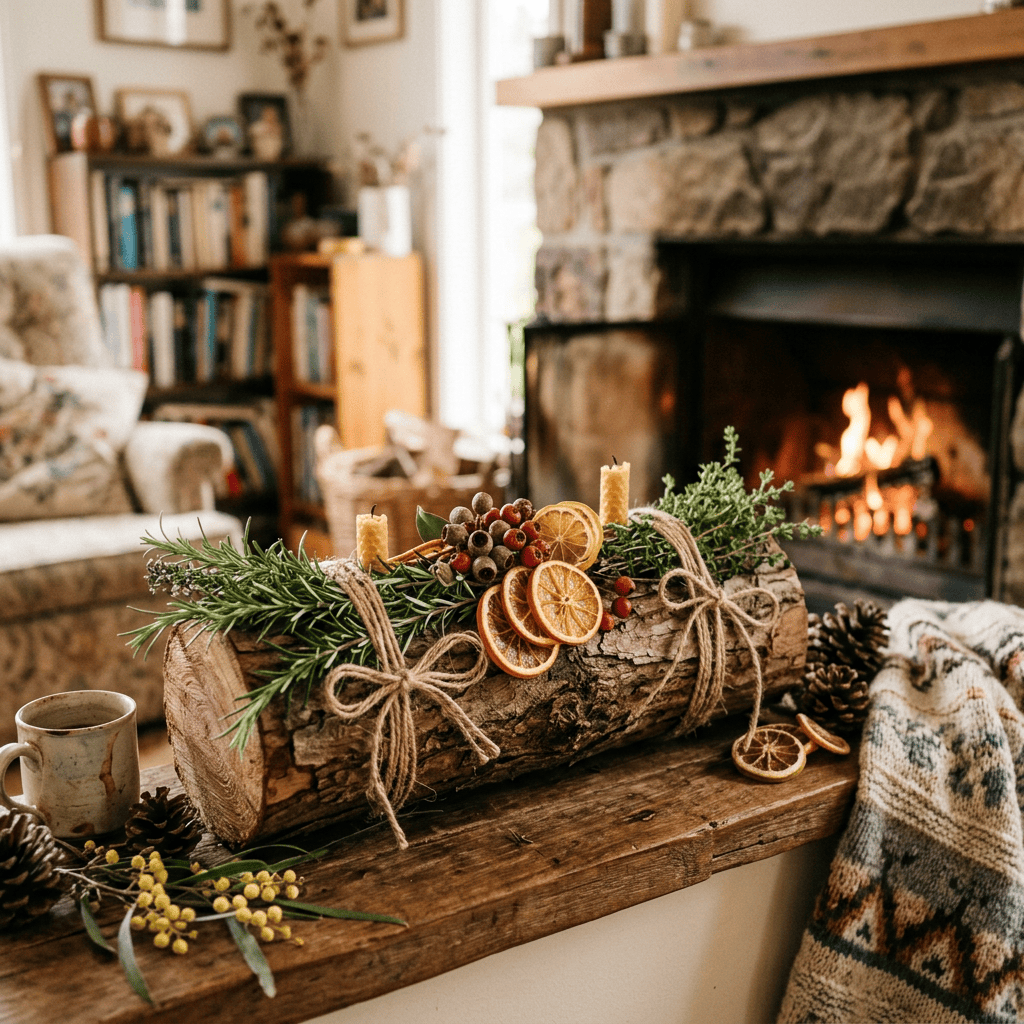
The Yule log is a beautiful tradition to bring into a modern family Yule and one that can be returned to year after year.
Choose a small log or sturdy piece of fallen wood and decorate it together with seasonal greenery, dried orange slices, cinnamon sticks, pinecones, ribbons or other natural decorations gathered during winter.
If you have a suitable fireplace or outdoor fire, the log can be burned as part of your Yule celebration. Before placing it on the fire, each person can share something they are ready to leave behind with the old year and something they would like to welcome as the light begins its return.
Traditionally, a small piece of the Yule log could be kept to kindle the following year’s fire, creating a thread from one Yule to the next.
For homes where burning a log isn’t possible, create a decorative Yule log instead and place it somewhere central during your celebrations. Bring it out each winter and decorate it anew as a family.
 The Wheel at Home