Samhain
Samhain At a Glance
Pronounced: SOW-en or SAH-win, depending on regional tradition
Date: 30 April – 1 May in the Southern Hemisphere
Wheel Position: Halfway between the Autumn Equinox (Mabon) and the Winter Solstice (Yule) – one of the four major Sabbats
Season: Mid to late autumn
Themes: Remembrance, ancestors, reflection, release, endings, transformation, protection, gratitude, the thinning veil, inner wisdom, death and rebirth, and preparation for winter.
Samhain marks the final turning of autumn towards winter and the beginning of the darker half of the year. The season of growth and harvest is coming to an end, and the Wheel is moving towards its quietest point. It is a natural threshold: a time between what has been and what is still to come.
There is a depth to Samhain that sets it apart from many of the other Sabbats. Its focus is not on beginning something new, but on acknowledging endings and recognising their place within the cycle. The Wheel reminds us that nothing in nature remains in one state forever. Growth gives way to harvest, harvest gives way to rest, and eventually life begins to stir again.
Yet Samhain is not simply a season on endings. It is also a time of remembrance and connection with what came before.
This is why remembering loved ones and ancestors sits so naturally within Samhain. We can acknowledge the people whose lives have touches our own, remember family stories and traditions, and recognise that the past continues to shape up even as we move forward. Remembrance doesn’t have to be sombre; it can hold gratitude, affection, laughter and the simple pleasure of keeping someone’s memory alive.
Samhain also invites us to look at our own lives with the same acceptance we see in the turning season. There are experiences, habits, expectations and chapters that eventually reach their end, and holding onto them does not stop the Wheel from turning. This is a time to recognise what has run its course, appreciate what it has given us and allow ourselves to release what no longer belongs in the season ahead.
As winter draws closer, Samhain offers a natural point of reflection before the deeper stillness of Yule. We can remember where we have come from, acknowledge what we have lost and what we have learned, and make peace with the fact that rest, endings and change all have their place in the cycle.
Samhain in the Southern Hemisphere
In the Southern Hemisphere, Samhain falls around 30 April–1 May, as autumn is settling more deeply into the landscape. While much of the familiar imagery associated with Samhain comes from the Northern Hemisphere, here the festival belongs firmly to our own autumn — shortening days, cooler evenings, changing leaves, softer light and the first real sense that winter is approaching.
Depending on where you live in Australia, autumn can look very different. In cooler regions, deciduous trees may be turning brilliant shades of red, gold and orange, mornings can be crisp and the first frosts may already have arrived. Further north, particularly in subtropical and tropical areas, the change can be much quieter. The days remain pleasantly warm while evenings become cooler, humidity begins to ease and the shift in the season is often noticed more in the changing light and temperature than in dramatic autumn colour.
What we all share is the movement towards the darker part of the year. By Samhain, daylight hours have noticeably shortened since the Autumn Equinox and will continue to decrease until the Winter Solstice. Samhain sits between these two points on the Wheel, carrying us from the balance of the equinox towards the longest night at Yule.
This makes Samhain particularly meaningful to celebrate by paying attention to the autumn that is actually unfolding around us. Rather than trying to recreate the misty forests, pumpkins and falling leaves so often seen in Northern Hemisphere Samhain imagery, we can notice the signs that belong to our own part of the world — what is changing in our gardens, which plants are flowering or fading, the birds and animals we see, the foods coming into season and the way our homes and daily routines begin to change as the evenings grow cooler.
Some traditional Samhain imagery still fits beautifully. Fire, candles, seasonal food, shared meals and gathering together as darkness falls all feel at home at this point in the year. Other traditions can be adapted to reflect the landscape and climate around us, allowing Samhain to feel connected to where we actually live rather than to an autumn happening on the other side of the world.
Celebrating Samhain in the Southern Hemisphere is about recognising our own place on the Wheel — noticing autumn deepen, acknowledging the approach of winter and allowing the changing season around us to become part of the way we mark the festival.

The Story of Samhain
Samhain is one of the four traditional Gaelic seasonal festivals, alongside Imbolc, Beltane and Lughnasadh. Its name comes from the Irish Samhain, and the festival was traditionally observed around the beginning of November in Ireland and other parts of the Gaelic world, marking the transition from the lighter half of the year into the darker half.
Historically, this was an important seasonal threshold. The main work of the growing and harvest seasons was coming to an end, livestock were brought down from summer pastures and decisions were made about which animals could be kept and fed through winter. Food and fuel needed to be stored, communities prepared for the difficult months ahead, and the rhythm of life shifted as daylight shortened and winter approached.
The earliest surviving references to Samhain appear in medieval Irish literature, although the seasonal observances themselves are generally understood to have older roots. Samhain appears frequently in Irish mythology and storytelling as a significant point in the year, when gatherings took place and unusual or supernatural events could unfold.
This idea of Samhain as a threshold became one of its most enduring characteristics. Irish and Scottish folklore contains traditions surrounding spirits, supernatural beings and the Aos Sí at this time of year. The boundaries between the ordinary world and the Otherworld were considered less certain, and customs involving fire, food, protection and divination became associated with the season.
Bonfires were an important part of Samhain traditions in some areas. Fire offered warmth and protection as winter approached, but it could also carry ritual significance. Accounts and later folklore describe communal fires, extinguishing and relighting household hearths, and practices intended to protect people, livestock and homes through the darker months.
Food and feasting also had their place. Seasonal gatherings brought communities together, while some traditions involved setting aside food for spirits or the dead. Remembrance of those who had died gradually became strongly associated with Samhain, contributing to the modern understanding of the festival as a time for ancestors, memory and connection with those who came before us.
The familiar idea that “the veil between the worlds is thin” at Samhain is largely modern language, rather than a phrase we can trace directly to ancient Gaelic practice. The idea behind it, however, reflects much older folklore in which Samhain was regarded as a liminal time when encounters with spirits and beings of the Otherworld were more possible than usual.
As Christianity spread through Ireland and Britain, older seasonal traditions did not simply disappear. Customs changed, overlapped and acquired new meanings alongside the Christian observances of All Saints’ Day and All Souls’ Day in early November. Over many centuries, traditions involving the dead, disguises, visiting homes, food, fire and supernatural folklore contributed to the collection of customs that eventually developed into Halloween.
The Samhain celebrated by many modern Pagans and witches is therefore not an unchanged ancient festival handed down exactly as it is practised today. The modern Wheel of the Year developed during the twentieth century, bringing different seasonal festivals together into the eight-Sabbat cycle now familiar to many Pagan traditions. Within that Wheel, Samhain became one of the four seasonal or major Sabbats, opposite Beltane.
Today, Samhain is celebrated in many different ways. For some it remains strongly centred on ancestors and remembrance, while for others it is associated with divination, protection, reflection, release and the cycles of death and renewal. Many contemporary witches also regard Samhain as the Witches’ New Year, although this is a modern interpretation rather than a universal historical tradition.
At its heart, Samhain remains a festival of crossing a threshold. The harvest has ended, winter lies ahead, and the year moves into its darker season. Its long history has changed and gathered new layers over time, but the ancient recognition of this turning point — and of the mysteries surrounding endings, memory and what lies beyond the familiar — continues to give Samhain much of its meaning today.
What We Notice Here
By Samhain, autumn has properly settled in. The mornings are cooler, evenings arrive earlier and the intense heat and brightness of summer have softened. The sun sits lower in the sky, shadows stretch further through the afternoon, and there is a noticeable change in the quality of the light as we move closer to winter.
Across Australia, what we notice will depend enormously on where we live. In cooler regions, deciduous trees may be turning red, gold and orange, leaves gather underfoot and the first frosty mornings may begin to appear. In warmer and subtropical areas, including Southeast Queensland, autumn is often less dramatic. Days can still be warm and sunny, but the mornings and evenings become cooler, humidity eases and the shorter days make the seasonal shift increasingly noticeable.
Gardens and bushland change too. Summer growth begins to slow, seed heads and dried grasses appear, deciduous plants lose their leaves and different native plants move through their own flowering and fruiting cycles. Bird and insect activity changes with the availability of food and the cooler weather, and fallen leaves, bark, seed pods and other signs of the season begin to collect on the ground.
Inside our homes, our rhythms begin to change with the season. We start reaching for blankets in the evening, cooking warmer and more comforting meals, making more cups of tea and spending a little more time indoors as darkness arrives. Candles and lamps are switched on earlier, windows that stayed open through summer begin to close at night, and the home slowly starts to feel like a place to retreat to rather than escape from the heat.
Samhain is a lovely time to deliberately notice these quieter changes. Watch how much earlier the sun disappears, feel the difference between the warmth of the afternoon and the coolness that follows it, notice what is flowering, fruiting, drying or falling away in your own garden or neighbourhood. These small observations connect us to this point on the Wheel far more directly than trying to make our autumn resemble one from somewhere else.
The Wheel of the Year is happening around us whether or not our landscape looks like the traditional images associated with Samhain. We only need to notice.
This is the season of cooler mornings and lengthening shadows, fallen leaves and seed pods, warmer kitchens and earlier evenings. Autumn is drawing towards its end, winter is approaching, and the landscape around us is quietly changing with it.
Themes of the Season
Samhain carries themes of remembrance, release, reflection, ancestry, protection, endings and transition. It sits at a threshold on the Wheel, as the lighter part of the year gives way to the darker months and the natural world begins drawing its energy inward.
Remembrance
Samhain has long been associated with remembering those who have died. It offers a time to honour ancestors, family members, friends and others whose lives have touched our own, keeping their stories and memories present while acknowledging that death is part of the natural cycle of life.
Release
Autumn gives us a visible reminder that letting go is part of every cycle. Leaves fall, plants die back and the landscape begins to shed what it no longer needs. Samhain carries this same theme of release, inviting us to recognise what has reached its natural ending and what we may no longer wish to carry forward.
Reflection
As the days shorten and the season becomes quieter, Samhain encourages us to turn our attention inward. It is a time to look back over the previous turn of the Wheel, noticing what changed, what grew, what ended and what we learned without needing to judge the year by what we did or did not achieve.
Ancestors
Ancestry is an important part of Samhain, but it can extend beyond our immediate family tree. We may remember relatives and generations who came before us, while also honouring cultural ancestors, teachers, chosen family and people whose lives helped shape the world we inherited.
Protection
Protection has historical roots within Samhain traditions, when the festival was associated with uncertain boundaries and supernatural beings moving more freely through the landscape. In modern practice, protection can also represent the boundaries we create around ourselves, our homes and the things we value.
Endings and Beginnings
Samhain reminds us that endings and beginnings are closely connected. Something must often finish before space is created for what comes next, and the period between the two can be valuable in its own right. Not every beginning needs to arrive immediately after an ending.
The Turning of the Wheel
For many modern Pagans and witches, Samhain marks the end of one turn of the Wheel and the beginning of another, and it is sometimes called the Witches’ New Year. Rather than beginning with resolutions or outward celebration, this turning point is associated with remembrance, reflection and deciding what is worth carrying into the cycle ahead.
Together, these themes give Samhain its particular character — a season of remembrance and release, of honouring what has passed while standing at the threshold of what is still to come.
Seasonal Invitation
Samhain invites us to become a little more comfortable with endings.
This is a season for noticing what has run its course. We can allow an old habit to fade, clear something from our homes that we no longer use, finish something that has been lingering, or acknowledge that a particular chapter of our lives has changed. Not everything needs to be carried with us simply because it once mattered.
There is also an invitation here to remember. We can tell old family stories, cook recipes that have travelled through generations, look through photographs, speak the names of people we miss or spend time thinking about those who helped shape us. Remembrance does not have to be solemn. It can be warm, funny, affectionate and full of life.
Samhain also asks us to pay attention to our own need for quieter space. As evenings arrive earlier and autumn begins moving towards winter, we can spend a little more time at home, turn down some of the outside noise and notice what comes to the surface when life becomes less busy. There may be things we are ready to understand differently, forgive, accept or finally put down.
There is room here for appreciating what remains, too. The people who are still beside us. The relationships that have endured. The lessons we have carried forward. The parts of ourselves that have changed and the parts that have somehow remained recognisably ours through every season.
So rather than asking what you should do for Samhain, perhaps begin with something simpler:
What am I ready to honour, and what am I ready to let go?
Remember what deserves remembering. Make peace with what has ended. Keep what still belongs with you. Let the rest become part of the past.
Samhain Correspondences
Samhain correspondences draw strongly on the end of the harvest season, the approach of winter and traditions surrounding remembrance, ancestors, protection and the boundary between life and death. Many traditional correspondences come from Ireland, Scotland and other parts of the British Isles, so not every plant, animal or seasonal food will naturally fit an Australian autumn. Where appropriate, Australian alternatives can help bring Samhain closer to the season happening around us.
Colours & Candles
Black — protection, mystery, endings, the unknown and the unseen
Deep Red or Burgundy — life, blood, ancestral connection, strength and transformation
Dark Purple — intuition, spiritual wisdom, mystery and divination
Brown — earth, grounding, decay and the natural cycle of renewal
Burnt Orange — autumn, harvest, fire and seasonal change
Gold — fire, remembrance and the last warmth before winter
Silver — moonlight, intuition and the spirit world
White or Cream — remembrance, peace, ancestors and spiritual connection
Deep Forest Green — earth, endurance, nature, grounding and protection
For candles, black, deep red, purple, orange and white are particularly suited to Samhain. A single white candle can also be used simply in remembrance of someone who has died.
Crystals & Stones
Obsidian — protection, truth, introspection and shadow work
Black Tourmaline — grounding and protection
Smoky Quartz — grounding, release and transformation
Onyx — protection, strength and stability
Labradorite — intuition, transformation and spiritual awareness
Amethyst — intuition, spiritual wisdom and reflection
Garnet — vitality, courage, ancestral connection and grounding
Bloodstone — courage, resilience, vitality and connection with the life cycle
Clear Quartz — clarity, intention and amplification
Carnelian — courage, creativity, warmth and the remaining energy of the harvest
Traditional Herbs, Plants, Flowers & Trees
Plants associated with Samhain often reflect protection, remembrance, divination, death, transformation and the final harvest. Apples in particular have a long connection with Samhain traditions, while trees such as yew and elder carry older associations with death, protection and the otherworld.
Apple — abundance, divination, love, wisdom and the final harvest
Yew — death, rebirth, ancestors and immortality
Elder — protection, transformation, death and regeneration
Hawthorn — protection, boundaries and the otherworld
Rowan — protection and spiritual safeguarding
Oak — strength, endurance, wisdom and ancestry
Rosemary — remembrance, protection and cleansing
Mugwort — dreams, intuition and divination
Sage — cleansing, wisdom and protection
Bay — protection, wisdom and divination
Thyme — courage, purification and remembrance
Wormwood — protection, divination and spirit work
Australian Herbs, Plants, Flowers & Trees
Australian Samhain correspondences can be drawn from plants that are noticeable during autumn, as well as native plants whose qualities lend themselves naturally to themes of remembrance, protection, endurance and seasonal transition. What is actually flowering or changing will vary considerably depending on where you live.
Eucalyptus — cleansing, protection, healing and renewal
Tea Tree — cleansing, protection and restoration
Native Rosemary — remembrance, cleansing and protection
Sheoak — grounding, endurance and connection to place
Banksia — regeneration, resilience and transformation
Wattle — resilience, renewal and connection to the Australian landscape
Grevillea — vitality, connection and resilience
Bottlebrush — renewal, adaptability and resilience
Rather than trying to recreate a Northern Hemisphere autumn, fallen leaves, seed pods, bark, branches and other naturally shed materials gathered responsibly from your own garden or local surroundings can create a Samhain space that reflects the Australian season more authentically.
Animals
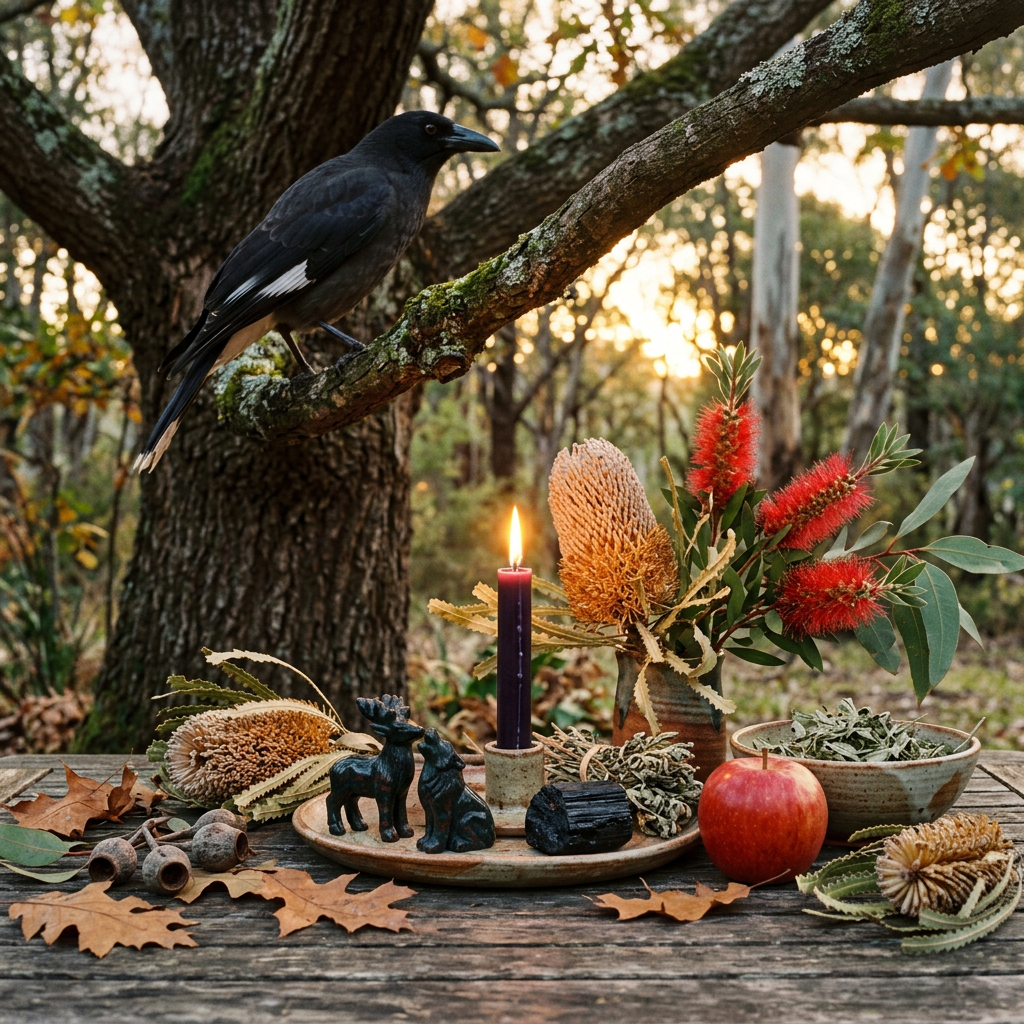
Raven and Crow — mystery, intelligence, death, transformation and the otherworld
Owl — wisdom, darkness, observation and intuition
Bat — transition, rebirth, intuition and navigating darkness
Wolf — instinct, protection, loyalty and connection with the wild
Stag and Deer — transition, wilderness, regeneration and the cycles of nature
Black Cat — mystery, independence, intuition and protection
Spider — fate, creativity, patience and the weaving of life
Moth — transformation, darkness and attraction to light
For an Australian Samhain, local animals and birdlife can be just as meaningful. Ravens, magpies, currawongs, powerful owls, possums, flying foxes and other animals active around dusk and during autumn can become part of our own seasonal observations. The point is not to assign imported folklore to Australian wildlife, but to notice the creatures actually sharing the season with us.
Essential Oils
Frankincense — reflection, grounding and spiritual practice
Myrrh — remembrance, contemplation and spiritual connection
Cedarwood — grounding, protection and stability
Patchouli — earth, grounding and introspection
Cypress — transition, grief, remembrance and renewal
Juniper Berry — cleansing and protection
Rosemary — remembrance, clarity and cleansing
Clove — protection, warmth and strength
Cinnamon — warmth, energy and abundance
Sweet Orange — warmth, comfort and the remaining light of autumn
Essential oils should always be used appropriately and diluted when required. Some oils are unsuitable for certain people, pets or methods of use, so it is worth checking the safety information for the individual oil rather than assuming that natural automatically means harmless.
Food & Drinks
Samhain foods traditionally reflect the final harvest, stored produce and the transition into winter.
Apples — harvest, abundance, wisdom and divination
Pumpkin and squash — harvest, abundance and nourishment
Root vegetables — grounding, nourishment and the earth
Potatoes — sustenance, grounding and home
Nuts — abundance, wisdom and stored potential
Blackberries — harvest, protection and the ending of the growing season
Bread — nourishment, home and community
Soups and stews — warmth, comfort and sharing
Spiced cakes and breads — celebration, hospitality and harvest
Cinnamon, cloves, nutmeg and ginger — warmth and autumn spice
Apple cider or spiced apple juice — harvest, abundance and celebration
Tea, chai, cocoa and other warm drinks — comfort, warmth and gathering
For an Australian Samhain, seasonal autumn produce can make the celebration feel much more connected to the land around us. Apples, pears, pumpkin, potatoes, sweet potatoes, mushrooms, brassicas and other locally available autumn produce are simple places to begin.
Symbols
The Ancestor Altar — remembrance, family and connection with those who came before
Candles — remembrance, guidance and light within darkness
Fire — transformation, protection and the changing season
Apples — harvest, divination and the otherworld
The Cauldron — transformation, death, rebirth and mystery
Skulls and Bones — mortality, ancestors and the cycle of life and death
Fallen Leaves — endings, release and natural change
Seeds and Nuts — potential held through the darker months
Photographs and Keepsakes — memory, ancestry and personal connection
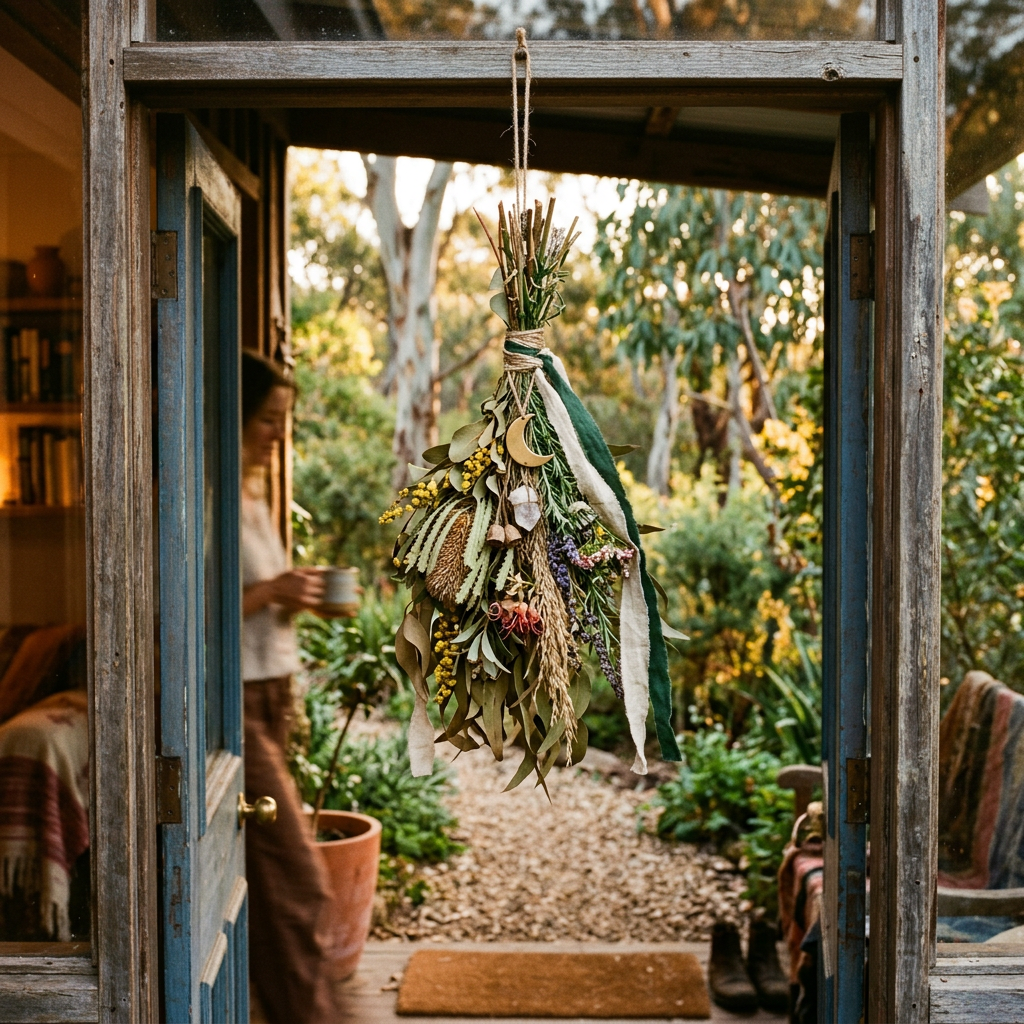
Doorways and Thresholds — boundaries, transition and movement between states
The Dumb Supper — remembrance and symbolic hospitality for the dead
Tarot
Death — endings, transformation and transition
Judgement — reflection, awakening and answering the past
The High Priestess — intuition, mystery and hidden knowledge
The Hermit — introspection, solitude and inner wisdom
The Moon — intuition, uncertainty, dreams and the unseen
Six of Cups — memory, the past and those who have shaped us
Ten of Pentacles — ancestry, family, inheritance and legacy
Five of Cups — grief, loss and acknowledging what remains
Moon Phases
Samhain is a seasonal festival rather than a lunar festival, so it is not tied to a particular phase of the moon. However, the moon phase occurring around Samhain can add another layer to personal reflection, remembrance or ritual.
New Moon — beginnings, intentions and what may emerge from darkness
Waxing Moon — growth, movement and carrying something forward
Full Moon — illumination, awareness and bringing hidden things into view
Waning Moon — release, endings and letting go
Dark Moon — rest, introspection, mystery and the unseen
The date of Samhain itself remains the seasonal marker; a particular lunar phase is not required to celebrate it.
Deities of Samhain
Samhain has strong connections with Irish mythology and later folklore, but care is needed when describing particular gods and goddesses as “Samhain deities”. Some have genuine associations with stories or traditions connected with Samhain, while others are modern Pagan correspondences whose broader themes simply resonate with the festival.
The Morrígan
The Morrígan is an Irish goddess associated with sovereignty, battle, prophecy, fate and death. She appears in important Irish mythological material connected with Samhain and is one of the stronger deity associations with the festival.
The Dagda
The Dagda is a major figure of Irish mythology associated with abundance, protection, fertility and supernatural power. Stories involving the Dagda take place around Samhain, giving him a genuine mythological connection with the season.
The Cailleach
The Cailleach is a powerful figure of Gaelic tradition associated with winter, landscape, storms and the darker part of the year. Her connection with Samhain is largely through the seasonal transition into winter rather than Samhain belonging specifically to her.
Manannán mac Lir
Manannán mac Lir is an Irish sea and otherworld figure associated with boundaries, journeys, protection and the Otherworld. These qualities resonate particularly well with Samhain’s themes of thresholds and the unseen.
Other Deities That May Resonate
Hecate — Greek goddess associated with crossroads, boundaries, night, magic and the dead. She is not historically a Samhain goddess, but her symbolism has made her popular within modern Samhain practice.
Persephone — Greek goddess whose mythology includes descent, return and the seasonal cycle. Her story can resonate with themes of darkness and transition, although she has no historical connection with Samhain.
Hades — Greek god of the underworld and the dead. His realm makes him relevant to modern practices concerned with mortality and ancestors, but he is not traditionally connected with Samhain.
Anubis — ancient Egyptian god associated with funerary rites and care of the dead. His connection with Samhain is a modern thematic one rather than a historical association.
You do not need to work with a deity to celebrate Samhain. For many people, the season itself—autumn, remembrance, the final harvest and the approaching winter—is more than enough.
Ways to Celebrate Samhain
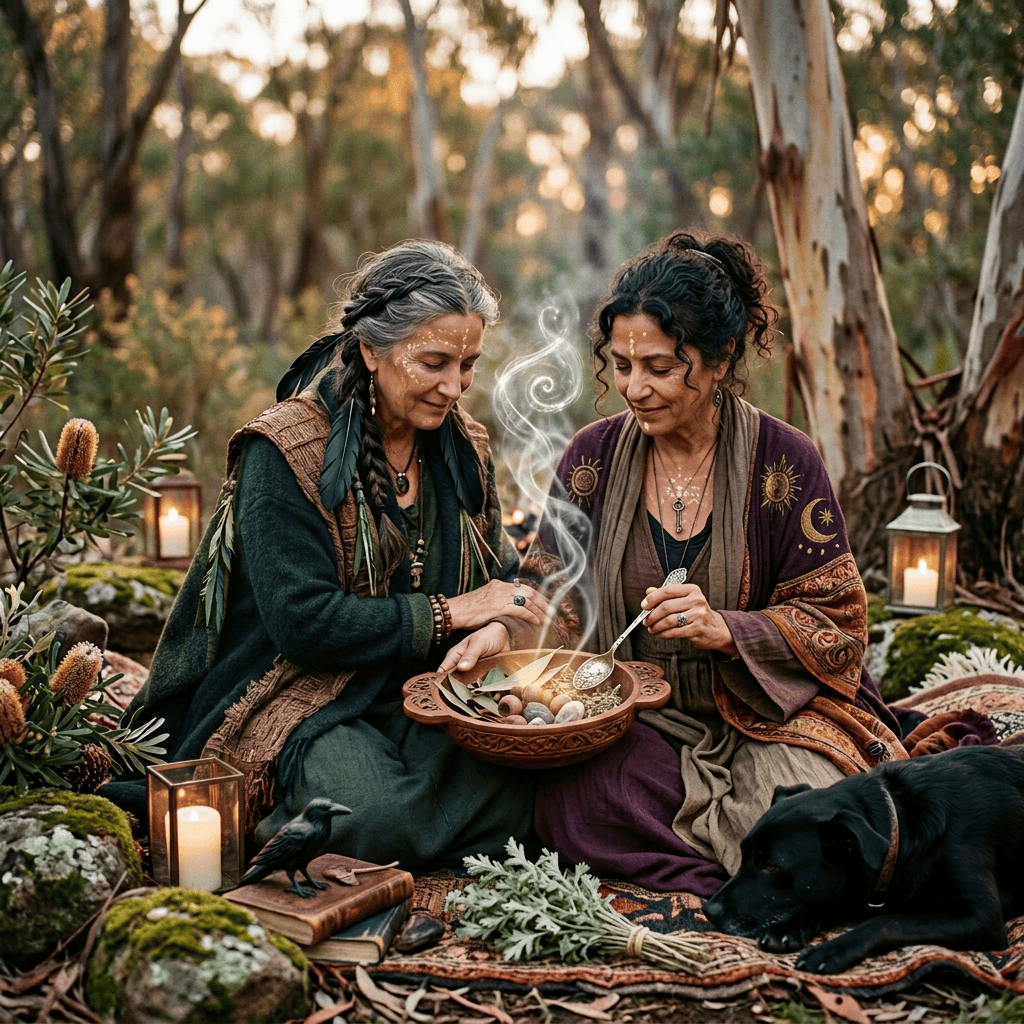
Samhain arrives as autumn deepens and the year begins its movement towards winter. Traditionally it marked the end of the harvest season and the beginning of the darker half of the year. Today, it can be celebrated through remembrance, seasonal food, time outdoors, gathering with people we love and simply noticing the changes happening around us.
Watch the Autumn Sunset
Spend some time outside as daylight begins to fade. Notice the cooler air, the changing light, the sounds of birds settling for the evening and the way the landscape looks at this point in the year. Samhain has long been associated with thresholds and transitions, and dusk is a natural time to acknowledge that feeling of moving from one thing into another.
Light a Candle for Remembrance
Light a candle for someone who has died, whether that is a family member, friend, ancestor or even a much-loved animal. You can place a photograph or small keepsake nearby, say their name, share a story about them or simply sit with the memory for a while.
Share an Autumn Meal
Prepare a meal using foods that suit the season and gather around the table. Apples, pumpkin, root vegetables, bread, soups, stews and baked dishes all work beautifully at this time of year. You could also cook an old family recipe or make something associated with someone you remember.
Bring Autumn Indoors
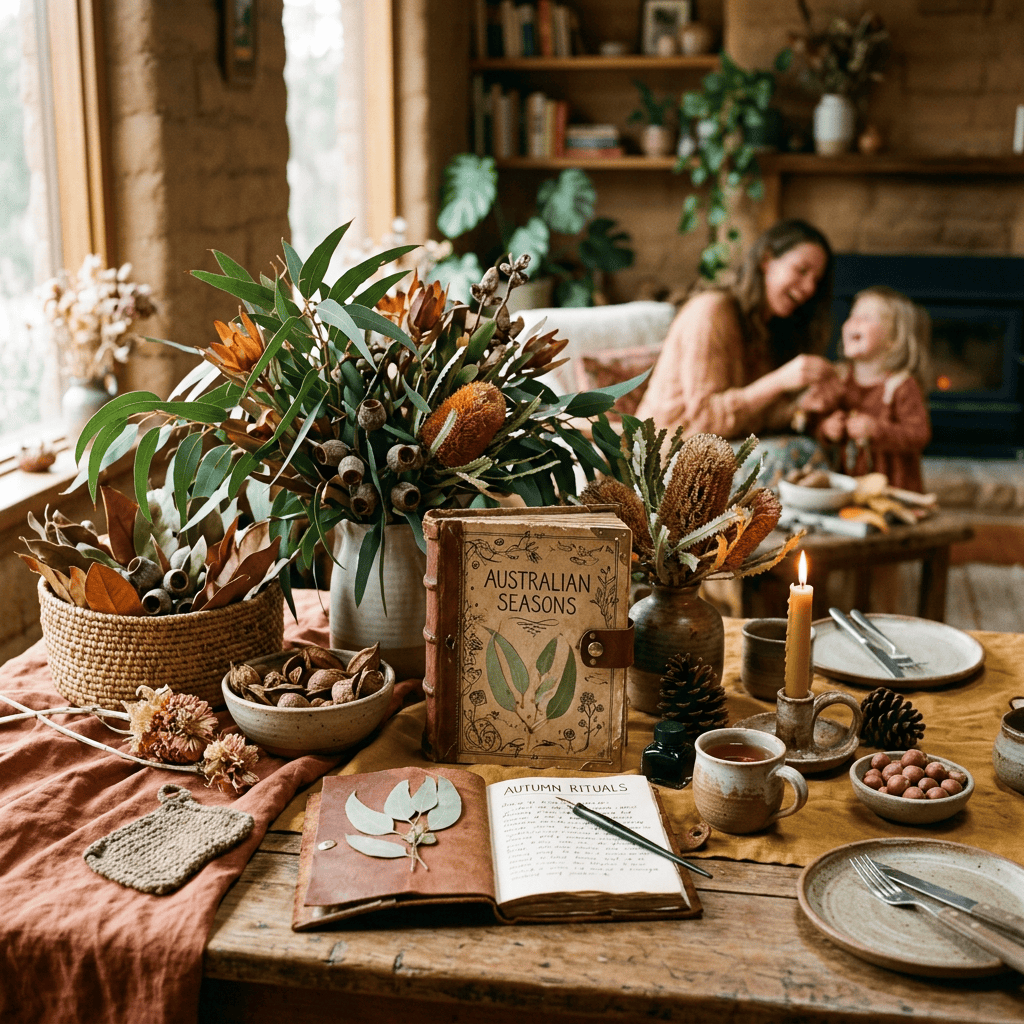
Gather fallen leaves, interesting branches, seedpods, nuts or seasonal flowers and use them around the home. In Australia, this does not have to resemble a Northern Hemisphere autumn. Banksia, bottlebrush, eucalyptus, seedpods and whatever is changing in your own garden or neighbourhood can become part of your Samhain decorations.
Spend an Evening by the Fire
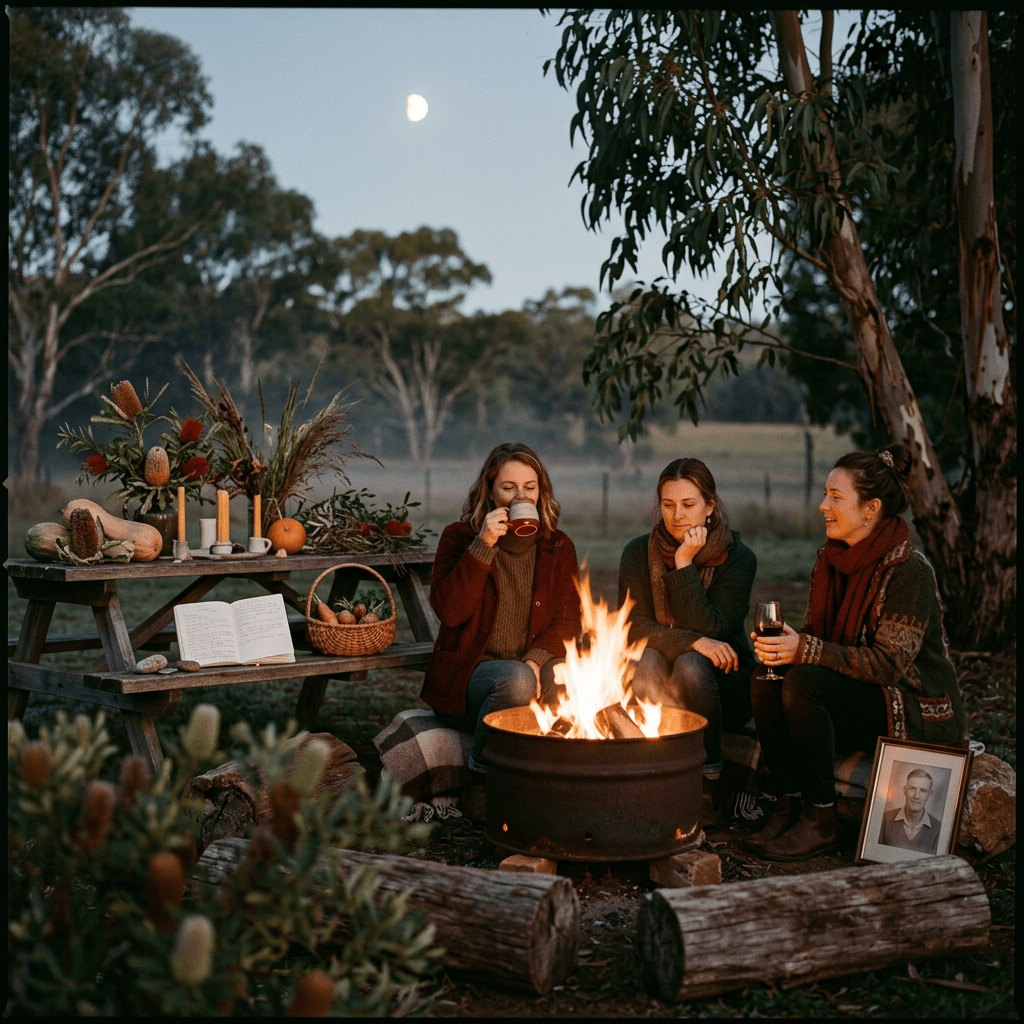
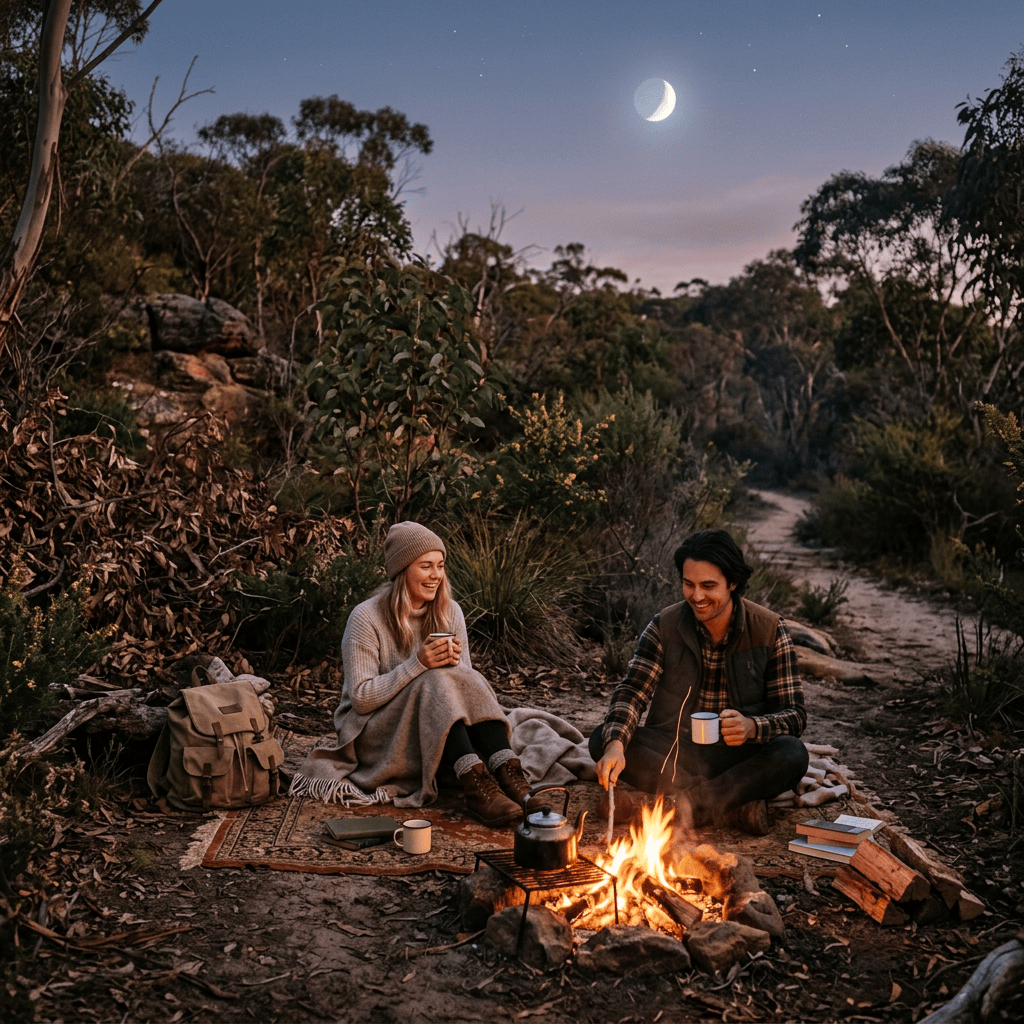
As the evenings become cooler, spend some time around a fireplace, firepit or outdoor brazier if you have one. Share stories, make something warm to drink, toast marshmallows or simply watch the flames. Fire has long been part of Samhain traditions and remains a beautiful way to mark the approach of winter.
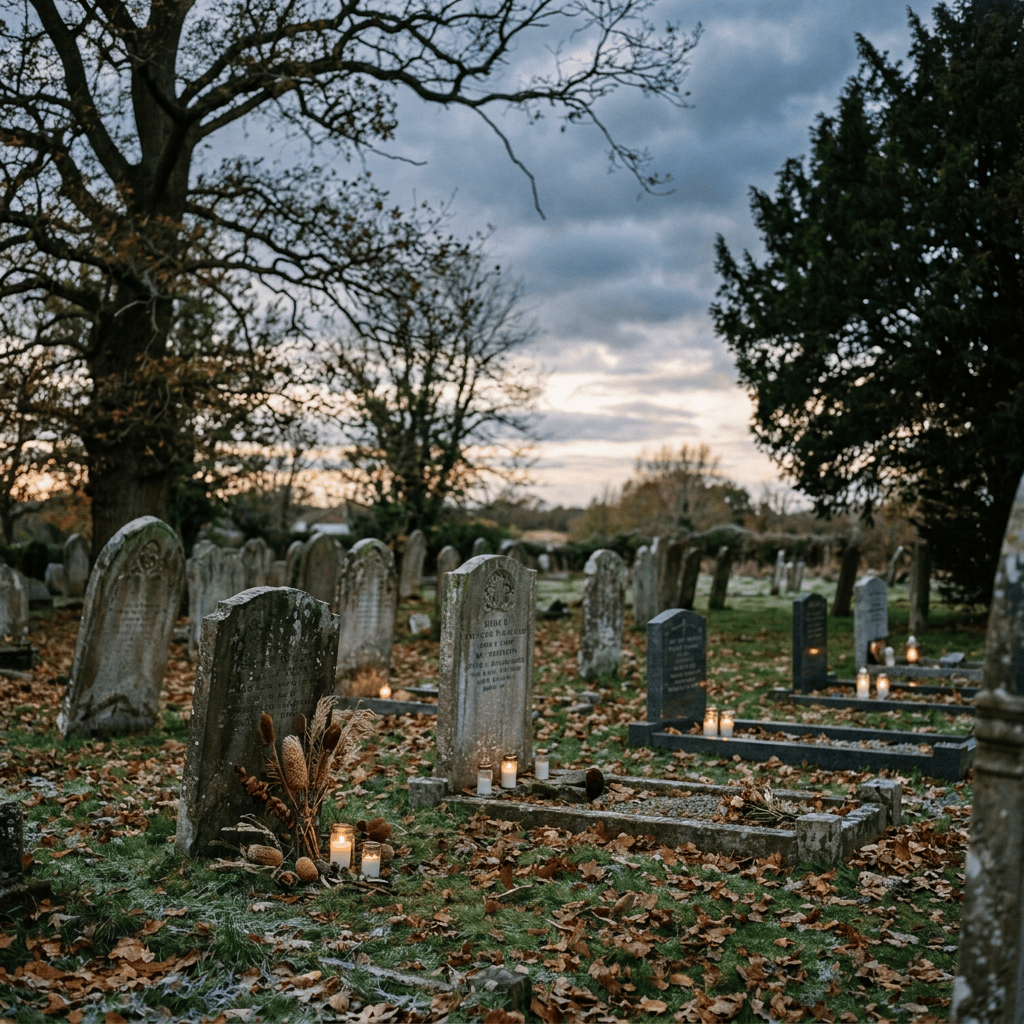
Visit a Cemetery or Place of Remembrance
Visit the resting place of someone you love, a memorial garden or another place that holds personal meaning. Take flowers, tidy a grave if appropriate, sit for a while or simply walk quietly and remember. It can be a gentle way of making remembrance part of ordinary life rather than something reserved only for anniversaries.
Take an Autumn Walk
Go for a walk and deliberately look for signs that the season is changing. Notice fallen leaves, seedpods, fungi, cooler shadows, flowering natives and the birds or animals that are particularly noticeable at this time of year. What autumn looks like will vary enormously across Australia, which makes observing your own landscape particularly important.
Gather for an Evening of Stories
Invite family or friends over for dinner, dessert or drinks and spend some time telling old stories. Bring out photographs, talk about relatives, remember people who are no longer here or share funny stories from years ago. Samhain’s connection with ancestors does not have to make the evening sombre; remembrance can be full of laughter.
Make Something for the Season
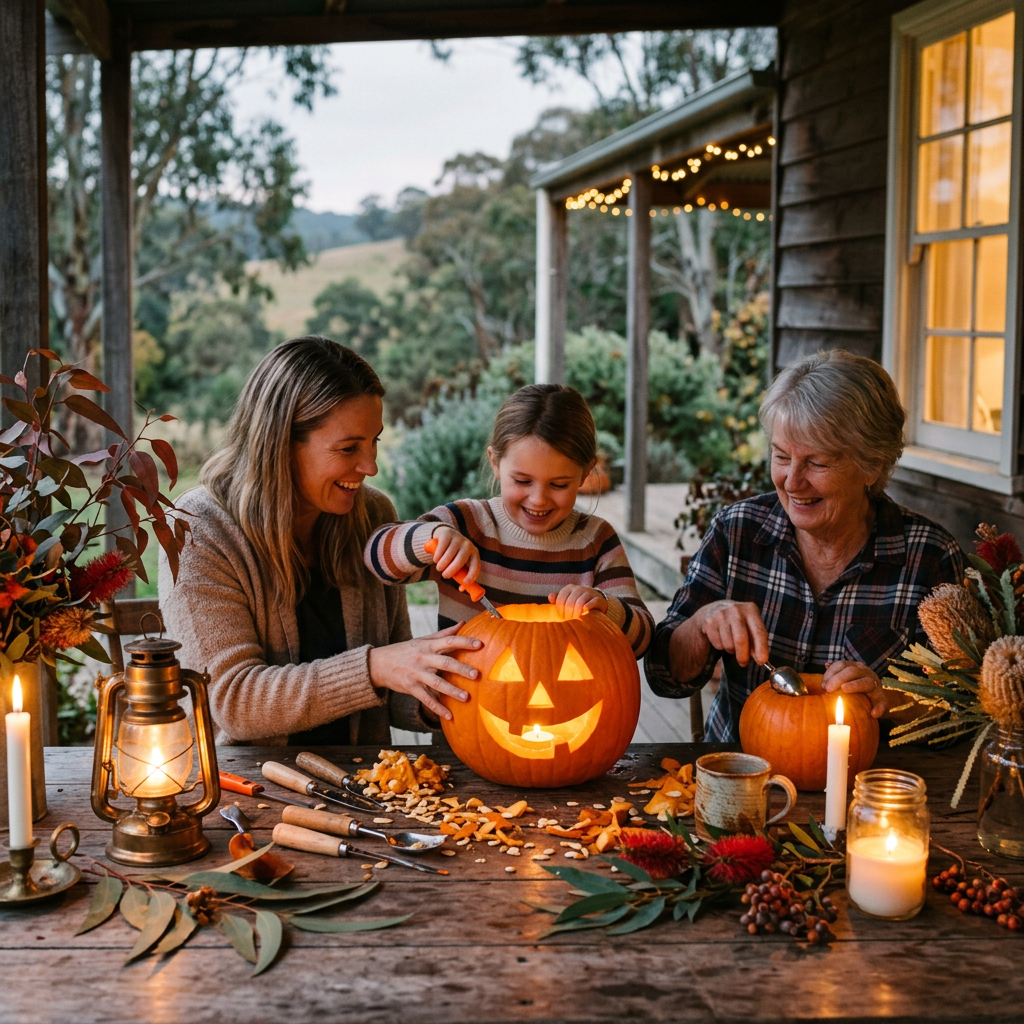
Bake an apple cake, carve or decorate a pumpkin, press autumn leaves, make an autumn wreath, preserve seasonal produce or create something using natural materials gathered from your garden. Making something slowly by hand can become its own way of marking the turning season.
Create a Little Autumn Comfort
As the weather cools, bring some warmth back into the home. Put fresh blankets on the bed or sofa, cook something slowly, light candles, bring out warmer clothes, make a pot of tea or spend an evening reading. Samhain sits at the threshold of winter, making it a natural time to begin settling the home for the colder months.
Samhain can hold both celebration and remembrance. It gives us space to enjoy the harvest and changing season while remembering the people and stories that came before us, acknowledging what has ended and watching the Wheel begin to turn towards winter.
Bringing the Season Home
Bringing Samhain into the home can be warm, earthy and personal. As autumn deepens and the evenings begin to cool, small changes around the house can reflect the shift towards the darker half of the year and Samhain’s themes of remembrance, endings, ancestry and the natural cycle of life and death.
There is no single way to decorate for Samhain, and your home certainly does not need to look like Halloween unless that is something you enjoy. Celebrating Samhain seasonally in Australia can sometimes look a little unusual to other people, especially when pumpkins, candles, skulls and darker decorations appear around the end of April and beginning of May.
But that does not mean you have to choose between Samhain and Halloween.
Some witches, myself included, celebrate Samhain seasonally around 30 April–1 May, when autumn is deepening here in the Southern Hemisphere, and still enjoy decorating or celebrating Halloween again in October. The two do not have to cancel each other out. One can be a spiritual and seasonal observance connected with the Wheel of the Year, while the other can simply be a fun family tradition filled with costumes, decorations, food and memories.
Seasonal Display Ideas
A Samhain display can begin with things gathered from the season around you. Fallen leaves, bark, branches, seedpods and dried flowers can be arranged with candles, crystals or other natural objects. Australian natives such as banksia, bottlebrush and eucalyptus can sit beautifully alongside more traditional Samhain elements and help connect the celebration with the autumn actually happening outside.
Deep purple, black, burgundy, brown and cream work beautifully at this time of year. You might add apples, small pumpkins or other seasonal produce, a piece of black tourmaline or bloodstone, dried mugwort or rosemary, or a small cauldron or fire-safe bowl. Old books, keys, tarot or oracle cards and other objects with a sense of age or history can also suit the season.
Remembrance can form part of the display too. Photographs of loved ones, family heirlooms, handwritten recipes, letters or small objects that belonged to someone who has died can be placed alongside a candle dedicated to them. These do not have to create a formal ancestor altar; they can simply bring the people and stories that matter to you into the season.
Your display can change as Samhain approaches. Add something collected on an autumn walk, a photograph you rediscover, a fallen leaf from a favourite tree, something made by the children or a handwritten memory or family story. Over time, these small additions can become part of your own Samhain traditions.
Creating a Seasonal Atmosphere
Creating a Samhain atmosphere is less about filling the house with decorations and more about allowing home to reflect the deeper, quieter feeling of late autumn.
Light candles as evening arrives and allow the house to become a little softer as daylight fades. Open a window and notice the cooler air, cook something slowly, bring out blankets and warmer bedding, or spend an evening around a fire if the weather allows. The gradual change in everyday routines can mark the season just as effectively as decorations.
Scent can add another layer. Apples, cinnamon, cloves, rosemary and other autumnal herbs and spices can be used in cooking or a simmer pot, while essential oils can be used safely if you enjoy them. The smell of something baking, a pot of soup on the stove or an old family recipe cooking can become part of the atmosphere too.
Music, photographs and family stories suit Samhain particularly well. Put on music that reminds you of another time or person, look through old albums, tell stories about relatives, make a recipe handed down through the family or bring out something that has been tucked away for years. Remembrance does not always have to be solemn; it can be funny, affectionate and full of ordinary memories.
Spend some time outside after dark as well. Notice the temperature, the night sky, the sounds of birds and animals settling around you and how different familiar surroundings feel at this point in the year.
The aim is not to make the house look like Samhain. It is to let the home reflect what Samhain represents — autumn deepening, winter approaching, memories being carried forward and the Wheel continuing to turn.
Seasonal Activities
Samhain is a lovely season for activities that connect us with autumn, family, memory and the changing natural world. As the days shorten and the weather begins to cool, it is a good time for making things by hand, spending time outdoors, gathering around the table and remembering the people and stories that came before us.
Make
- Create a Samhain wreath using autumn leaves, eucalyptus, banksia, seedpods, dried flowers and ribbon.
- Make candle holders from recycled jars using autumn leaves, twine or pressed flowers.
- Bake an apple cake, spiced biscuits, fruit loaf or another favourite autumn treat.
- Create an autumn garland using dried leaves, seedpods, cinnamon sticks, dried apple or handmade decorations.
- Make a Samhain simmer-pot mix with apple, orange peel, cinnamon, cloves and rosemary.
- Press autumn leaves and flowers for later craft projects.
- Carve or decorate pumpkins if they are available, or use apples and other seasonal produce as natural decorations.
- Make a small remembrance candle for someone you have loved and lost.
- Create a family recipe book, beginning with recipes that have been passed down or remind you of particular people.
- Make an autumn nature journal using leaves, drawings, photographs and observations collected throughout the season.
- Create a simple ancestor or remembrance display using photographs, candles, flowers and meaningful objects.
- Make something using fallen leaves, bark, seedpods or other natural materials collected on an autumn walk.
Do
- Take an autumn nature walk and notice what is flowering, fruiting, drying, falling or changing locally.
- Spend an evening around a fire or outdoor firepit.
- Visit a local forest, bushland, garden or nature reserve and look for signs of late autumn.
- Go outside after dark and spend some time beneath the autumn night sky.
- Visit a cemetery where family members are buried, tend a grave or leave flowers if this is meaningful to you.
- Look through old photographs, letters or family keepsakes.
- Ask an older relative about their childhood, family traditions or people you never had the chance to know.
- Cook a favourite family recipe and learn the story behind it.
- Spend an afternoon baking while listening to music that reminds you of people or times from your past.
- Have a candlelit dinner at home.
- Photograph the same place around Samhain each year and watch how autumn changes over time.
- Spend some time gardening, pruning, gathering fallen leaves or preparing the garden for the cooler months.
- Have a screen-free evening with candles, books, music, conversation or games.
- Write down a memory of someone who has died — especially one of the small, ordinary stories that could otherwise eventually be forgotten.
Share
- Invite family or friends for a relaxed Samhain meal.
- Cook a family recipe and share the story of where it came from.
- Bake extra cake, biscuits or bread and take some to a neighbour, friend or family member.
- Gather around a fire for warm drinks, conversation and storytelling.
- Bring old photographs to the dinner table and share the stories behind them.
- Ask family members to contribute memories to a family journal or memory book.
- Share stories about relatives your children or younger family members may never have met.
- Make a favourite food, dessert or drink associated with someone who has died and enjoy it in their memory.
- Swap books, recipes, seeds, cuttings or autumn produce with friends.
- Create a small autumn care package for someone who could use a little kindness.
- Have a family cooking afternoon and make something connected with your family history or traditions.
- Invite everyone to share a favourite memory of someone who is no longer here — funny stories and everyday memories included.
- Donate food, clothing, blankets or useful items to a local organisation as the cooler months approach.
- Check in on someone who may appreciate some company, a phone call or an invitation to share a meal.
- Samhain activities can hold both sides of the season: the pleasure of autumn and gathering together, alongside remembrance and reflection. Food, craft, nature, stories and time spent with people you love can all become part of how your family marks Samhain from year to year.
Rituals & Seasonal Magic
Samhain is a season of remembrance, release and reflection. As autumn deepens and we move towards the darker half of the year, its rituals traditionally turn towards endings, those who came before us, and the things we are ready to lay down before moving forward. Samhain magic does not have to be sombre, but it can make space for memories, gratitude and the quieter parts of life that we do not always stop to acknowledge.
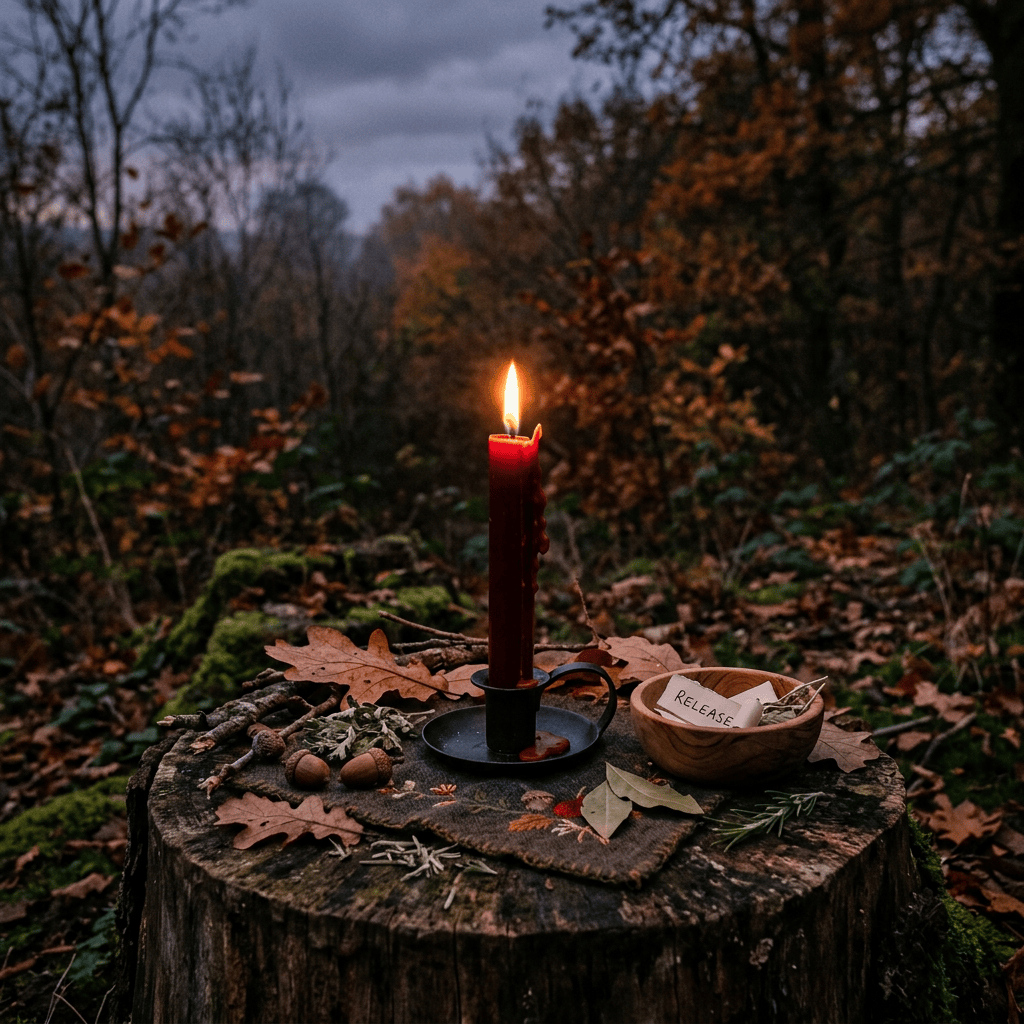
A Simple Samhain Candle Ritual
For this ritual, you will need a black, white, burgundy or deep red candle, a small piece of paper and a pen. You can also place a photograph, keepsake or other meaningful object nearby if you would like to remember someone who has died.
Find a quiet place as evening begins and sit for a moment with the candle unlit. Think about the season that has passed — what it brought you, what changed and what you have learned along the way.
On your piece of paper, write one thing you are ready to leave behind as the Wheel turns towards winter. It could be a habit, worry, expectation, disappointment or something else that has simply run its course.
Light the candle and take a few moments to watch the flame.
Say quietly:
I honour what has been,
I remember what remains,
and I release what I no longer need.
If you are remembering someone who has died, spend a little time thinking about them. Recall their voice, something they used to say, a meal they loved, a place you shared or an ordinary memory that still makes you smile.
Fold your paper away from you three times. Keep it beside the candle until the ritual is finished, then tear it up and dispose of it. If the paper contains only plain, compostable materials, it can also be added to your compost.
Allow the candle to burn for a little while as you sit quietly, then extinguish it safely.
A Simple Samhain Release Spell
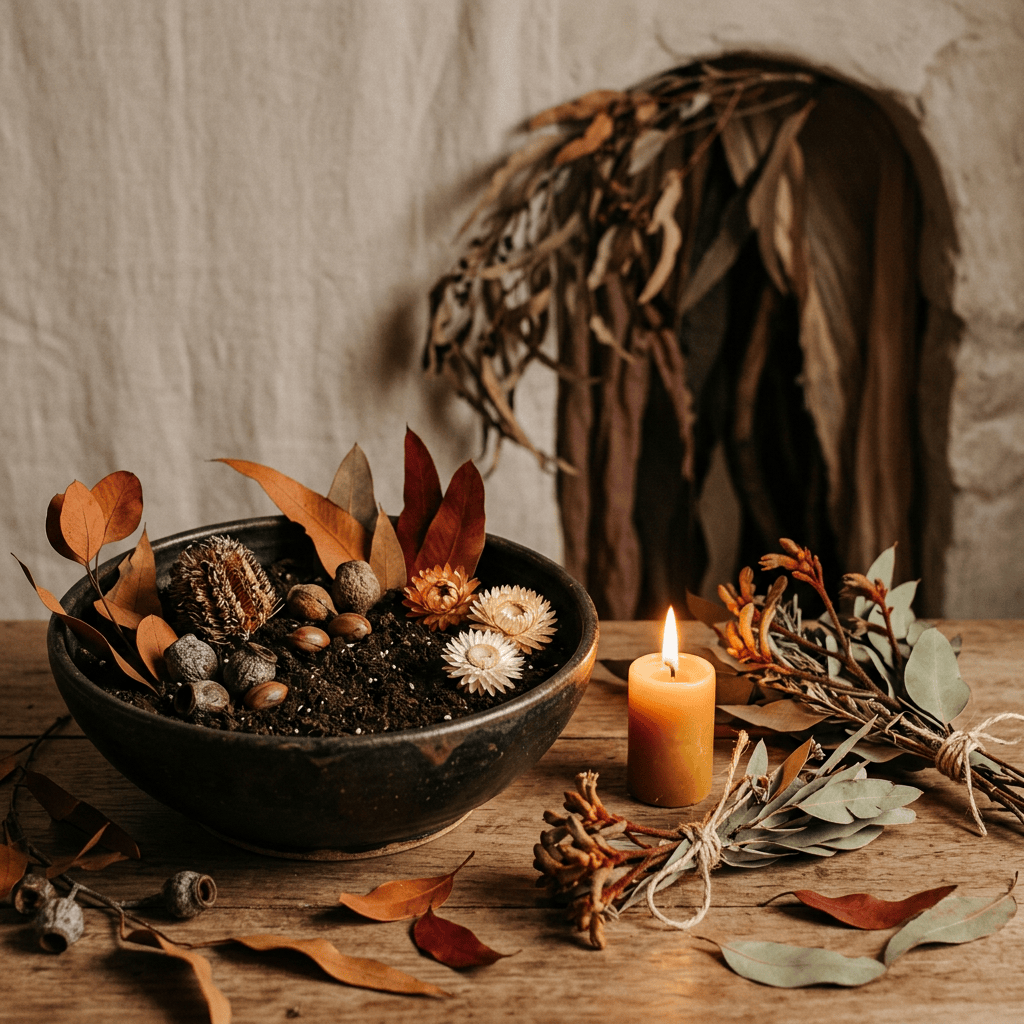
You will need a small bowl or jar, a dried autumn leaf, a little rosemary, a piece of dried apple and a small piece of smoky quartz, obsidian or black tourmaline if you have one.
Place each item into the bowl slowly.
Add the leaf for the natural cycle of change and letting go.
Add the rosemary for remembrance.
Add the apple for wisdom, ancestry and the continuing cycle of life.
Add the crystal for grounding and protection as you move into the darker season.
Hold the bowl in both hands and think about something you are ready to make peace with, release or stop carrying into the months ahead.
Say:
What has ended, I release.
What has taught me, I remember.
What belongs behind me may remain there.
I step into the season ahead with space for what comes next.
Leave the bowl somewhere in your home for the days around Samhain. Afterwards, return the natural ingredients to the compost where appropriate, and clean and return the crystal to your collection.
Samhain Reflections
Samhain is a natural point for looking back over the year and noticing how life has changed along the way. As the season turns inward, it can be a chance to remember, reconnect and pay attention to the things that are often overlooked in the busier parts of life.
Choose one question or work through all five. There is no need for perfects answers – simply notice what comes up.
Journal Prompts
- What memories from the past year feel especially important to me now, and why?
- Which people, places or traditions make me feel most connected to where I come from?
- What parts of myself have become stronger or clearer over the past year?
- What does home, comfort and belonging look like for me at this stage of my life?
- If I could preserve one story, lesson or memory for the people who come after me, what would it be?
A Samain Tarot Spread
Use five cards to explore what is ending, what remains and what may be quietly beginning beneath the surface.
- Card One – What is passing (What has reached the end of its season in my life?)
- Card Two – What I Carry with Me (What lesson, strength or gift from the past should I keep?)
- Card Three – What I Am Ready to Release (What no longer needs to follow me forward?)
- Card Four -Wisdom from the Shadows (What am I being invited to understand, acknowledge or look at more deeply?)
- Card Five – The Light I Carry Forward (What will guide me through the darker, quieter season ahead?)
Take a little time afterwards to look at the cards as a whole. Notice any repeated themes, symbols or feelings, and consider how the reading reflects where you are as the season turns.
A Samhain Blessing
May I honour what has passed
without being held by it.
May I remember those who came before me,
the hands that shaped my family,
the stories that still live quietly within us,
and the love that remains after goodbye.
May I release what has reached its ending
with grace, gratitude and trust.
May my home be a place of warmth
as the nights grow longer,
my heart a place of remembrance,
and my spirit open to the wisdom found in stillness.
May I carry forward what is worth keeping
and leave behind what no longer needs to follow me.
As the earth turns inward,
may I allow myself to do the same.
So may it be.
Seasonal Self Care
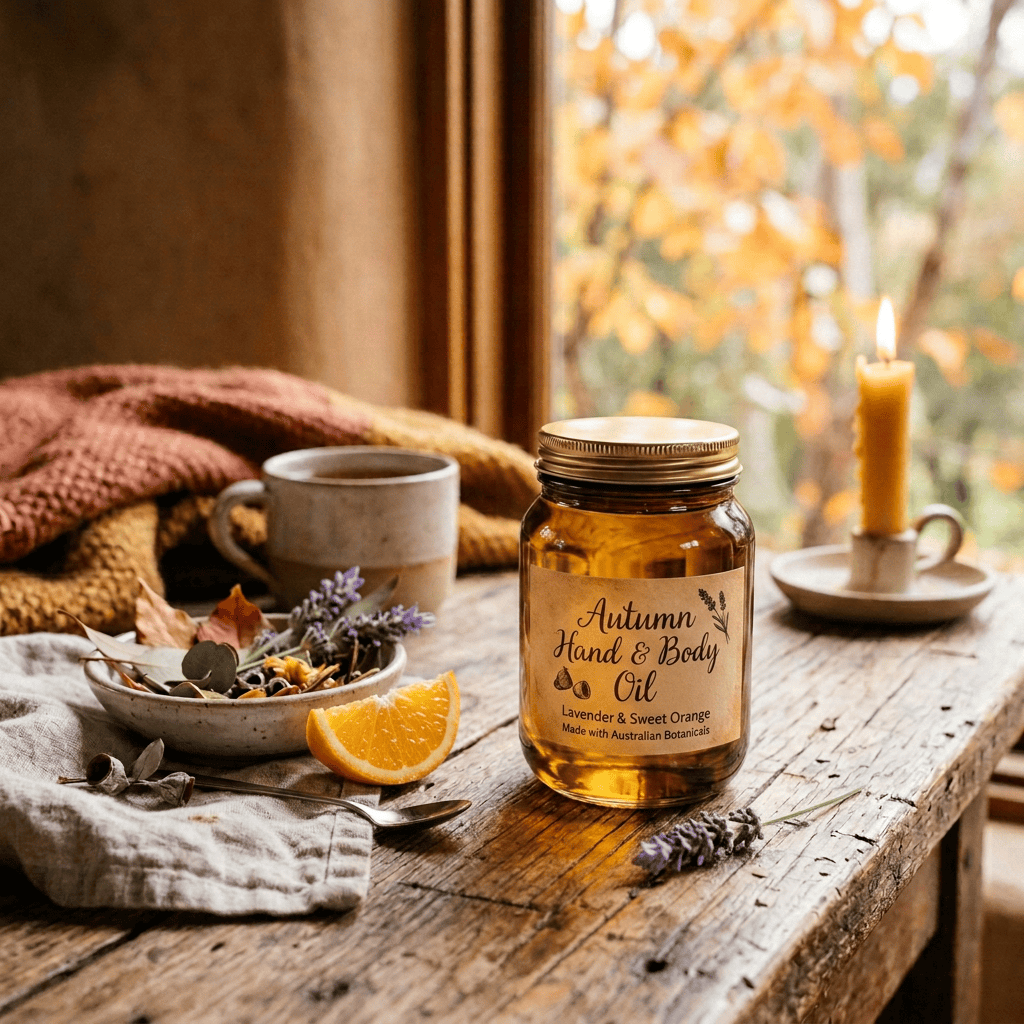
Autumn Hand & Body Oil
As the weather cools and the season becomes drier and quieter, Samhain is a good time to slow down and bring a little more care to the body.
This simple oil can be used on hands, arms, feet or any dry areas of skin after a shower or before bed.
YOU WILL NEED:
- 2 tablespoons jojoba, sweet almond or fractioned coconut oil
- 2 drops lavender essential oil
- 1 drop frankincense oil
- 1 drop sweet orange oil
Combine the oils in a small bottle or jar and shake gently. Massage a small amount into the skin slowly, taking a moment to notice the warmth of your hands and the feeling of being present in your body.
You might use it as part of an evening routine during the Samhain season – after a warm shower, while journaling, or before settling in for the night. If you prefer to keep it very simple, use the carrier oil on its own and skip the essential oils entirely.
Practical Magic for the Season
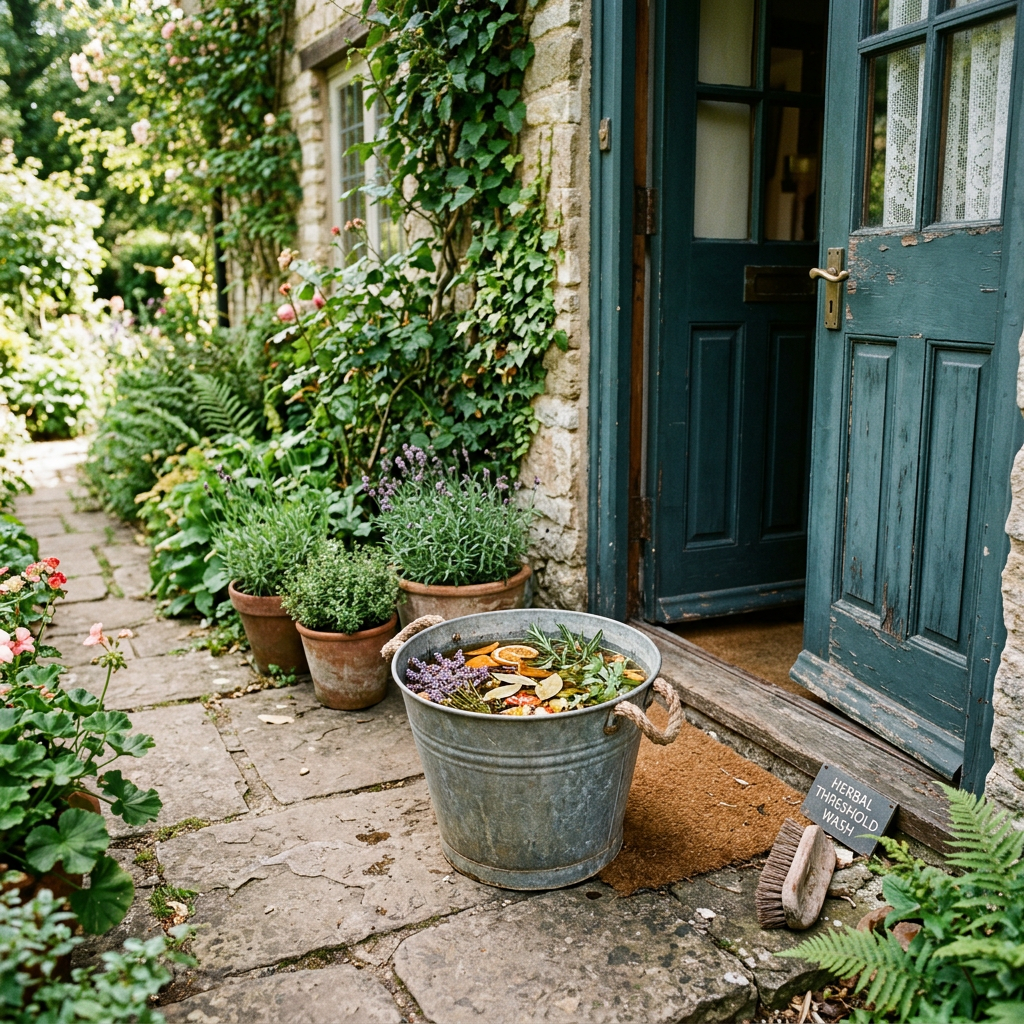
Samhain Threshold Wash
Samhain is a traditional time for clearing away what has grown stagnant and preparing the home for the darker half of the year. A simple threshold wash turns an ordinary bit of cleaning into a small seasonal ritual.
Us it around your front doorway, windowsills or other entrances to symbolically cleanse the home and create a sense of protection and welcome.
You’ll need:
- Warm water
- A small splash of white vinegar
- A sprig of rosemary
- A bay leaf
- A little lemon peel
- A few eucalyptus leaves OR 2-3 drops of eucalyptus essential oil
Steep the herbs and peel in hot water for around 10-15 minutes, then allow the water to cool slightly. Strain the mixture and add it to a bowl or bucket with warm water, a small splash of vinegar and eucalyptus oil (if using).
As you stir the mixture, you might quietly say:
What has passed may leave in peace. What enters here comes with good intent. May this home be protected, warm and well.
As you wipe down your front door, threshold or windowsills, imagine clearing away the accumulated energy of the season that has passed.
When finished, return the used herbs to the garden or compost. This can be repeated whenever the home feels in need of a fresh start, not only at Samhain.
One small practical note: because essential oil doesn’t properly dissolve in water, keep the amount low and give the mixture a quick stir before using it. And if you’re using it around pets, I’d keep it to doorframes/thresholds rather than anywhere they’re likely to lick or walk through while wet
Small Samhain Gift Idea
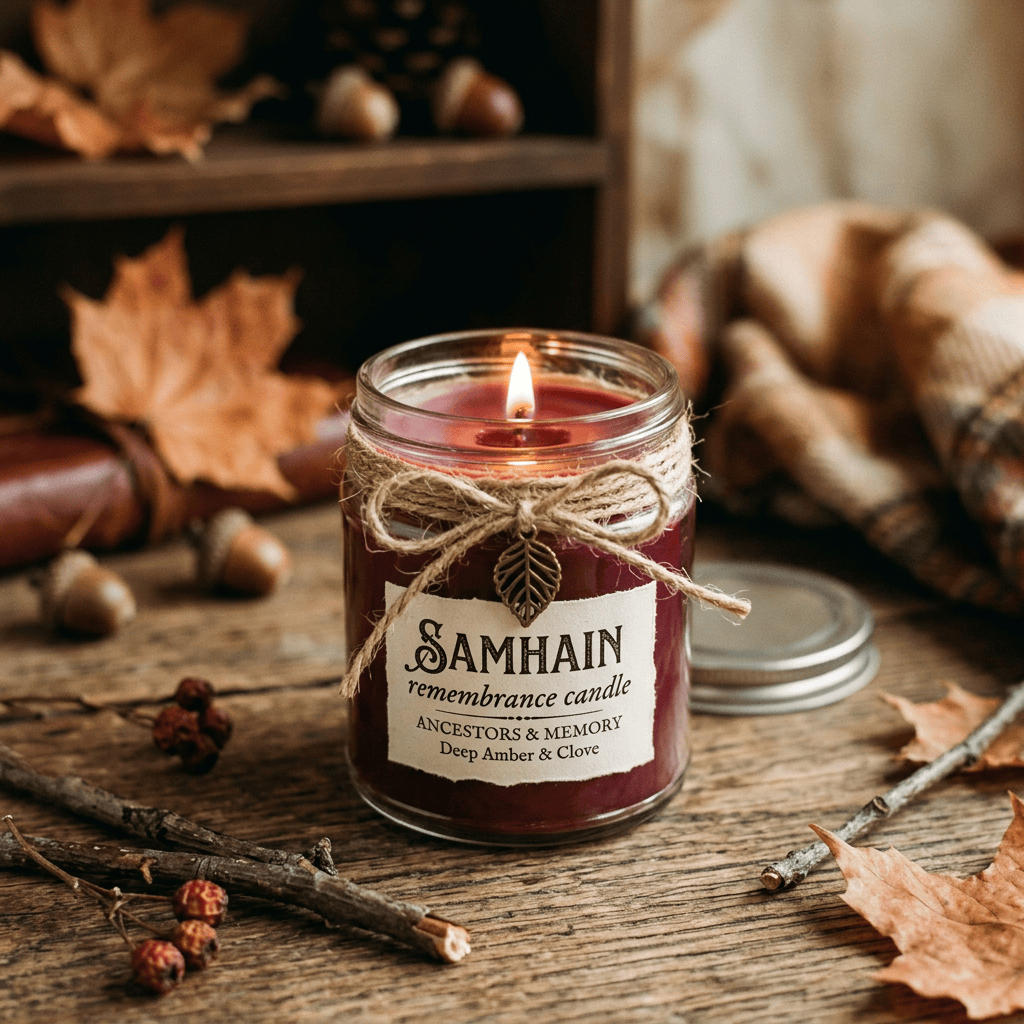
Samhain Remembrance Candle
A small handmade candle can make a beautiful Samhain gift, particularly for someone who enjoys marking the season or keeping a candle for remembrance.
Choose a small black, deep purple, burgundy or cream candle and place it in a simple glass jar or candle holder. Tie a piece of twine or ribbon around the jar and add a small handwritten tag.
The candle can be given with the intention that it is lit during Samhain in memory of loved ones, ancestors, pets or anyone the recipient would like to quietly remember.
On the tag, you could write:
Light this candle for those remembered,
for the stories that remain,
and for the love that continues.
For a more personal gift, add the person’s name to the label or include a small handwritten note sharing a favourite memory.
A Samhain Family Tradition
Remembering Our Dead
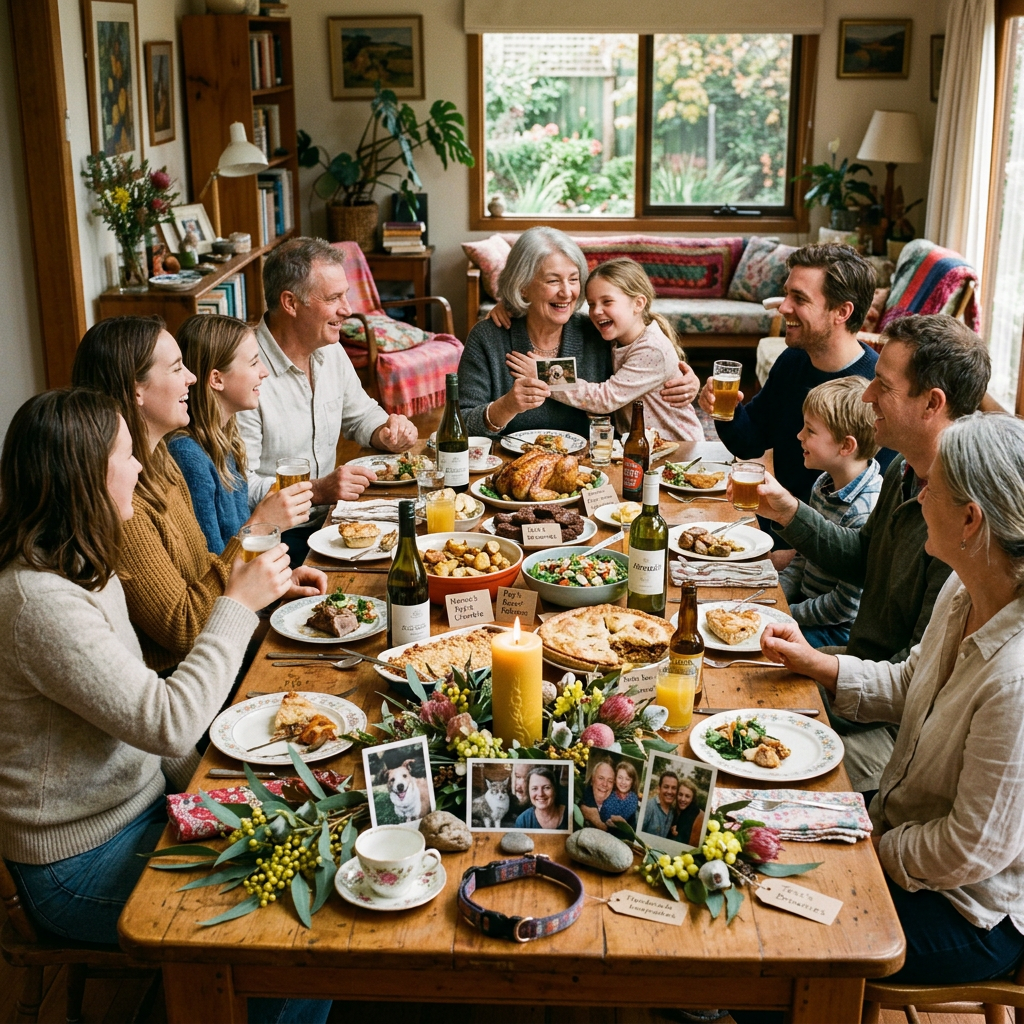
Gather together somewhere comfortable, perhaps around the dinner table or outdoors as dusk.
Place a candle in the centre, along with photographs, flowers, keepsakes or small objects that remind you of loved ones, pets or family members who are longer with you.
Take turns sharing a memory, story or something you are grateful to have learned from them. If younger children are involved, they might draw a picture, place or flower beside the candle or simply name someone they remember.
Finish by sharing a favourite family food, dessert or warm drink together.
The purpose is not to make the evening sad, but to keep memory woven into family life.
 The Wheel at Home