Ostara – The Spring Equinox
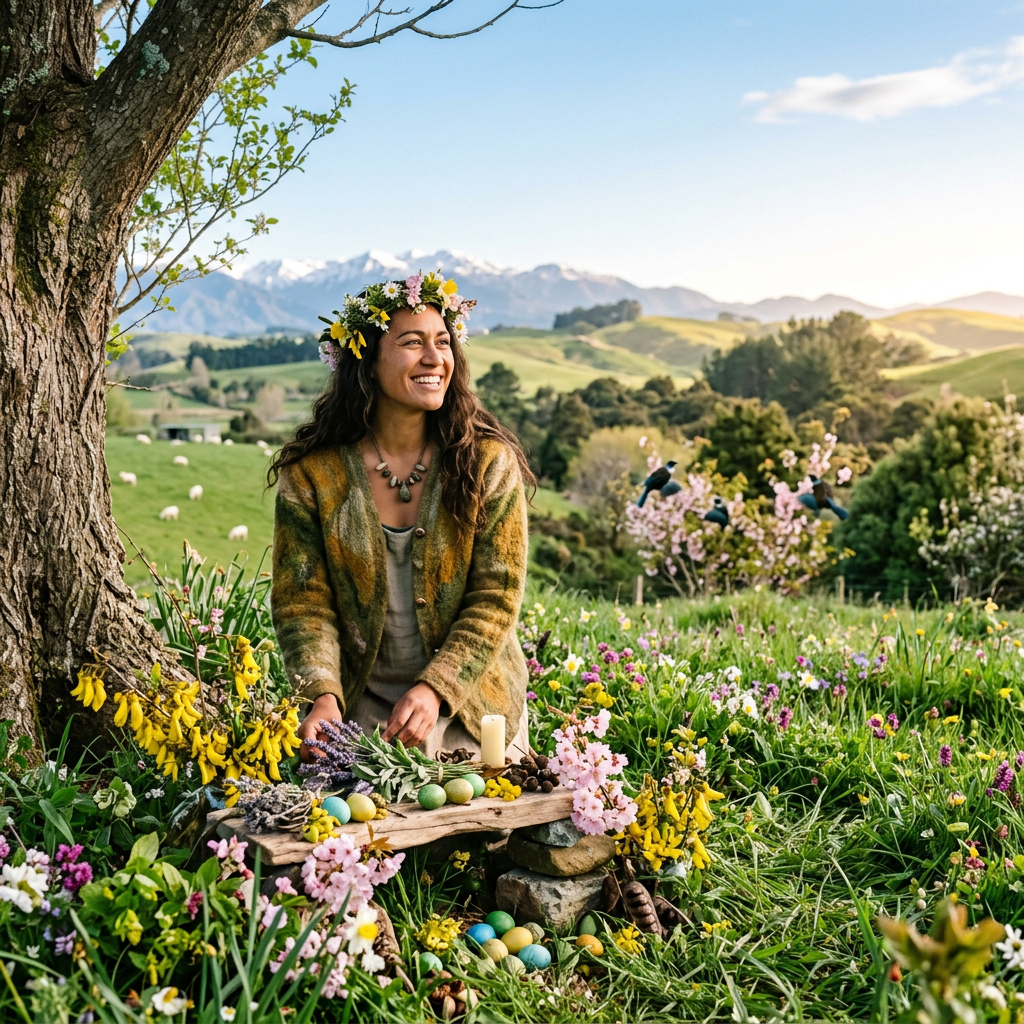
Ostara At a Glance
Pronounced: oh-STAR-ah
Date: Around 20-23 September in the Southern Hemisphere
Season: Spring
Wheel Position: Spring Equinox – between Imbolc and Beltane
Themes: Balance, renewal, growth, fertility, new beginnings, awakening, hope, creativity and planting seeds for what is to come
Ostara marks the Spring Equinox, one of the two points in the year when day and night are approximately equal. It is a moment of balance on the Wheel, but also a turning point, as we move from the darker half of the year into the lighter half.
By Ostara, the quiet beginnings of Imbolc have gathered momentum. The sense of something waking and preparing has shifted into something more active, and the energy of the season begins to feel increasingly outward-looking.
There is an optimism to Ostara. It celebrates growth that is underway, possibilities beginning to open and the return of greater light and activity after winter. It is a point on the Wheel that feels fresh and full of potential without yet carrying the fullness and intensity of the warmer seasons ahead.
The Equinox is a brief moment of balance within the season that is already moving forward. From here, the Wheel continues towards longer days, greater warmth and the abundance still to come.
Ostara in the Southern Hemisphere
In the Southern Hemisphere, Ostara falls around 22–23 September, at the Spring Equinox. By now the seasonal shift that began around Imbolc has become much more apparent. The days are longer, warmth is returning and spring is establishing itself across the landscape.
September can look very different depending on where you live in Australia. In the cooler southern regions, cold mornings and occasional frosts can linger even as the afternoons become warmer. Further north, spring can arrive with considerably more heat, while tropical areas follow their own seasonal rhythms that do not fit neatly into the familiar four-season pattern.
The Equinox itself gives us a common point in the year. Day and night are approximately equal in length, and from here daylight continues to increase as we move towards the Summer Solstice. It is a brief point of balance within a season that is already gathering momentum.
Around us, the changes can be much easier to see than they were at Imbolc. Gardens are putting on fresh growth, flowering becomes more abundant and deciduous trees in cooler areas begin filling out again. Birds may be nesting or feeding young, bees and other insects become more noticeable, and the warmer days draw people outside again. In some parts of the country, however, September can already feel surprisingly hot and dry, and the landscape may tell a very different spring story.
This is part of what makes an Australian Ostara so interesting. Spring here does not always resemble the soft green season portrayed in traditional European imagery. It can be lush and flowering, but it can also be dry, windy, dusty or unexpectedly hot. In some regions it brings spectacular wildflowers; in others, the first hints of the approaching storm season or an increasing awareness of bushfire weather.
Ostara can therefore be celebrated by paying attention to the spring that is actually unfolding around us. Flowers, seeds and eggs still work beautifully as symbols of growth and new life, but so can a flowering native in the garden, birds building a nest, the first really warm afternoon or simply noticing how much later the sun is setting.
There is also something particularly fitting about spending more time outdoors at Ostara. Gardens can be planted or tended, windows and doors opened to the warmer air, meals taken outside and seasonal flowers or greenery brought into the home. After the more inward months of winter, everyday life naturally begins to expand outwards again.
Celebrating Ostara in the Southern Hemisphere allows the Spring Equinox to become more than a date borrowed from another seasonal calendar. It becomes our own spring celebration, shaped by the climate, landscape and small changes taking place wherever we happen to call home.
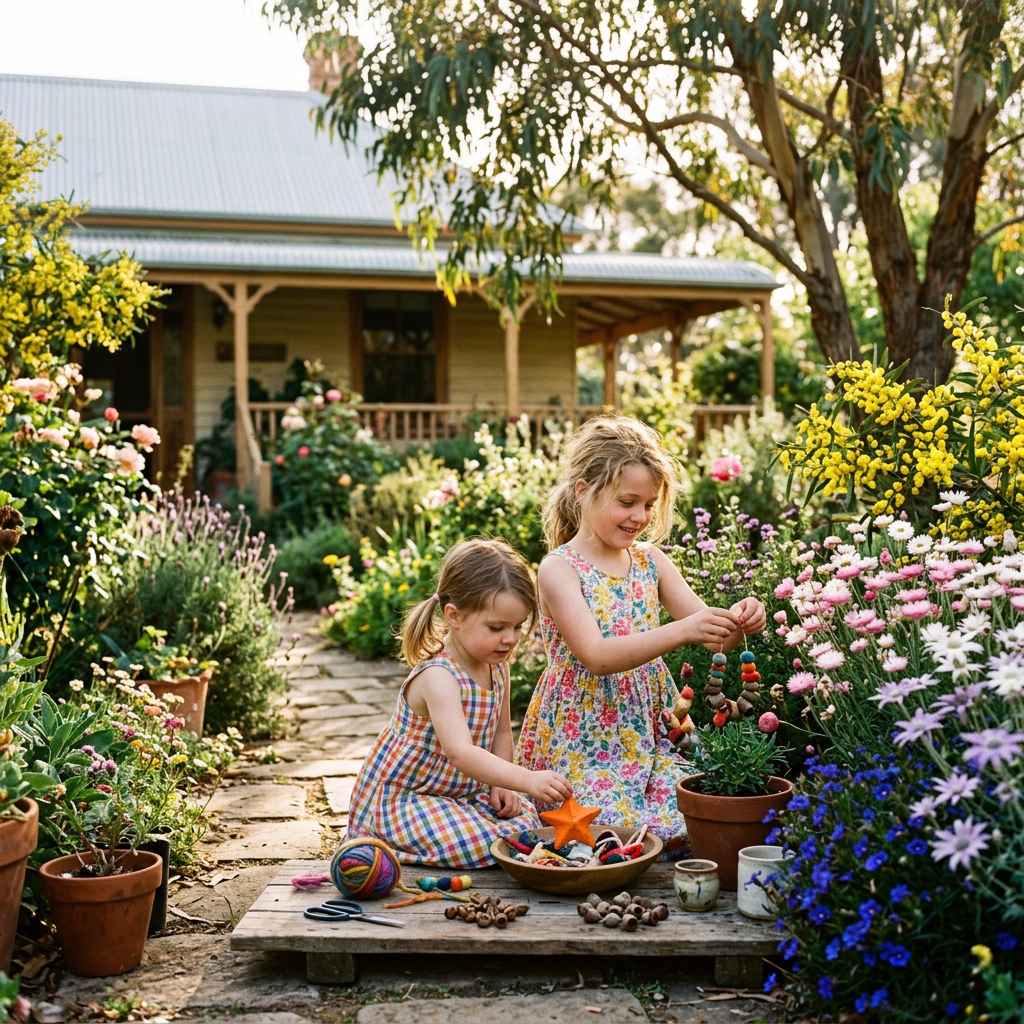
The Story of Ostara
Ostara is the modern Pagan celebration of the Spring Equinox, one of the two points in the year when day and night are approximately equal in length. Unlike Imbolc, Beltane, Lughnasadh and Samhain, it is not one of the four traditional Gaelic seasonal festivals. Its place on the modern Wheel of the Year comes instead from the astronomical Spring Equinox and traditions that were brought together as the eight-Sabbat Wheel developed during the twentieth century.
The Equinox itself, of course, is far older than the modern festival. People across many cultures have observed the movements of the sun and the changing seasons for thousands of years, and spring has naturally carried associations with returning warmth, growth, fertility and the renewal of the land. There was not, however, one ancient European festival called Ostara celebrated everywhere at the Spring Equinox.
The name Ostara has a particularly interesting and sometimes confusing history. It is generally connected with Ēostre, a goddess mentioned by the eighth-century English monk and scholar Bede. In The Reckoning of Time, Bede wrote that the Anglo-Saxon month corresponding roughly with April was called Ēosturmōnaþ and had once been named for a goddess called Ēostre, in whose honour feasts had been celebrated.
Bede’s brief reference is the only early written account that explicitly names Ēostre. No surviving stories, descriptions of her worship or details of those feasts are known, which leaves a great deal uncertain. She may indeed have been an Anglo-Saxon spring goddess, but many of the elaborate stories and correspondences now attributed to her come from much later interpretations rather than surviving ancient tradition.
More than a thousand years after Bede, the nineteenth-century folklorist Jacob Grimm considered the name and proposed a related Germanic goddess whom he called Ostara. Grimm believed that traditions surrounding Easter and spring may have preserved traces of an earlier Germanic deity associated with dawn and the returning light. His ideas became influential, but Ostara as described by Grimm was a reconstruction rather than a goddess documented directly in surviving ancient Germanic sources.
This is also where the relationship between Ostara and Easter becomes complicated. The English word Easter and German Ostern may be connected with the same linguistic tradition as Ēostre, but this does not mean that all Easter customs originated in the worship of an ancient goddess. Christianity developed its celebration of the resurrection of Jesus from the Jewish festival of Passover, and most languages still use names for Easter derived from Pascha, rather than from Ēostre.
Eggs and hares are another part of the story that has gathered layers over time. Both have obvious associations with spring, fertility and new life, and eggs have a long history within Christian Easter traditions. Hares and rabbits also became strongly associated with Easter in later European folklore. The popular modern story that an ancient goddess Ostara transformed a bird into a hare that continued to lay coloured eggs is often repeated, but there is no known ancient source for it.
The Spring Equinox itself was not universally celebrated as the beginning of spring either. Different cultures divided the year in different ways, and seasonal festivals did not always fall neatly on the solstices and equinoxes. The idea of a perfectly symmetrical ancient Wheel containing four Celtic festivals and four solar festivals is largely a feature of modern Paganism.
During the twentieth century, emerging forms of modern Witchcraft, Wicca and contemporary Paganism gradually shaped the eight-part Wheel of the Year we recognise today. The solstices and equinoxes were combined with the four Gaelic seasonal festivals to create a cycle of eight celebrations spaced throughout the year.
The Spring Equinox acquired several names within these developing traditions. Ostara became particularly popular, drawing on the earlier writings about Ēostre and Grimm’s reconstructed Ostara. Today, some Pagans use Ostara, while others simply call the festival the Spring Equinox.
Within the modern Wheel, Ostara has developed into a celebration of balance, growth, fertility, renewal and new life. Eggs, seeds, flowers and young animals have become familiar symbols, while planting, gardening, decorating eggs and spending time outdoors are common ways of marking the season. These practices draw from a mixture of spring symbolism, European folk customs, Easter traditions and modern Pagan practice rather than from one single ancient Ostara festival.
For those of us in the Southern Hemisphere, Ostara moves to around 22–23 September so that it remains aligned with the Spring Equinox. Easter remains in March or April because it is a Christian religious observance determined independently of our seasons. This means that some symbols many of us grew up associating with Easter — particularly eggs, rabbits, flowers and new life — actually make more seasonal sense here in September.
Ostara therefore has a slightly different history from festivals such as Imbolc or Samhain. There is less of an ancient festival to reconstruct and more of a modern celebration built around a very old astronomical event. Knowing that does not diminish it; it simply allows us to separate what is historically documented from the traditions that modern Paganism has created and adopted along the way.
At the centre of it all is the Spring Equinox itself: a real turning point in the year, observed beneath the many stories and traditions that humans have placed around it.
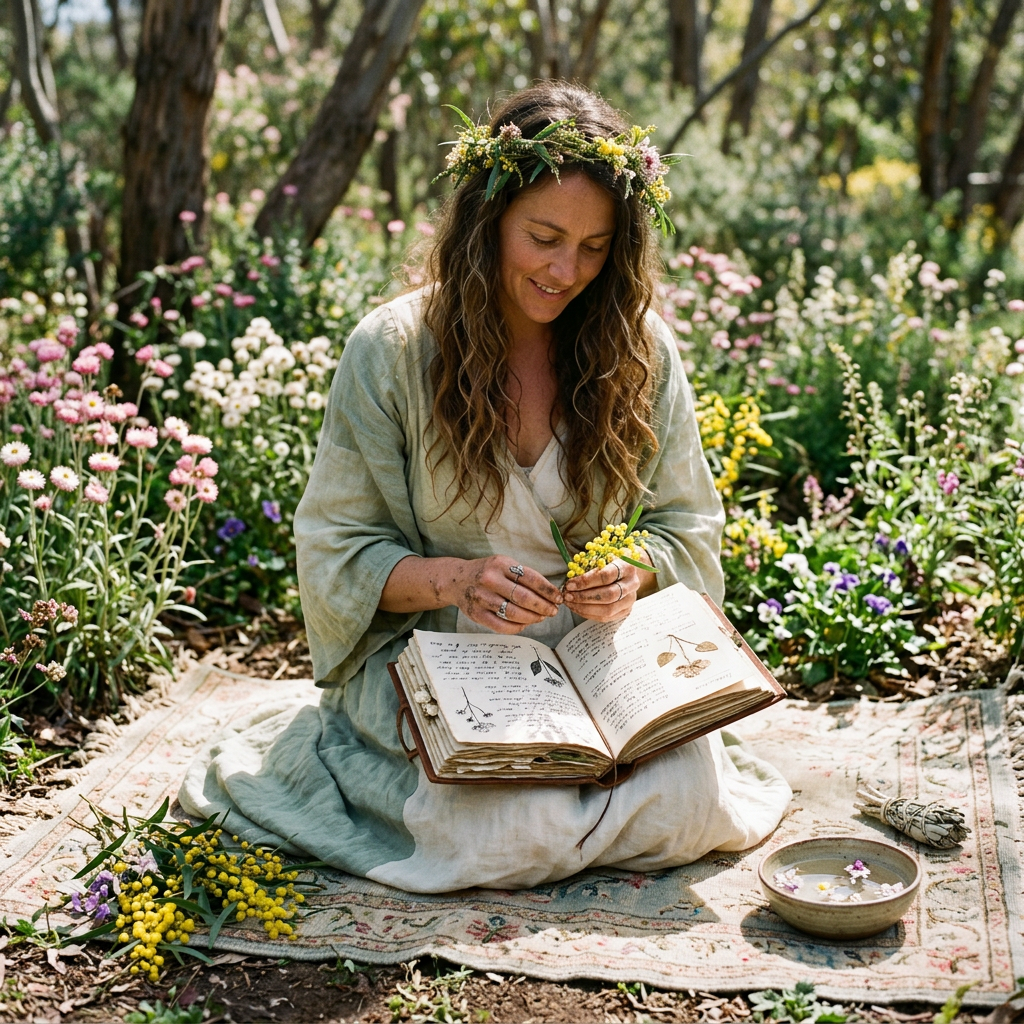
What We Notice Here
By Ostara, spring in Southeast Queensland has moved well beyond the first hints of change. The days have a different feel to them now. Mornings are brighter, afternoons are warmer and the extra daylight gives us more time to be outside before evening arrives.
The landscape is becoming much more colourful. Wattles may still be flowering, but they are joined by an increasing variety of native flowers, garden plants and flowering trees. Grevilleas, bottlebrushes and other nectar-rich plants bring plenty of activity with them, and gardens that were fairly quiet through winter can suddenly seem full again.
Birdlife is particularly busy at this time of year. Nest building, courtship, territorial calls and feeding young can make mornings wonderfully noisy. Magpies are nesting, lorikeets and honeyeaters gather around flowering trees, and there is often far more movement overhead and through the garden than there was only a few weeks earlier.
Insects have returned in greater numbers too. Bees move between flowers, butterflies begin appearing more regularly and all sorts of tiny creatures seem to re-emerge with the warmth. It is one of those seasonal changes that can happen almost without us noticing until suddenly the garden is buzzing again.
There is plenty happening in the garden itself. Spring planting is underway, herbs are growing quickly and vegetables can seem to take off almost overnight. New leaves are soft and bright, flowers open quickly in the warmer weather and regular watering starts becoming more important as the days heat up.
September in Southeast Queensland can also bring that very familiar combination of beautiful spring weather and the first suggestion of the heat ahead. Some days are clear, dry and almost impossibly blue; others already feel warm enough to make us wonder where spring went. The sun has more bite to it, the ground can dry quickly and the comfortable middle of the day begins shifting towards the mornings and late afternoons.
Around the home, spring starts spilling into everyday life. Doors stay open longer, washing is out and dry before we know it, outdoor areas begin getting used again and gardens call for attention. It is a good time for pots of herbs, fresh flowers on the table, lighter meals and evenings spent outside while the temperature is still comfortable.
There is an abundance to notice now that was not present at Imbolc. The tiny buds and tentative new growth of late winter have become leaves, flowers, nests, insects and activity. Spring is no longer something we are waiting for.
And perhaps that is the loveliest way to recognise Ostara here. Look at what has changed since Imbolc. Notice what has grown, what has returned, what is flowering and what has become louder, brighter or busier. The Wheel has moved, and this time we can see it everywhere.
This is our Ostara: bright spring mornings, noisy gardens, nesting birds, bees among the flowers, rapidly growing plants, warm afternoons and evenings that seem to stretch just a little further.
Themes of Ostara
Ostara carries themes of balance, growth, possibility, vitality, creativity and connection. Spring is no longer hovering at the edges as it was at Imbolc. The season has gained momentum, and Ostara reflects that shift from preparing for growth to actively participating in it.
Balance
Balance sits at the heart of Ostara because of the Spring Equinox, when day and night are approximately equal. But balance here is not about keeping everything perfectly even. The Equinox is a passing point, and almost immediately the balance shifts again as daylight continues to increase.
In our own lives, this can be a useful time to notice where our energy is going. Work, rest, relationships, home, creativity and time for ourselves rarely sit in perfect proportion. Ostara offers a natural point to look at what has been taking too much and what might need a little more attention.
Growth
At Imbolc, growth was tentative — something beginning beneath the surface or appearing in small signs. Ostara brings a much more active kind of growth. Plants are putting on leaves, gardens are becoming busier and spring has moved into a more confident stage.
Personal growth can work in much the same way. Ideas that were considered or prepared earlier can now be given more attention. This is a season for nurturing what has already begun rather than constantly searching for something new to start.
Possibility
Spring has an openness about it. There is still plenty of the seasonal year ahead, and things have not yet reached the fullness of summer. Ostara sits in that space where many directions are still possible.
Possibility does not have to mean making enormous changes. It might be trying something unfamiliar, returning to an old interest, changing a routine, making plans, meeting new people or simply becoming curious about what else might fit into our lives.
Vitality
The increasing warmth and daylight bring a noticeable change in the pace of the season. We spend more time outdoors, gardens demand more attention and the natural world becomes louder and more active.
Vitality at Ostara is about engaging with that movement. Walking, gardening, cooking with fresh seasonal ingredients, working on the home or simply getting outside can all be ways of joining in with the more energetic rhythm of spring.
Creativity
Where Imbolc carries the first spark of inspiration, Ostara gives that spark somewhere to go. Creativity becomes less about imagining and more about making, experimenting and seeing what develops.
This might mean working with flowers, decorating eggs, gardening, painting, sewing, cooking, writing or making something simply because the process is enjoyable. Spring itself is wonderfully creative — full of colour, shape, scent and change — and there is plenty around us to draw from.
Fertility and Abundance
Fertility is one of Ostara’s best-known themes, although it does not need to be understood only in the literal sense. Seeds germinate, plants flower, animals reproduce and the landscape becomes increasingly productive.
In everyday life, fertility can describe anything capable of producing or creating something more — an idea becoming a project, a friendship deepening, a garden producing food, a skill improving through practice or an opportunity beginning to develop. It is the fertile ground from which something can grow.
Connection
As life moves outdoors again, Ostara naturally lends itself to connection. We reconnect with gardens and outdoor spaces, spend longer outside, notice neighbours and wildlife, share meals and begin making plans for the warmer months.
Connection with the season can be equally simple. Knowing what is flowering nearby, growing something ourselves, eating foods that are abundant locally or noticing the changing length of the day brings the Wheel out of the abstract and into ordinary life.
Forward Movement
There is a sense of momentum at Ostara. The Equinox is not a destination but a point the year moves through on its way towards the longer, warmer days ahead.
This can be a good season for taking the next step with something that has been waiting. Not rushing towards an outcome or trying to transform everything at once, but giving our attention to what already has some life in it and allowing it to move forward.
Together, these themes give Ostara a very different character from the quieter beginnings of Imbolc. This is spring in motion — growing, creating, connecting and making use of the energy that is now gathering around us.
A Seasonal Invitation
Ostara invites us to step fully into spring.
The tentative beginnings of Imbolc have gathered momentum. There is more light, more warmth and more happening around us, and this part of the Wheel carries an energy that feels brighter, busier and ready to move.
This is a lovely time to spend more of the day outside. Have breakfast in the garden, take your coffee onto the verandah, go for a walk somewhere green or simply sit in the afternoon sun for a while. Plant herbs, flowers or vegetables, pot something new for the doorstep, pick a few flowers for the table or give some attention to the outdoor spaces that are becoming part of everyday life again.
Bring some of that spring energy inside too. Change the heavier winter bedding, put fresh flowers beside the bed, move a chair closer to an open window or add a little more colour to the house. Cook with fresh herbs and seasonal produce. Eat outside when the weather is beautiful. Let home begin to feel like spring has arrived there as well.
Ostara is also a good time to give some attention to the things you began thinking about earlier in the season. An idea that appeared at Imbolc might now be ready for action. Start the project. Make the booking. Plant the seeds. Try the class. Send the message. Give something a genuine chance to grow rather than keeping it safely in the planning stage.
The balance of the Equinox can also be brought into ordinary life without turning it into another exercise in self-improvement. Notice what has been getting most of your time lately. Notice what you have been missing. Make room for something enjoyable simply because you want more of it — time outside, creativity, friends, movement, cooking, gardening, reading or an afternoon with absolutely nowhere you need to be.
Spring is wonderfully good at being imperfect. Gardens grow in unexpected directions, weather changes its mind, flowers appear where nobody planted them and not every seed comes up. There is freedom in allowing our own plans to have some of that looseness too. We can begin, experiment, change direction and see what happens.
So for Ostara, the question might be:
What am I ready to give more life to?
Choose something that already has a little energy behind it. Give it your attention. Spend time outside. Make something. Grow something. Enjoy the warmth. Let yourself become a little more involved with the world again.
There is plenty of spring still ahead. This is the time to get amongst it.
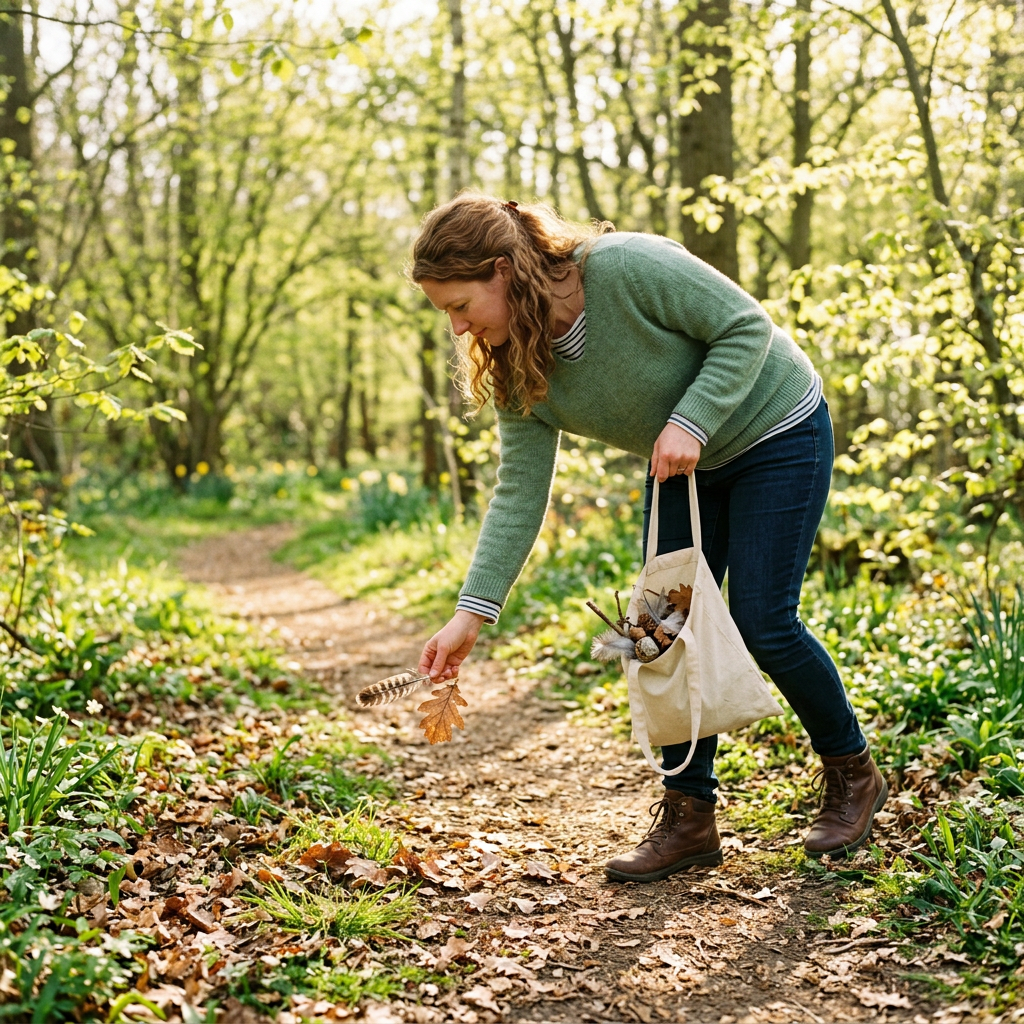
Spring Equinox Correspondences
These correspondences bring together associations commonly used for Ostara and the Spring Equinox, along with Australian alternatives that reflect our own spring landscape and season.
Colours & Candles
Green — growth, renewal, fertility and abundance
Yellow — sunlight, optimism, happiness and vitality
Pink — affection, gentleness, new life and blossoming
Lavender — balance, calm, intuition and spring flowers
White — clarity, freshness and new beginnings
Gold — sunlight, confidence, vitality and abundance
Light Blue — clear skies, communication and the element of air
For candles, green, yellow, pink and white are particularly suited to Ostara. Green can represent growth and abundance, yellow the strengthening sun, pink the blossoming season and white a fresh beginning.
Crystals & Stones
Green Aventurine — growth, opportunity, optimism and abundance
Moss Agate — nature, grounding, growth and connection with the earth
Rose Quartz — love, compassion, gentleness and harmony
Clear Quartz — clarity, intention and amplification
Citrine — optimism, creativity, confidence and vitality
Moonstone — cycles, intuition, fertility and new beginnings
Aquamarine — clarity, balance, calm and communication
Amazonite — harmony, balance, expression and fresh perspective
Traditional Herbs, Plants, Flowers & Trees
Daffodil — renewal, hope and the arrival of spring
Crocus — awakening, joy and new beginnings
Primrose — youth, hope and new life
Tulip — love, abundance and springtime
Violet — love, protection and gentleness
Clover — luck, abundance and growth
Hawthorn — fertility, protection and the changing season
Willow — intuition, flexibility and renewal
Birch — new beginnings, purification and fresh growth
Rosemary — clarity, protection and remembrance
Lavender — peace, balance and purification
Not all of these plants have an ancient connection with a festival called Ostara. Many have become part of modern Ostara practice because of their associations with spring, flowering, growth and renewal.
Australian Herbs, Plants, Flowers & Trees
Wattle — optimism, resilience, abundance and solar energy
Grevillea — vitality, connection and abundance
Bottlebrush — vitality, adaptability and renewal
Banksia — resilience, regeneration and strength
Eucalyptus — cleansing, protection and renewal
Tea Tree — cleansing, restoration and protection
Native Violet — gentleness, growth and connection with the earth
Flannel Flower — gentleness, resilience and balance
Waratah — vitality, strength and renewal
What is flowering at Ostara will vary enormously across Australia. Flowers and foliage from your own garden or locally growing plants can be just as meaningful as anything traditionally associated with a European spring.
Animals
Hares — fertility, vitality, instinct and spring
Rabbits — fertility, abundance and new life
Birds — freedom, communication, nesting and new beginnings
Bees — pollination, community, productivity and abundance
Butterflies — transformation, change and emergence
Ladybirds — good fortune, gardens and natural balance
Hares and rabbits have become particularly recognisable symbols of modern Ostara, although claims linking the Easter hare directly to an ancient goddess Ostara are not supported by surviving historical evidence. Australian birds, bees, butterflies and other creatures active around us in spring can provide a much more immediate seasonal connection.
Essential Oils
Lavender — balance, calm and relaxation
Lemon — freshness, clarity and cleansing
Sweet Orange — optimism, joy and vitality
Geranium — balance, harmony and renewal
Rosemary — clarity, energy and cleansing
Bergamot — brightness, optimism and emotional balance
Frankincense — grounding, reflection and spiritual practice
Peppermint — freshness, energy and clarity
Essential oils should always be used appropriately and diluted when required. Some oils are unsuitable for certain people, pets or methods of use, so check the safety information for the individual oil.
Food & Drinks
Eggs — new life, fertility and potential
Seeds — beginnings, growth and future abundance
Leafy Greens — growth, vitality and nourishment
Fresh Herbs — renewal, freshness and seasonal growth
Honey — sweetness, abundance and pollination
Spring Vegetables — growth, nourishment and seasonal abundance
Edible Flowers — beauty, blossoming and celebration
Fresh Fruit — abundance, vitality and sweetness
Bread — nourishment, home and sharing
Herbal Teas — freshness, flowers and herbs
Symbols
Eggs — fertility, potential and new life
Seeds — beginnings, growth and possibility
Flowers — blossoming, beauty and renewal
Hares and Rabbits — fertility, abundance and spring
Nests — home, creation, protection and new life
Baskets — gathering, abundance and carrying what we nurture
Sunrise — awakening, light and new beginnings
The Sun — vitality, warmth and increasing daylight
Equal-Armed Cross — balance, the four directions and the meeting of seasonal forces
Spring Greenery — growth, vitality and the flourishing season
Tarot
Justice — balance, equilibrium and thoughtful choices
Temperance — harmony, balance and integration
The Empress — fertility, creativity, growth and abundance
The Sun — vitality, optimism, warmth and confidence
The Fool — possibility, beginnings and stepping into something new
Ace of Pentacles — opportunity, growth and planting foundations
Three of Wands — expansion, progress and looking ahead
Moon Phases
Ostara is not tied to a particular moon phase, but the moon occurring at the time can add another layer to personal ritual or reflection.
New Moon — beginnings, intentions and potential
Waxing Moon — growth, momentum and building energy
Full Moon — abundance, illumination and awareness
Waning Moon — release, adjustment and making space
Dark Moon — rest, reflection and preparation
Deities of Ostara
Because the modern Ostara celebration combines the Spring Equinox with traditions gathered from several different sources, it is worth being particularly careful about claims that certain deities were historically worshipped at an ancient festival called Ostara.
Ēostre
Ēostre is the Anglo-Saxon goddess mentioned by the eighth-century scholar Bede, who wrote that a month corresponding roughly with April had once been named for her and that feasts had been celebrated in her honour. Very little else is known about her from early sources. Her association with spring is reasonable given the timing of the month, but many of the detailed stories and symbols attributed to her today developed much later.
Ostara
Ostara is the name used by Jacob Grimm in the nineteenth century for a Germanic goddess he proposed was related to the Anglo-Saxon Ēostre. She is an important influence on the name of the modern Pagan festival, but Grimm’s Ostara was a scholarly reconstruction rather than a deity directly documented under that name in surviving ancient sources.
Persephone
In Greek mythology, Persephone’s return from the Underworld is connected with the return of growth to the earth through the story of Demeter and Persephone. She was not historically associated with Ostara, but her story has become a natural springtime correspondence for some modern Pagans.
Flora
Flora is the Roman goddess of flowers, blossoming and fertility. Her own festival, Floralia, was celebrated later in the northern spring rather than at the Equinox. Her connection with Ostara is therefore a modern seasonal association rather than a historical one.
Eos
Eos is the Greek goddess and personification of the dawn. She has no historical connection with Ostara, but her associations with dawn, increasing light and the beginning of a new day can complement the symbolism of the Spring Equinox.
Ostara arrives when spring is well underway and the world around us feels increasingly active. It is a celebration of balance, growth and possibility, making it a lovely time to get outside, enjoy the warmer weather and take part in the season rather than simply observing it.
Plant Something for the Season
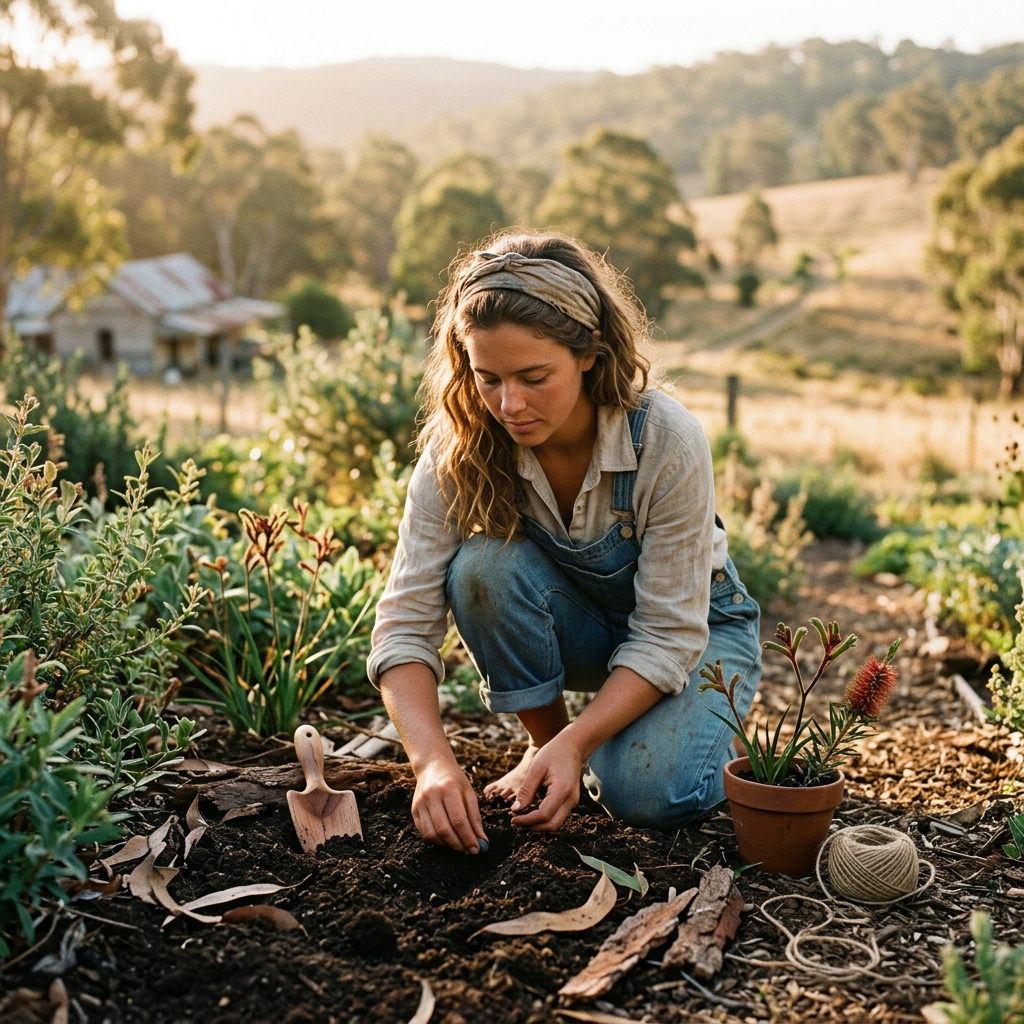
Plant herbs, vegetables, flowers or a small native plant in the garden or a pot. Choose something suited to your local climate and give it a place where you can watch it grow over the coming months.
Have Breakfast Outside
Take breakfast or morning tea into the garden, onto the verandah or to a local park. Enjoy the morning light, listen to the birds and make an ordinary meal feel a little more connected to the Equinox.
Decorate Eggs
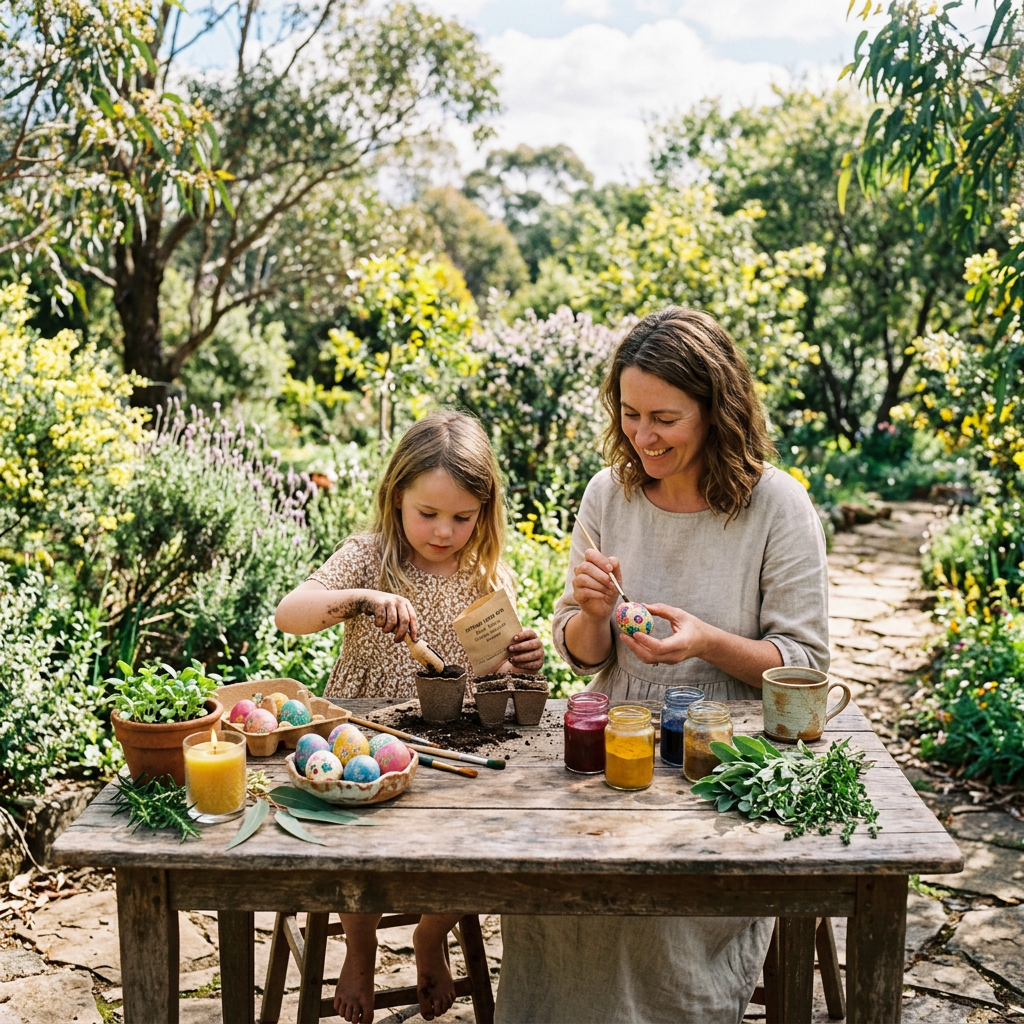
Decorated eggs have become one of the most recognisable symbols of modern Ostara. Paint or draw on blown eggs, wooden eggs or papier-mâché eggs and display them in a bowl, basket or amongst flowers and greenery.
Natural dyes can be fun to experiment with too. Beetroot, turmeric, red cabbage and onion skins can create surprisingly beautiful colours.
Visit a Garden or Nursery
Spend an afternoon wandering through a botanical garden, local nursery, flower farm or garden centre. See what is flowering, choose something new to grow or simply enjoy being surrounded by the colour and activity of spring.
Create a Spring Table
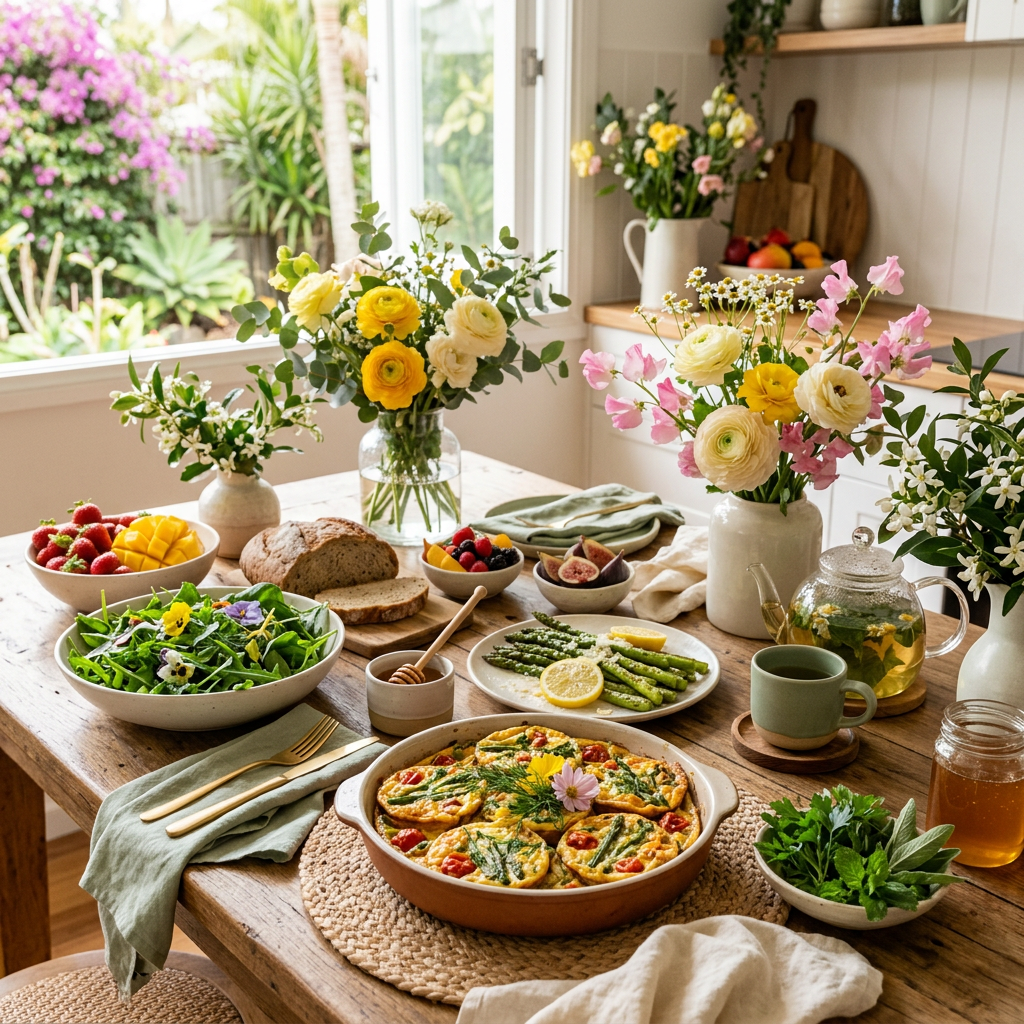
Bring the season to the table with fresh flowers, greenery, colourful napkins and seasonal food. Add a few decorated eggs or candles in soft spring colours and share lunch or dinner with family or friends.
Watch the Sunrise or Sunset
The Equinox is a solar event, so mark it by spending a little time with the sun. Get up early to watch the sunrise, or take a drink outside in the late afternoon and watch the light change as the sun goes down.
Spend a Day in the Garden
Give the garden some proper attention. Plant, mulch, weed, repot, fertilise or tackle one of the jobs that has been waiting. If you do not have a garden, work with indoor plants, start a windowsill herb pot or visit a community garden.
Make Something with Flowers
Pick flowers from the garden or buy a small bunch and use them for something other than simply putting them in a vase. Press them, make a little wreath, create a flower crown, decorate a seasonal table or dry suitable flowers to use later.
Eat with the Season
Make a fresh spring meal using produce that is abundant where you live. Fresh herbs, leafy greens, vegetables, eggs, honey and colourful fruit can all work beautifully. Take the meal outside if the weather is good and enjoy the longer evening.
Do Something You Have Been Waiting to Do
Ostara has more movement than Imbolc, so take one of those plans that has been sitting in the I’ll get around to it pile and actually do it. Book the day trip, start the class, begin the garden project, organise lunch with someone or pull out the supplies for something you have wanted to make.
Take a Spring Walk
Go somewhere you know well and see how different it looks now. A local bushwalk, beach, neighbourhood, park or garden can change enormously between late winter and the Equinox. Take your time and see what catches your attention.
Celebrate the Equinox
On the day of the Equinox, make a little occasion of it. Light a candle, put flowers on the table, cook something you love, spend some time outside or gather a few people for a spring meal.
Ostara is a particularly easy Sabbat to bring into everyday life because so much of it can happen outdoors. Plant something, eat outside, fill the house with flowers, go somewhere beautiful or simply enjoy having more daylight to play with.
Bringing the Season Home
Ostara is a lovely time to let spring properly into the home. By now the quieter transition of Imbolc has passed, so the focus can shift from simply freshening things up to enjoying colour, flowers, greenery and the brighter, more energetic feeling of the season.
Seasonal Displays
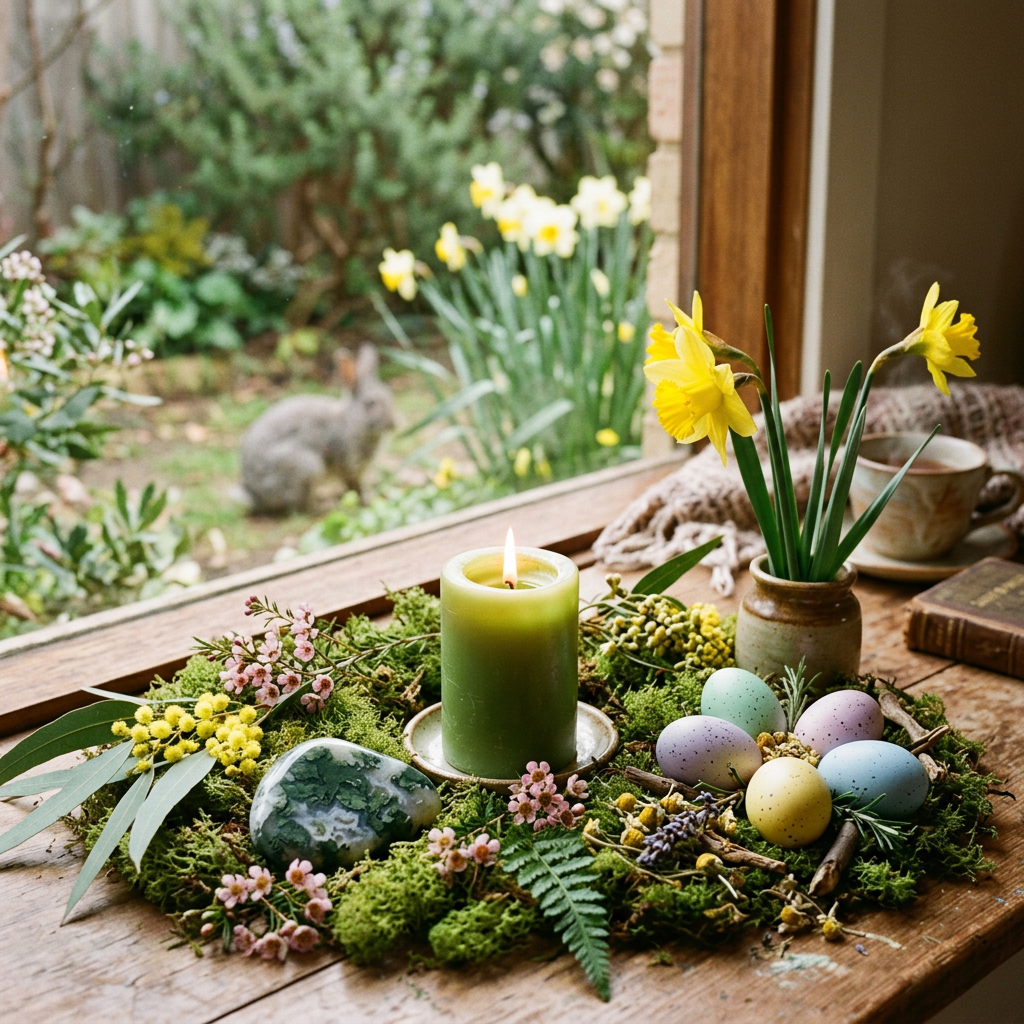
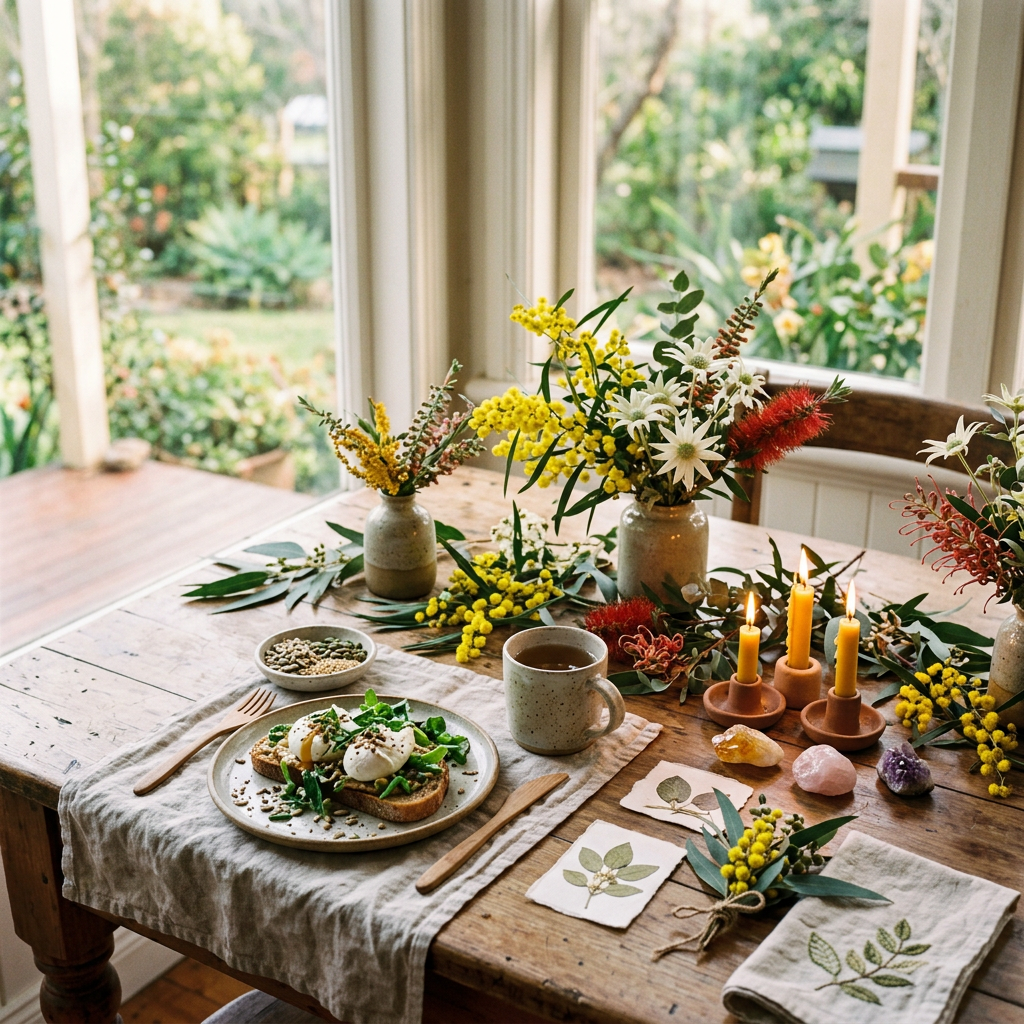
Create an Ostara display on a table, shelf or sideboard using flowers, greenery and a few symbols of spring. A green, yellow or soft-pink candle, a small bowl of decorated eggs, fresh flowers, crystals or a pot of growing herbs can bring the season together beautifully.
Bring in whatever is flowering around you. A few stems from the garden, flowering native branches or a colourful bunch from the markets can become the centre of the display. Spring gives us much more to work with than the sparse beauty of winter, so this is a lovely season to enjoy colour.
Seeds, eggs, nests, feathers, flowers and small pots of living plants all suit Ostara. Natural objects collected on walks can be added too, particularly anything that catches your attention because it represents the season where you live.
You could also include something handmade. Paint or naturally dye a few eggs, press spring flowers, make a small wreath from garden greenery or decorate a little pot and plant something in it. Ostara lends itself beautifully to things that are growing, changing or made by hand.
Creating a Seasonal Atmosphere
Bring more colour into the home now that spring is well underway. Fresh greens, sunny yellows, soft pinks, lavender, white and floral patterns can replace some of the heavier colours and textures of winter.
Make the most of the longer, warmer days. Open doors and windows, pull back curtains and let fresh air move through the house. Outdoor spaces can become part of the home again too — tidy the verandah, bring the cushions back outside, set up somewhere comfortable to sit or create a little spot for morning coffee.
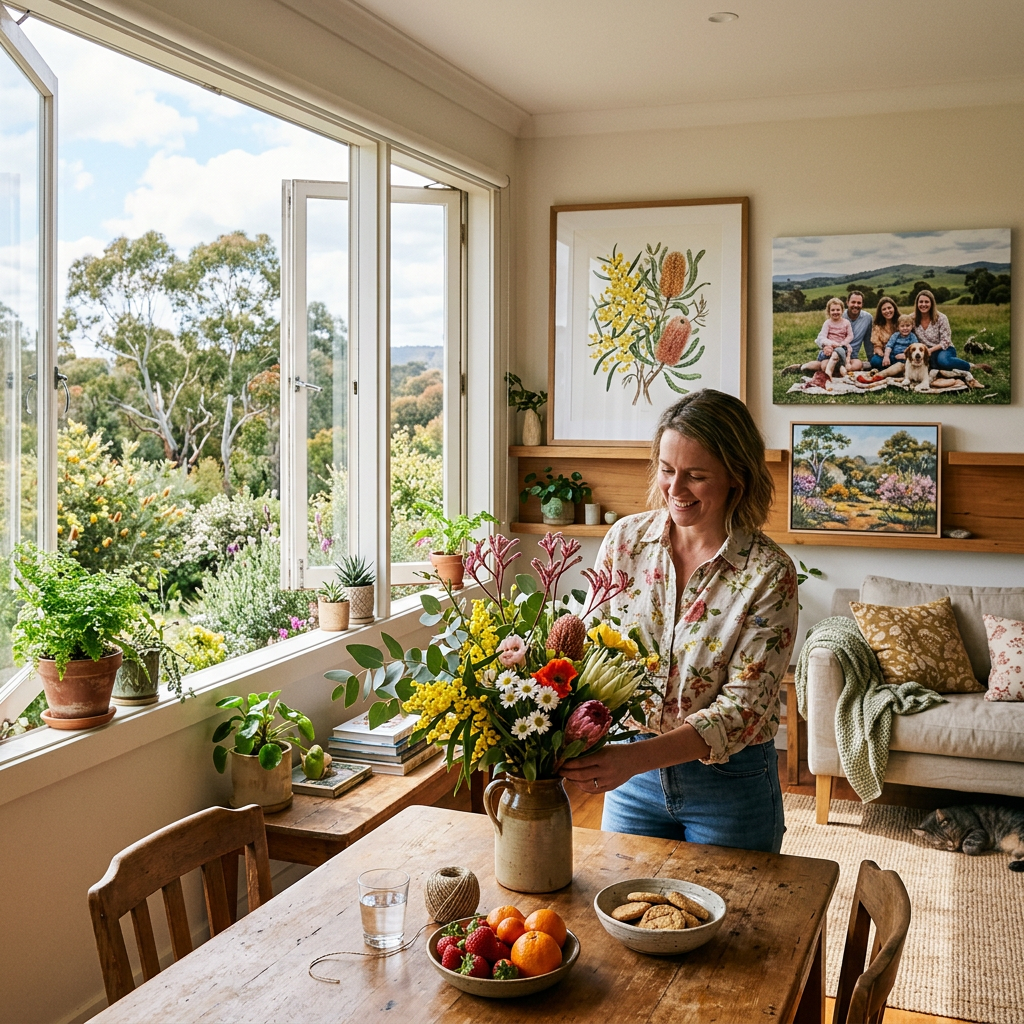
Flowers and living plants are particularly suited to Ostara. Put herbs on a sunny windowsill, bring a flowering pot indoors for a while or fill a jug with whatever is blooming in the garden. A bowl of lemons or other colourful seasonal produce can be just as effective as a decorative arrangement.
Fresh, green and floral scents work beautifully at this time of year. Lemon, bergamot, lavender, geranium, rosemary and mint can be introduced through fresh plants, flowers, candles, simmer pots or other home fragrance.
Lighter fabrics can come back into use as the weather warms. Change heavier throws and bedding, bring out lighter tablecloths and cushions, and add a little colour where the house has felt darker through winter.
Spring Seasonal Activities
Spring is a good season for doing things with your hands, getting outside again and beginning projects that have been sitting quietly through winter. Some activities can be symbolic or ritual-based, while others can simply be enjoyable things that fit the time of year.
Make
- Decorate eggs using paint, natural dyes, pressed flowers or botanical designs
- Make homemade seed paper or intention paper with dried herbs and flowers
- Create pressed-flower bookmarks, cards or framed pieces
- Make a small spring wreath using greenery, flowers and ribbon
- Start a herb pot or windowsill garden
- Make flower crowns or simple floral headpieces
- Create botanical candles or decorate candle jars with spring imagery
- Make a seasonal simmer pot or dried botanical blend
- Paint small garden markers for herbs, vegetables or flowers
- Create a Spring Equinox journal page, collage or vision board
Do
- Plant seeds, seedlings, herbs or flowers
- Visit a nursery, botanical garden or local garden show
- Take a spring walk and photograph what is flowering
- Spend an afternoon gardening or tidying an outdoor space
- Have breakfast or morning tea outside
- Watch the sunrise or sunset around the Equinox
- Refresh one area of the home for spring
- Start something you have been putting off over winter
- Pick flowers from your own garden for the house (yes, dandelions count!)
- Notice which birds, insects and plants are becoming active around you
Share
- Have a relaxed spring lunch or afternoon tea
- Give someone a small bunch of flowers or herbs from the garden
- Swap seedlings, seeds or plant cuttings
- Bake something light and seasonal to share
- Plant something together as a family
- Decorate eggs with children or grandchildren
- Visit a garden, park or nursery with someone
- Share a picnic outdoors
- Make a small spring gift basket with flowers, tea, seeds or homemade treats
- Invite family or friends to contribute something to a shared seasonal table
Rituals & Seasonal Magic
The Spring Equinox is a good time for magic centred around balance, renewal, growth and beginnings. It can be used to set intentions, clear away stagnant energy, welcome in fresh momentum or simply acknowledge the shift into a brighter part of the year.
A Simple Candle Ritual
Choose a candle in a colour that suits what you want to bring into the season – green for growth, yellow for optimism, white for clarity or pink for love and gentle renewal.
Place the candle somewhere quiet, along with a flower, leaf, crystal or other small seasonal item if you like.
Light the candle and take a moment to think about where things currently feel balanced in your life, and where they do not.
Then choose one thing you would like to encourage over the coming season. Rather than focusing only on the end result, think about what you can actually do to help it grow.
Say quietly:
As the light grows, so may this grow with me.
With patience, care and steady intention,
I welcome what is ready to begin.

Sit with the candle for a few minutes, then extinguish it when you are ready.
Family or Group Ritual – Planting Together
Give each person a seed, seedling or small plant and something to write on.
Ask everyone to choose one thing they would like to nurture over the coming season. It might be more family time, confidence, creativity, patience, fun, health, learning or anything else that feels meaningful.
Write the intention down and place it beneath the pot, beside the plant or somewhere nearby.
Plant everything together, then give each plant some water.
Each person can share their intention if they want to, but there is no need for everyone to explain themselves.
Over the following weeks, caring for the plant becomes a small reminder to also give some attention to whatever was chosen.
A Simple Spring Equinox Spell – Open the Way
This spell is for creating movement around something that has felt stuck or slow.
You’ll need:
- A small piece of paper
- A pen
- A seed
- A little soil
- A small pot or garden space
On the paper, write one thing you are ready to move towards.
Underneath it, write one action you can take to help make that happen.
Fold the paper towards you and place it beneath the soil.
Plant the seed above it and water it.
As you do, say:
What has waited may now begin.
What has been still may start to move.
I plant the seed and do my part.
May the way ahead begin to open.
Keep caring for the seed as it grows. Let it be both a magical working and a practical reminder that intentions usually need a bit of participation from us as well.
Reflection
The Spring Equinox sits at a natural point of balance, making it a useful time to look at what is beginning to shift in our own lives. Spring can bring fresh energy, but it can also highlight the areas that have become cluttered, neglected or simply ready for something different.
Journal Prompts
- What feels as though it is beginning to wake up in me again?
- Where in my life do I feel balanced at the moment, and where do I feel pulled too far in one direction?
- What would I genuinely like to give more time and energy to over the coming season?
- What have I outgrown or lost interest in that I no longer need to keep carrying forward?
- If I chose one small thing to nurture between now and summer, what would I like it to be?
Five-Card Spring Equinox Spread
- What is beginning to emerge? Something that is becoming clearer, stronger or more present in your life.
- What needs more light? An area that needs attention, honesty or greater awareness?
- What needs tending? Something worth nurturing rather than rushing.
- What is ready to grow? An opportunity, strength, relationship, idea or part of yourself with potential.
- How can I stay balanced as I move forward? Guidance for carrying the season’s energy without taking on too much.
A Spring Equinox Blessing
May the returning warmth find you gently.

May you notice what is opening,
what is stirring,
and what is quietly asking to grow.

May there be balance between doing
and resting,
between holding on and beginning again.

May your home feel lighter,
your path feel clearer,
and your days hold a little more colour.

And as the light continues to grow,
may you give your own small beginnings
the time, care and courage they need to
become something more.

Blessed Spring Equinox.
Bless the earth beneath our feet,
the rising sap and opening flower,
the lengthening day and warming sun.

May what has slept begin to stir,
may what has waited find its season,
and may what we plant now be tended well.

May there be balance in our homes,
strength in our hands,
and hope in the paths before us.

As light and darkness stand together,
may we honour both,
and welcome the turning of the year.

Blessed be the Spring Equinox.
Seasonal Self Care
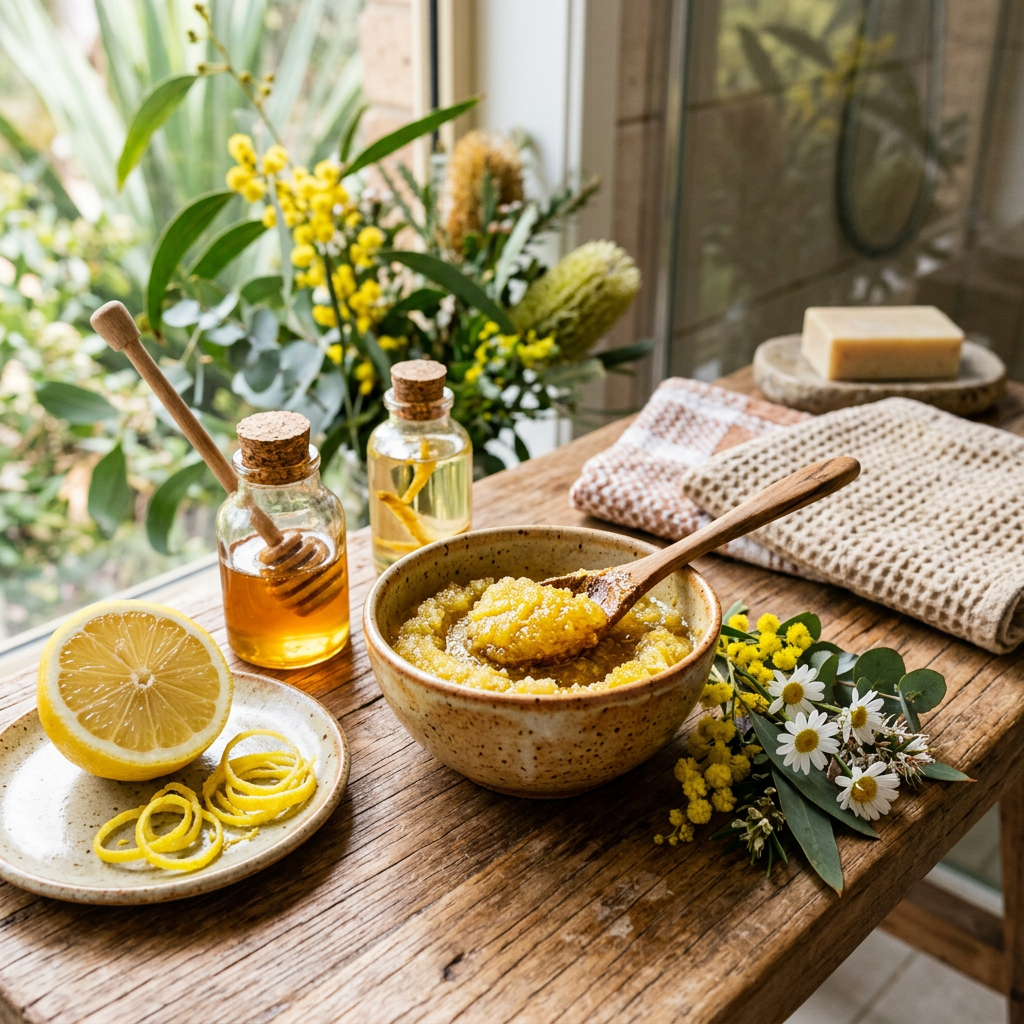
Spring Honey & Sugar Body Scrub
After the cooler months, this simple scrub is a lovely way to refresh winter-dry skin and welcome the lighter days of spring. Sugar provides gentle physical exfoliation, while honey and oil leave the skin feeling soft and nourished.
You’ll need:
- 1/2 cup fine white or caster sugar
- 2 tablespoons jojoba or sweet almond oil
- 1 tablespoon honey
- 1 teaspoon finely grated lemon zest (optional, for a fresh spring scent)
To make: Mix the sugar and oil together, then stir through the honey and lemon zest until you have a soft, slightly grainy paste. Add a little more oil if you prefer a looser scrub.
To use: In the shower, massage a small amount gently over damp skin using circular movements, concentrating on areas such as elbows, knees, hands and feet. Rinse with warm water and pat the skin dry.
A little spring ritual: As you exfoliate, imagine brushing away the heaviness and stagnation of winter and making room for fresh energy, growth and new beginnings.
A couple of sensible notes: Avoid broken, irritated or freshly shaved skin, and don’t use this as a facial scrub. Patch-test first if you have sensitive skin. The shower/bath may also become slippery from the oil.
Make & store note: If you’re making a jar to keep rather than a small batch to use straight away, leave out the fresh lemon zest. Fresh ingredients introduce moisture and can shorten the life of homemade body products. Make the basic sugar, oil and honey scrub in small batches, keep water out of the jar, and always use clean, dry hands or a spoon to scoop it out.
Practical Seasonal Magic
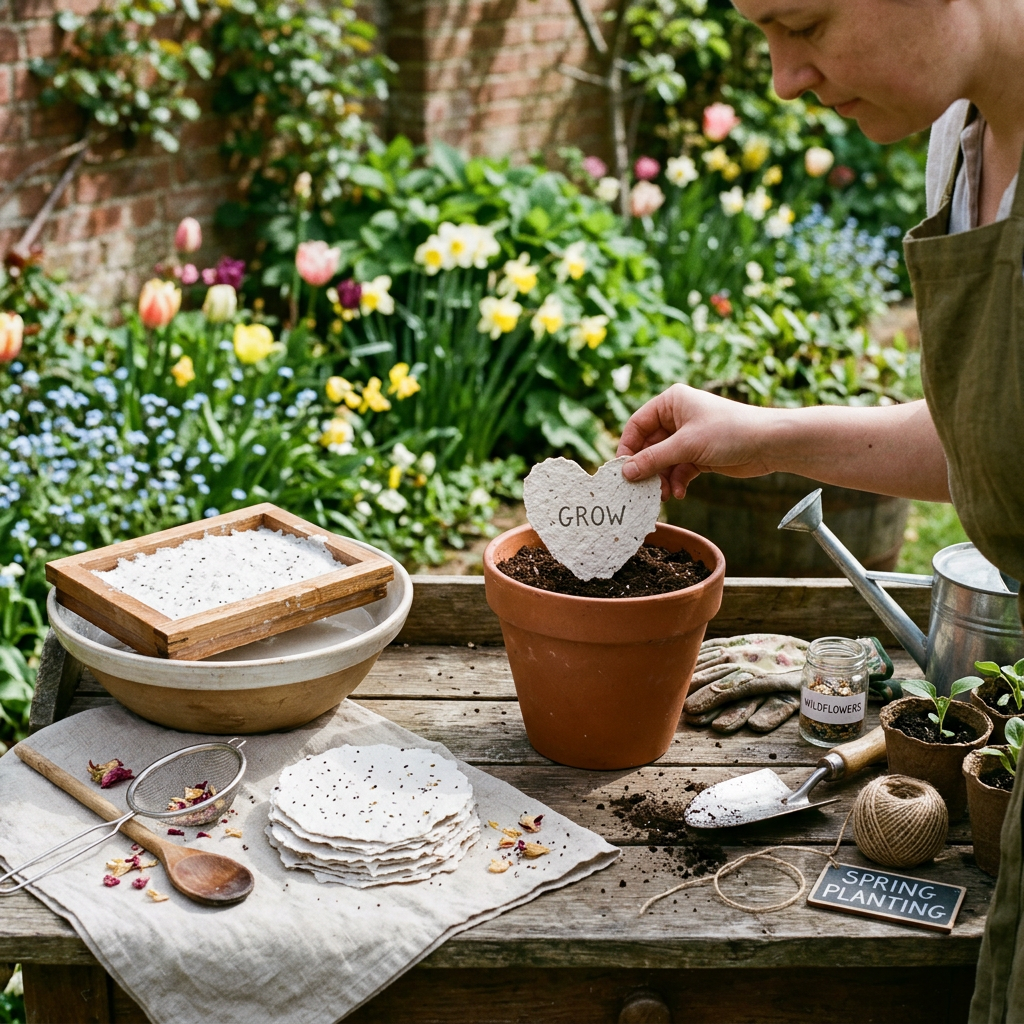
Plantable Intention Paper
Ostara is a season of new beginnings, growth and possibility, making it the perfect time to turn an intention into something you can quite literally plant and nurture.
Plantable intention paper is made from recycled paper pulp with seeds pressed into it. Once dry, write a word, wish or intention for the season onto the paper, plant it in the earth, and allow the first shoots to become a living reminder of what you hope to grow.
You’ll need:
- Scrap paper or uncoated paper, torn into small pieces
- Warm water
- A blender (see note below)
- A bowl or shallow tray
- A fine mesh screen, splatter screen or pieces of flyscreen
- Small seeds suitable for your local climate
- A pen or pencil for your intention
To Make:
- Tear the paper into small pieces and soak it in warm water for a few hours, or overnight until very soft.
- Add the soaked paper and enough water to cover it in a blender. Blend briefly until you have a loose paper pulp.
- Pour the pulp into a bowl or shallow tray. Stir the seeds through by hand after blending – don’t put the seeds in the blender.
- Scoop a thin layer of pulp onto your mesh and gently spread it into the shape you’d like. Small circles, rectangles, hearts or egg shapes are lovely for Ostara.
- Press out as much excess water as possible with a towel, then leave the paper somewhere airy to dry completely.
- Once dry, carefully peel your handmade seed paper from the mesh.
Plant Your Intention
Take a quiet moment to think about what you would like to begin, nurture or invite into your life this spring. It might be creativity, courage, rest, connection, abundance or simply more time outdoors.
Write one word or a short intention on your paper. When you’re ready, plant it according to the needs of the seeds you’ve chosen, water gently, and tend to it as it grows.
As you plant, you might say:
As I plant this seed, I plant my intention.
May I tend it wish patience, nourish it with care,
and give it room to grow.
A note about seeds: Choose seeds that are appropriate for your local area and growing conditions. Native and locally suitable flowering plants are a wonderful choice. Plant you intention paper in your own garden or pots rather than scattering seed paper in parks, reserves or bushland, where introduced plants can cause problems for local ecosystems.
A note about your blender: Making paper pulp can be hard on a blender, and thick pulp may clog or strain the motor. If you plan to make handmade or seed paper more than once, consider picking up an inexpensive or second-hand blender and keeping it just for papermaking and craft projects. Work in small batches with plenty of water and never add the seeds to the blender.
A Small Ostara Gift
A Little Pot of Spring
A small pot planted with herbs or flowers makes a lovely Ostara gift and carries the season with it long after the day has passed.
Choose a small terracotta pot and plant it with something easy to grow, such as basil, parsley, mint, thyme or a cheerful flowering plant. You could paint the pot, tie a ribbon or piece of twine around it, or leave the terracotta natural.
Add a small handwritten tag with something simple such as:
Something lovely for you to grow this spring.
It is inexpensive, useful and very Ostara — a small living gift that can continue growing as the season unfolds.
Our Family Ostara Tradition
Making a Flower Crown
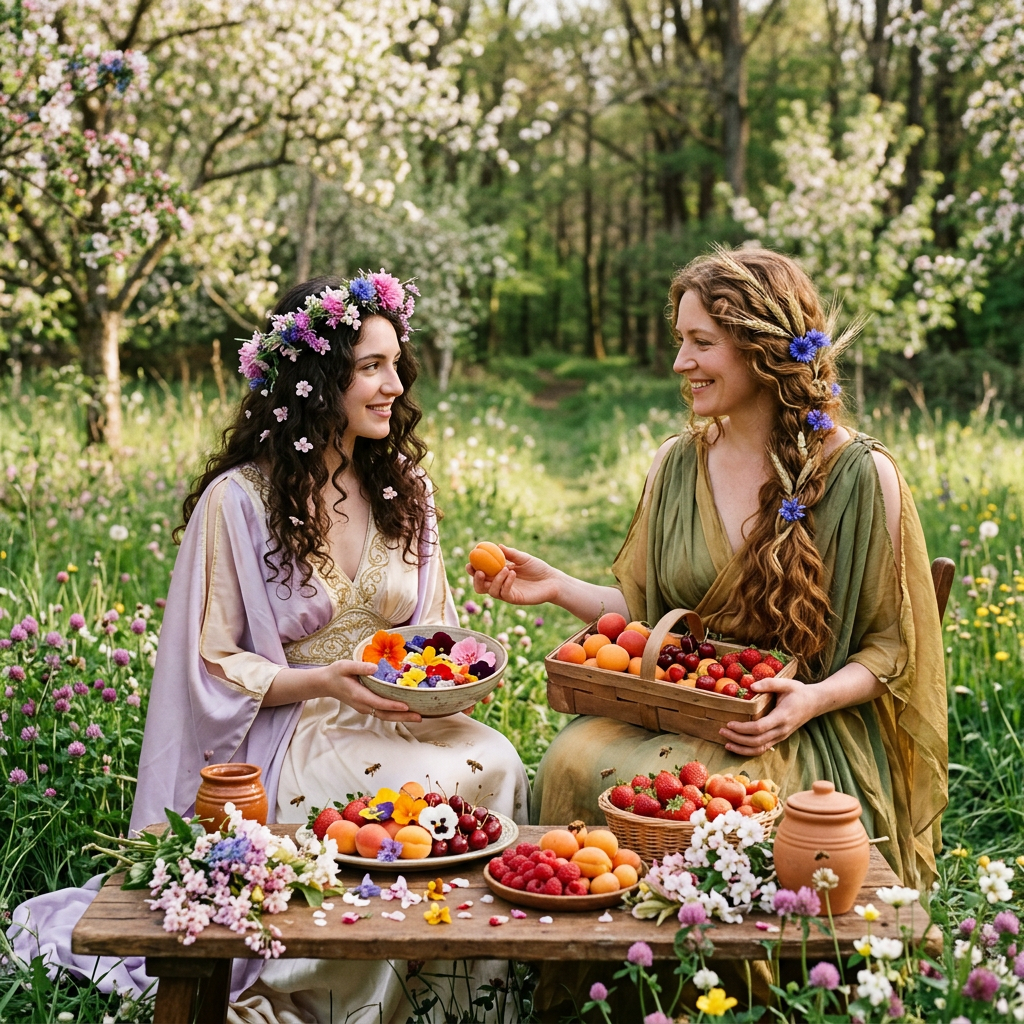
Few things say spring quite like gathering flowers and weaving them into a crown. Flower crowns and garlands have long been associated with springtime celebrations, when fresh blossoms and greenery return after winter. For Ostara, making one can be a simple way to celebrate the beauty, colour and abundance returning to the earth.
You can make your crown alone as a quiet seasonal activity, or turn it into a tradition with family and friends – gather your materials, make crowns together, then wear them for an Ostara meal, picnic, garden gathering or spring walk.
You’ll need:
- Flexible greenery or thin, bendable stems
- A selection of fresh flowers and herbs
- Florist wire or natural twine
- Florist tape, if desired
- Scissors, wire cutters, secateurs
- Ribbon, optional
To make your own flower crown:
- Measure around your head and create a comfortable circular base from flexible greenery and florist wire. Secure the ends together.
- Trim your flowers and greenery into manageable sprigs, leaving a few centimetres of stem.
- Arrange two or three small pieces together to make a little bundle.
- Place the bundle against your crown and secure the stems with florist tape, fine wire or twine.
- Add the next bundle so that the flowers overlap and conceal the previous stems and fastening.
- Continue around the crown, alternating flowers, herbs and greenery until you’re happy with how full it looks.
- Finish with a few special blooms or tie ribbons at the back if you’d like extra colour and movement.
Make it meaningful: Choose some of your plants for their symbolism as well as their beauty. Rosemary might represent remembrance, lavender peace, daisies new beginnings, and seasonal blossoms the return of growth and abundance. You could choose one flower to represent something you’d particularly like to welcome into the season ahead.
A gentle gathering note: Use flowers from your own garden, a florist, or places where you have permission to pick. If you’re gathering from the garden, take a little from several plants rather than stripping one, and leave plenty of blossoms for bees and other pollinators. Avoid picking wildflowers unless you know both the plant and the local rules around collecting it.
Once the celebration is over, the crown doesn’t necessarily have to be thrown away. Hang it somewhere dry and allow it to naturally fade and dry with the season, compost it when you’re ready, or save a few dried flowers for your journal or Ostara keepsakes.
 The Wheel at Home