Mabon – The Autumn Equinox
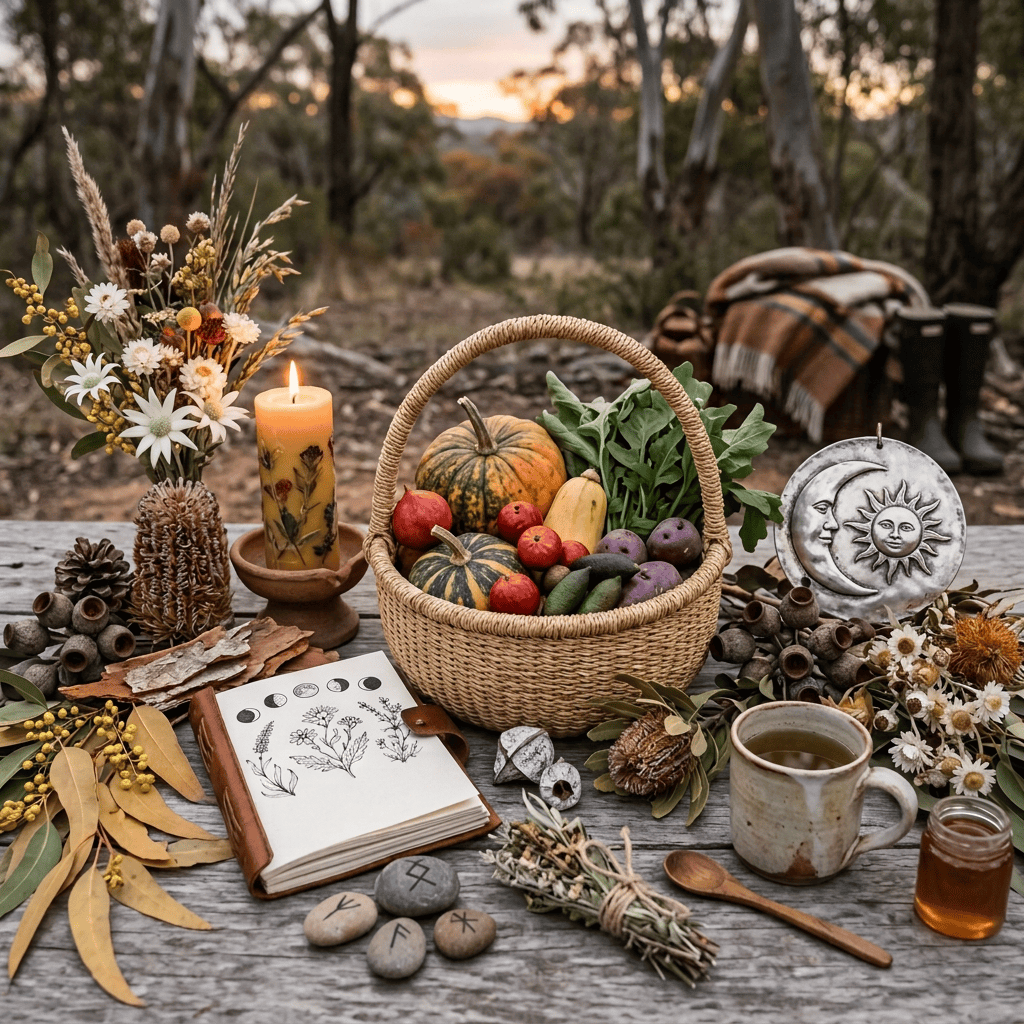
Mabon at a Glance
Pronunciation: MAY-bon
Date: Around 20–21 March in the Southern Hemisphere
Season: Autumn
Wheel Position: Autumn Equinox, between Lammas (Lughnasadh) and Samhain
Themes: Balance, harvest, gratitude, transition, abundance, reflection, preparation and letting go
Mabon marks the Autumn Equinox, the second of the three harvest festivals on the modern Wheel of the Year. It arrives between the first harvest of Lammas and the deeper transition of Samhain, bringing us to a point where summer is giving way to autumn and the darker half of the year is drawing closer.
At the Equinox, day and night are approximately equal, giving Mabon its strong association with balance. From here, the nights continue to lengthen and daylight gradually decreases as we move towards winter.
Mabon is also a harvest celebration. Lammas introduced the first harvest and the satisfaction of seeing what our work had produced; Mabon moves further into the season, with an emphasis on gathering, gratitude and making good use of what is available.
There is a quieter feeling to this point on the Wheel. The expansive energy of spring and summer has begun to settle, and attention starts turning towards home, comfort and preparation for the cooler months ahead. It is a natural time to take stock of what we have, appreciate what has carried us through the brighter half of the year and decide what we no longer need to carry forward.
In Australia, the Autumn Equinox can arrive well before the weather feels particularly autumnal. March may still bring plenty of heat, humidity and summer-like days, especially in the north and subtropics. Yet the changing light is unmistakable. Even when the temperature hasn’t caught up, the Wheel has turned again.
Mabon sits beautifully in that in-between place: a harvest still being gathered, summer beginning to loosen its hold and the year slowly tipping towards the dark.
Mabon in the Southern Hemisphere
In the Southern Hemisphere, Mabon falls around 20–21 March, marking the Autumn Equinox and the astronomical beginning of autumn. By this point, the days have been shortening since Litha, and around the Equinox we reach that familiar point of near balance between daylight and darkness before the nights begin to take the lead.
Across Australia, though, March doesn’t necessarily look like the autumn we see in traditional seasonal imagery. In many places there are no forests suddenly turning red and gold, no dramatic drop in temperature and certainly no guarantee that anyone is reaching for a woolly jumper. Autumn can arrive much more quietly.
In southern parts of the country, cooler mornings and evenings may already be becoming noticeable, and deciduous trees in gardens, parks and towns begin their gradual colour change. Further north, summer can linger stubbornly. Tropical areas remain warm, while Southeast Queensland can still experience hot days, humidity, heavy rain and thunderstorms well into March.
The changing light is often a better seasonal marker than the temperature. Sunset comes earlier, mornings begin a little later and the fierce brightness of midsummer starts to soften. Even on a hot day, there can be something different about the late-afternoon light that tells us the season has shifted.
Our harvest season is also far more complicated than the tidy progression of grain, fruit and autumn crops often used to represent the three Pagan harvest festivals. Australia is enormous, with tropical, subtropical, temperate, Mediterranean and arid growing regions, so there is no single March harvest happening across the country.
Instead, Mabon gives us another opportunity to look locally. Apples, pears, grapes, figs, pumpkins and other autumn produce may be appearing in some regions, while elsewhere completely different crops are being harvested. Farmers’ markets, roadside stalls and seasonal produce sections often tell us far more about our own harvest season than a traditional list ever could.
March also carries its own familiar rhythm in Australian homes. The long summer holiday period feels well behind us, school and work routines have settled and the year seems properly underway. Evenings begin closing in a little sooner, outdoor dinners happen earlier and there can be the first occasional thought that soup, blankets and cooler nights might not be too far away.
For those of us in subtropical areas, autumn often arrives through small changes rather than dramatic ones. A morning suddenly feels cooler. The air is less oppressive. A breeze comes through an open window and actually feels pleasant. You realise the air conditioner hasn’t been running quite as much. Then the next day is boiling again and autumn appears to have changed its mind.
That gradual transition suits Mabon rather well. The Equinox itself is a precise astronomical moment, but seasons rarely change neatly on command. Summer and autumn overlap for a while, with one slowly giving ground to the other.
Mabon in the Southern Hemisphere sits right within that overlap. The light and darkness reach their brief balance, the nights begin stretching ahead of us and autumn starts making itself known in its own time — sometimes through falling leaves and cool mornings, and sometimes simply through the welcome discovery that the evening breeze has finally lost its summer heat.
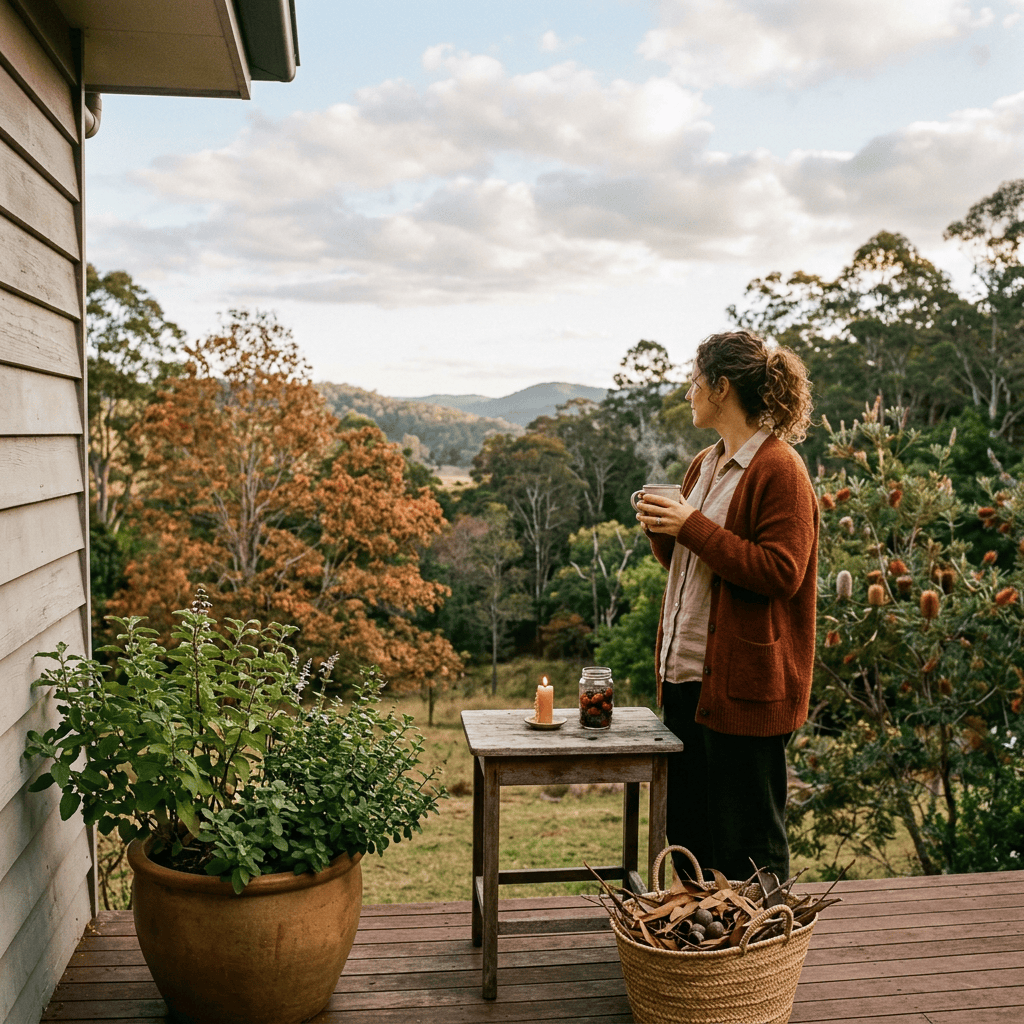
The Story of Mabon
Mabon is a little different from the Gaelic festivals on the Wheel because there was no ancient Celtic festival called Mabon celebrated at the Autumn Equinox. The Equinox itself is ancient, of course, and harvest celebrations have existed across many cultures for thousands of years, but Mabon as the name of a Pagan Sabbat is quite modern.
The Autumn Equinox occurs when the Sun crosses the celestial equator, giving us a point in the year when day and night are approximately equal in length. Ancient peoples certainly observed the changing movement of the Sun and the seasons, although the ways they marked this time varied enormously from one culture to another.
Across Europe, autumn was closely connected with harvest. Grain, fruit and other crops needed to be gathered, processed and stored before winter, making this one of the busiest and most important periods of the agricultural year. Harvest celebrations naturally developed around the completion of that work.
Feasting, sharing food and giving thanks for a successful harvest became common features of these celebrations. Harvest customs differed from place to place, but many involved communal meals, the final sheaf of grain, decorated harvest displays, songs, fairs and celebrations marking the end of the agricultural work.
Some European traditions treated the last sheaf of grain as particularly significant. It might be shaped into a figure, carried home ceremonially or preserved until the following planting season. Customs surrounding these figures varied considerably, and the familiar modern Pagan corn dolly draws upon this much broader collection of European harvest traditions rather than belonging specifically to an ancient festival called Mabon.
The name Mabon comes from Welsh mythology. Mabon ap Modron appears in the medieval Welsh collection of stories now known as the Mabinogion. His name means something close to “Divine Son,” while Modron means “Divine Mother.”
In the story of Culhwch and Olwen, Mabon is taken from his mother when he is only three nights old. He later becomes an important figure in the quest undertaken by Culhwch and his companions. His story contains themes of loss, imprisonment, recovery and return, but the surviving medieval Welsh material does not describe a harvest festival or Autumn Equinox celebration dedicated to him.
The connection between Mabon ap Modron and the Autumn Equinox came much later. The name Mabon was applied to the modern Pagan festival in the twentieth century, particularly through the work of American writer and modern Pagan Aidan Kelly, who used it while developing names for points on the modern Wheel that did not already have widely used festival names.
This means Mabon is not the ancient Celtic name for the Autumn Equinox, despite sometimes being described that way. It is a modern name inspired by a genuine figure from Welsh mythology.
The festival itself developed as part of the modern Pagan Wheel of the Year, which brought together the four Gaelic seasonal festivals — Samhain, Imbolc, Beltane and Lughnasadh — with the two Solstices and two Equinoxes.
Within that modern Wheel, the Autumn Equinox became the second harvest festival. Lammas or Lughnasadh begins the harvest season, Mabon represents its continuation and fullness, and Samhain brings us towards the final harvest and the beginning of the darker half of the year.
Modern Mabon celebrations therefore draw from several different sources rather than one ancient festival. Harvest feasts, apples, grapes, grain, baskets, corn dollies and autumn leaves come from broader harvest and seasonal traditions, while balance, equality and transition arise naturally from the Equinox itself.
For those of us in the Southern Hemisphere, the astronomical event occurs around 20–21 March. Moving the celebration to March keeps Mabon connected with the Autumn Equinox and its seasonal position between Lammas and Samhain, even though the modern name and many of its customs developed in the Northern Hemisphere.
Perhaps what makes Mabon interesting is that its history doesn’t need to be older than it really is to have meaning. The Equinox is real, harvest traditions are ancient and the human experience of watching summer fade into the darker part of the year is certainly nothing new.
Modern Paganism has gathered those threads together into a festival of harvest, balance and transition — an old seasonal turning point carrying a relatively new name.
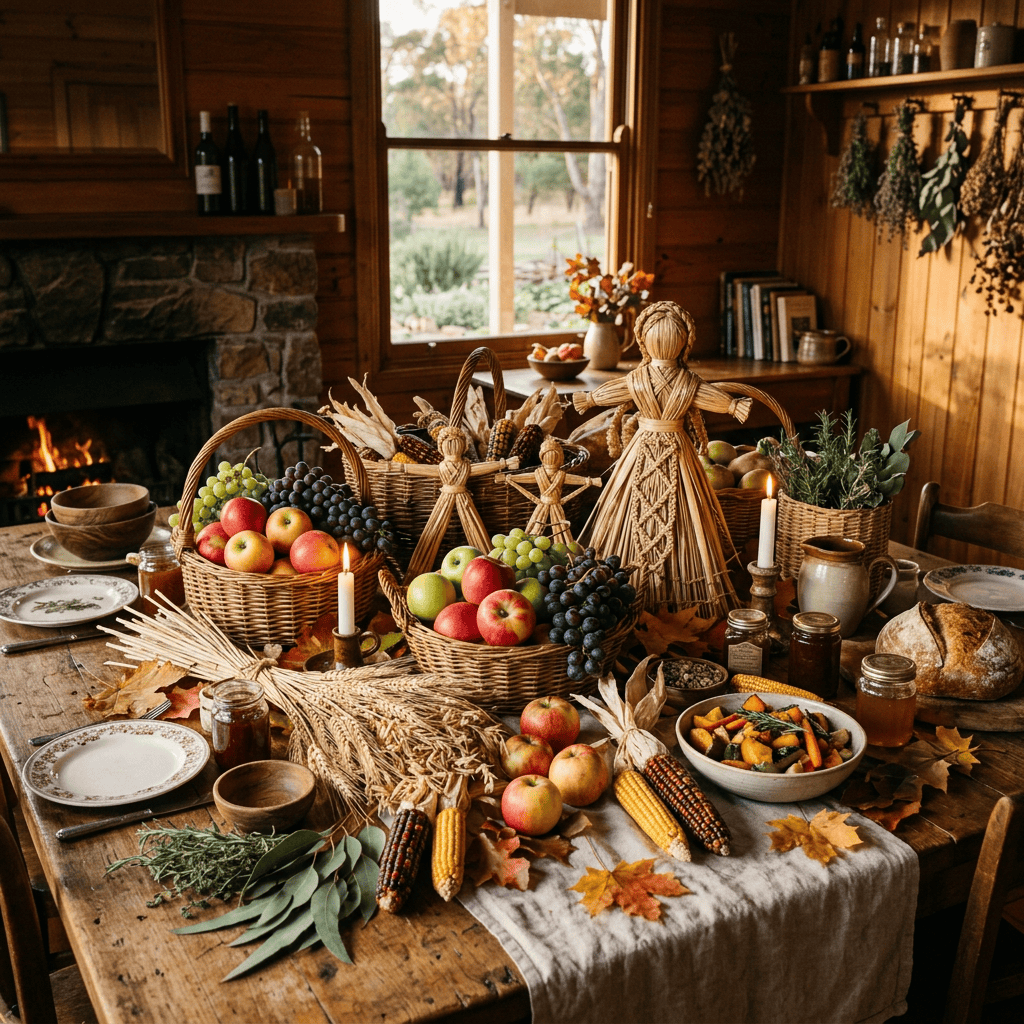
What We Notice Here
By Mabon, the change of season is finally beginning to feel a little more believable in Southeast Queensland. March can still throw some properly hot days at us, but the relentless intensity of high summer is starting to ease. Mornings can feel fresher, evenings are more comfortable and every now and then there is the first hint of coolness in the air.
The changing light is much easier to notice now. Sunset has moved noticeably earlier since Lammas, and the long summer evenings are becoming shorter. By the end of the day, darkness seems to arrive surprisingly quickly, especially after months of feeling as though summer afternoons would go on forever.
Rain and storms can still be very much part of the season. Gardens may remain lush after a wet summer, lawns keep growing and subtropical plants certainly haven’t decided that autumn means shutting down. Other years can be much drier, with browned grass and tired gardens carrying the effects of summer heat.
There may not be spectacular forests of red and orange around us, but there are still plenty of changes to notice. Deciduous trees planted in gardens and streets begin changing colour, seed pods appear, grasses mature and flowering patterns shift. Native plants follow their own rhythms rather than performing the classic autumn display we often associate with the season.
The garden starts changing too. Some summer vegetables are reaching the end of their run, herbs may be flowering or going to seed and it becomes time to clear out tired plants and think about what can be planted for the cooler months. Pumpkins and other late-summer produce bring some of those familiar harvest colours naturally into the season.
Fruit has its own autumn rhythm. Apples, pears, figs, grapes and persimmons begin appearing alongside the last of summer’s produce, while citrus trees are busy developing the fruit that will ripen through the cooler months. Farmers’ markets gradually change their colours as one season’s produce gives way to the next.
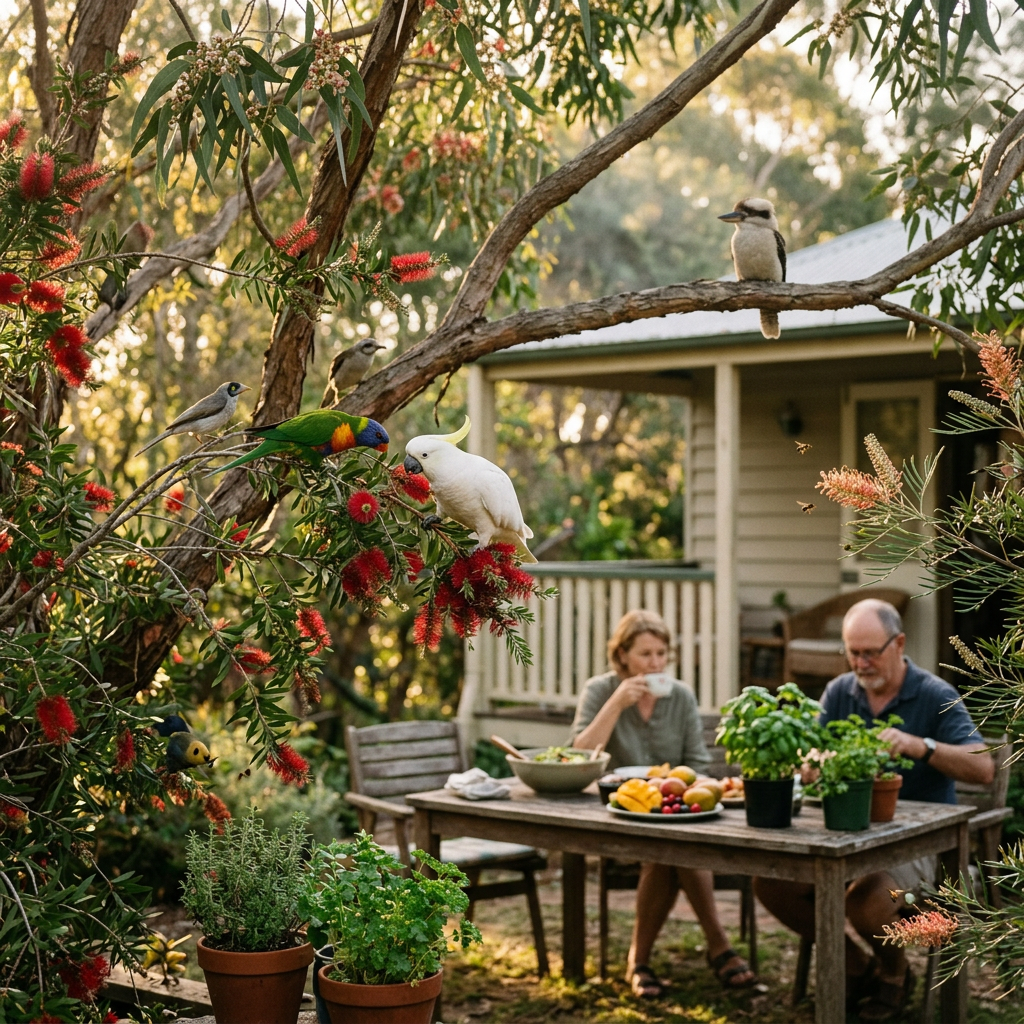
Birdlife remains busy. Lorikeets, cockatoos, kookaburras and other familiar visitors move through gardens and flowering trees, while insects are still active in the lingering warmth. The deafening cicada soundtrack of midsummer begins to quieten, and evenings can feel noticeably calmer.
Inside the home, the seasonal shift starts sneaking in as well. We might still be wearing summer clothes during the day, but a light blanket finds its way back onto the bed. The windows stay open longer because the breeze is finally pleasant, and cooking something warm for dinner no longer sounds completely absurd.
There is often a sense of settling at this point in the year. The rush of Christmas, holidays, January and the beginning of the working year has passed. March feels more established. Routines have found their shape, the year is moving along and there is a little more space to see how things are actually going.
The Equinox itself gives us something especially simple to observe. Light and darkness reach their brief point of near equality, and then darkness begins to take the longer share. We don’t need red forests or piles of fallen leaves to see that happening. We can watch it from our own windows as sunset arrives earlier each evening.
This is our Mabon: lingering warmth, softer afternoons, changing gardens, ripening autumn fruit, quieter cicadas, the first blanket returning to the bed and evenings that suddenly seem to be getting dark far too early. Summer hasn’t completely disappeared, but autumn has finally started making itself at home.
Themes of the Season
Mabon carries themes of balance, harvest, gratitude, transition, reflection, preparation and letting go. It sits at a genuine turning point in the year, with the Autumn Equinox bringing light and darkness briefly into near balance before the darker half begins to take over.
Balance
Balance is perhaps the theme most strongly associated with Mabon. Around the Equinox, day and night are approximately equal before the nights continue growing longer.
In everyday life, balance rarely means everything being divided neatly in half. Some parts of life need more from us at certain times, while others temporarily take a back seat. Mabon offers a useful moment to notice where our time and energy are actually going and whether that still feels right.
Harvest
Lammas began the harvest season; Mabon takes us further into it. More has ripened, more can be gathered and we have a clearer picture of what the growing season has produced.
Our personal harvest can be viewed in much the same way. Some things we began earlier in the year may now be producing results, while others haven’t developed quite as expected. Both are worth noticing. A harvest isn’t only about celebrating successes; it also tells us something about what worked, what didn’t and what we might do differently next time.
Gratitude
Harvest and gratitude naturally belong together. Mabon gives us another opportunity to appreciate what has supported and sustained us — food, home, relationships, work, community and the ordinary comforts that are easy to overlook.
There is also room for gratitude without pretending everything is wonderful. We can appreciate what is good while acknowledging what has been difficult. The balance of the Equinox leaves space for both.
Transition
Mabon stands between the expansive warmth of summer and the quieter months ahead. The change isn’t complete, particularly in our Australian climate, but the direction is clear.
Transitions are often like that. We can be leaving one stage while not quite having arrived at the next. Mabon belongs comfortably in that middle ground, where something is ending, something else is beginning and for a while both can exist together.
Reflection
The energy of the Wheel is beginning to turn inward. Spring encouraged beginnings and growth; summer brought activity and fullness; now autumn starts creating more space for reflection.
This is a good point to look back over the brighter half of the year. What grew well? What surprised you? What took more energy than expected? What are you pleased you said yes to, and what would you rather not repeat?
Preparation
For generations, harvest wasn’t simply about celebration. Food needed to be gathered, preserved and stored because winter was coming. Preparation was part of survival.
Our lives may look very different now, but autumn still lends itself to getting things in order. Finish lingering jobs, clear out what has accumulated, make the home comfortable and deal with those little things that will be useful to have sorted before winter arrives.
Letting Go
Autumn naturally brings the idea of release. Plants finish flowering, leaves fall, summer crops reach the end of their lives and the landscape begins redirecting its energy.
Mabon is only the beginning of that process. We don’t need to clear everything away at once. Instead, we can start noticing what has run its course — commitments, habits, expectations, clutter or plans that no longer fit — and allow some of them to finish.
Enough
There is a quieter form of abundance at Mabon than we found at the height of summer. Instead of constantly looking towards more growth, more plans and more possibilities, the harvest asks us to look at what has already been gathered.
Sometimes the most useful question at this point on the Wheel is simply: Do I already have enough?
Enough can be deeply comforting. Enough food. Enough things. Enough commitments. Enough achievement. Enough plans for now.
Mabon holds that brief balance between light and darkness, abundance and release, celebration and preparation. We can enjoy what has been gathered while beginning to clear some space, grateful for what the brighter months have given us and ready for the quieter turn of the year ahead.
Seasonal Invitation
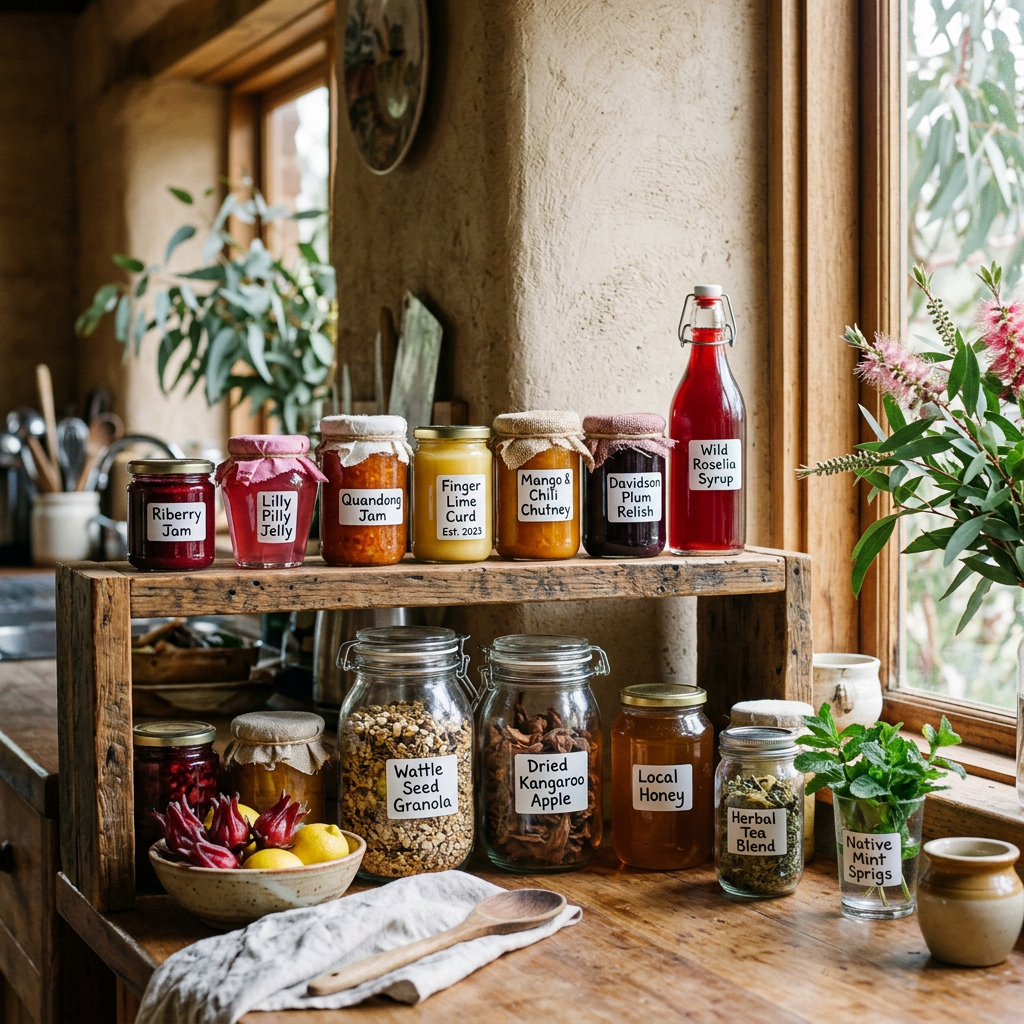
Mabon invites us to take stock.
We have travelled through the growing half of the Wheel, from the first stirrings of spring through the long days of summer and into the harvest season. Now there is an opportunity to look around at where we have landed before continuing towards the darker months of the year.
Start by noticing what feels good and steady in your life. What is working? What has become easier? What routines have settled into place? What people, places or small everyday comforts are making life better? We can spend so much time looking for what needs fixing that it is surprisingly easy to overlook what is already going well.
Then look at where things feel out of balance. Perhaps work has been taking too much energy, the calendar is overcrowded, the house has accumulated far too much stuff or you’ve been giving more than you’re getting back. The Equinox offers a natural checkpoint for noticing where something needs adjusting.
Mabon is also a good time for a gentle clear-out. Go through a cupboard, wardrobe or pantry. Finish something that has been hanging around unfinished. Donate what you no longer use, throw away what genuinely needs to go and make a little more room in the places where life has become cluttered.
Bring some of the harvest into the kitchen too. Cook with apples, pears, pumpkin, grapes or whatever is particularly good where you live. Make a crumble, roast some vegetables, bake something or preserve a little seasonal produce. As the evenings begin drawing in, cooking can become one of the simplest ways of noticing that the season is changing.
This is also a lovely time to gather people around the table. Share a meal, open something nice, use the good plates or invite someone over without turning it into a major production. Mabon carries gratitude particularly well when it is expressed through enjoying what we already have with people we care about.
And as autumn begins, allow a few things to finish. Not every abandoned plan needs rescuing. Not every goal still deserves your energy. Some things belonged to an earlier version of the year and can simply be crossed off, cleared away or quietly left behind.
For Mabon, the question might be:
What do I want to keep, and what am I ready to put down?
Keep what nourishes you. Appreciate what is working. Make a little room around the edges. The darker half of the Wheel is approaching, and there is something lovely about entering it carrying a little less.
Mabon Correspondences
Mabon correspondences bring together the colours and foods of the harvest, the balance of the Autumn Equinox and the gradual transition towards the darker half of the year. Traditional European associations sit alongside plants, foods and seasonal signs that feel more at home in an Australian autumn.
Colours & Candles
Deep Red — harvest, strength, warmth and maturity
Burnt Orange — autumn, transition and change
Gold — harvest, abundance and gratitude
Brown — earth, grounding and stability
Deep Green — the remaining growth of the warmer months
Burgundy — richness, maturity and the deepening season
Cream — grain, simplicity and balance
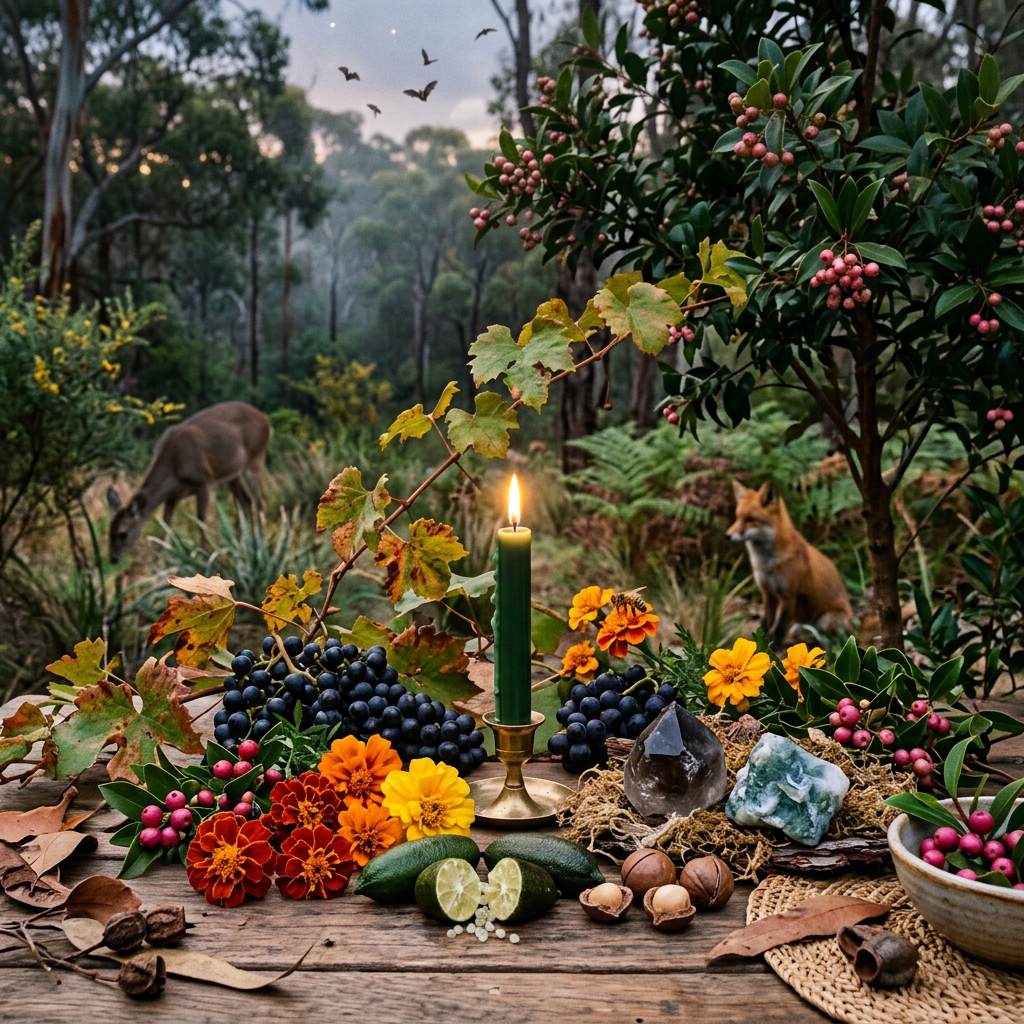
Candles in gold, burnt orange, burgundy, brown or cream suit Mabon beautifully. Using one light and one dark candle together can also represent the balance of the Equinox and the gradual shift towards longer nights.
Crystals & Stones
Smoky Quartz — grounding, release and transition
Tiger’s Eye — balance, confidence and stability
Carnelian — warmth, creativity and remaining summer energy
Citrine — abundance, gratitude and prosperity
Moss Agate — earth, harvest and connection with nature
Green Aventurine — abundance, gratitude and wellbeing
Red Jasper — grounding, endurance and stability
Black Tourmaline — protection, grounding and release
Traditional Herbs, Plants, Flowers & Trees
Apple — harvest, abundance, love and wisdom
Grape and Grapevine — harvest, abundance and celebration
Wheat — nourishment, harvest and prosperity
Corn — abundance, harvest and sustenance
Oak — strength, endurance and the changing season
Hazel — wisdom, knowledge and harvest
Rosemary — remembrance, gratitude and protection
Sage — wisdom, cleansing and reflection
Blackberry — harvest, abundance and protection
Marigold — warmth, transition and the remaining light
Apples and grapes are particularly fitting for the second harvest festival, while grains connect Mabon with the broader harvest season. Many of these associations come from European harvest traditions rather than from one historical festival specifically called Mabon.
Australian Herbs, Plants, Flowers & Trees
Eucalyptus — protection, strength and resilience
Banksia — endurance, regeneration and change
Bottlebrush — vitality, resilience and seasonal transition
Macadamia — nourishment and abundance
Lemon Myrtle — cleansing, vitality and freshness
Wattleseed — nourishment and connection with the land
Finger Lime — abundance and native produce
Lilly Pilly — nourishment, resilience and abundance
Native Rosemary — protection, remembrance and resilience
Rather than relying entirely on imported autumn leaves and European plants, an Australian Mabon can include whatever is actually changing, fruiting, flowering or producing seed around us.
Animals
Deer — seasonal change, gentleness and cycles
Foxes — adaptability and transition
Owls — wisdom, reflection and the approaching darkness
Crows and Ravens — intelligence, transformation and change
Possums — night, adaptability and the Australian landscape
Bats — transition, darkness and changing seasonal rhythms
Birds — movement, seasonal change and adaptation
Bees — harvest, work and community
Animals associated with autumn vary enormously depending on location, so local wildlife is often the most meaningful correspondence. The creatures becoming more noticeable at dusk are especially fitting as the nights begin lengthening.
Essential Oils
Cedarwood — grounding, stability and warmth
Frankincense — reflection, grounding and contemplation
Sweet Orange — gratitude, abundance and warmth
Bergamot — balance, optimism and emotional ease
Rosemary — clarity, remembrance and reflection
Patchouli — earth, grounding and abundance
Ginger — warmth, vitality and transition
Cinnamon — warmth, abundance and comfort
Essential oils should always be used appropriately and diluted when required. Some oils may not be suitable for children, pets, pregnancy or particular health conditions, and some citrus oils can increase sensitivity to sunlight when applied to the skin. Always check the safety information for the individual oil and the way you intend to use it.
Food & Drinks
Apples — harvest, abundance and autumn
Pears — seasonal abundance and nourishment
Grapes — harvest, celebration and plenty
Figs — abundance, sweetness and fertility
Pumpkin — harvest, nourishment and autumn
Root Vegetables — grounding, nourishment and the earth
Bread and Grains — harvest, sustenance and gratitude
Nuts — nourishment, abundance and storing for the cooler months
Honey — sweetness, prosperity and gratitude
Herbal Tea — warmth, comfort and slowing down
Apple or Pear Desserts — harvest, sharing and seasonal comfort
Symbols
Scales — balance and the Equinox
Baskets — harvest, gathering and abundance
Apples — harvest, wisdom and the changing season
Grapes and Vines — abundance and harvest
Leaves — change, release and transition
Seeds — completion, continuation and future growth
Grain — nourishment and harvest
Cornucopia — abundance and plenty
Sun and Moon — light, darkness and balance
Harvest Tables — gratitude, community and sharing
Tarot
Justice — balance, fairness and adjustment
Temperance — balance, moderation and harmony
The Hermit — reflection and the gradual inward turn
The Empress — abundance, harvest and nourishment
Nine of Pentacles — enjoying the results of our work
Four of Pentacles — security, holding on and considering what is enough
Eight of Cups — recognising when something has run its course
Moon Phases
Mabon is connected with the Autumn Equinox rather than a particular lunar phase, but the moon occurring around the Sabbat can shape personal reflection and seasonal magic.
New Moon — reassessing priorities and beginning again with greater balance
Waxing Moon — strengthening what you want to carry forward
Full Moon — gratitude, abundance and recognising what has reached fullness
Waning Moon — release, clearing and letting go
Dark Moon — rest, reflection and preparing for the inward season
Deities of Mabon
Unlike Lughnasadh, Mabon does not have a historical festival tradition centred around particular deities. Many of the figures now associated with the Sabbat come from modern Pagan practice because their stories reflect harvest, abundance, balance, descent or seasonal change.
Mabon ap Modron — The Welsh mythological figure whose name was given to the modern Sabbat. Mabon is the son of Modron and appears in medieval Welsh literature, most famously in Culhwch and Olwen. His story involves separation from his mother, imprisonment and eventual release. He was not historically a deity of the Autumn Equinox or harvest, despite his modern connection with the Sabbat.
Modron — A Welsh maternal figure whose name means “Divine Mother” and who is the mother of Mabon. Her inclusion in modern Mabon practice comes largely through that relationship rather than evidence of an ancient Equinox festival devoted to her.
Demeter — Greek goddess of agriculture, grain and harvest. Her mythology, particularly the story of her daughter Persephone, has made her a popular modern association with autumn, although she has no historical connection with the festival of Mabon.
Persephone — Greek goddess whose story of descent to and return from the Underworld became closely connected with seasonal cycles. Modern Pagans sometimes associate her descent with the darkening part of the year, although the ancient Greek festivals surrounding Demeter and Persephone followed their own religious calendar rather than the modern Wheel.
Dionysus — Greek god associated with wine, grapevines, fertility and celebration. His connection with grapes and wine makes him particularly suited to harvest symbolism, though again this is a thematic association rather than a historical Mabon tradition.
Pomona — Roman goddess associated with fruit trees and orchards. Apples and orchard fruits have become prominent in modern autumn celebrations, making Pomona another natural modern association with the harvest season.
For Mabon, these deities are best understood as figures whose stories and associations can add meaning to a modern Equinox celebration rather than evidence of an ancient Mabon pantheon. The strongest historical foundation of the Sabbat remains the Autumn Equinox itself and the many harvest traditions that developed around this part of the agricultural year.
Bringing the Season Home
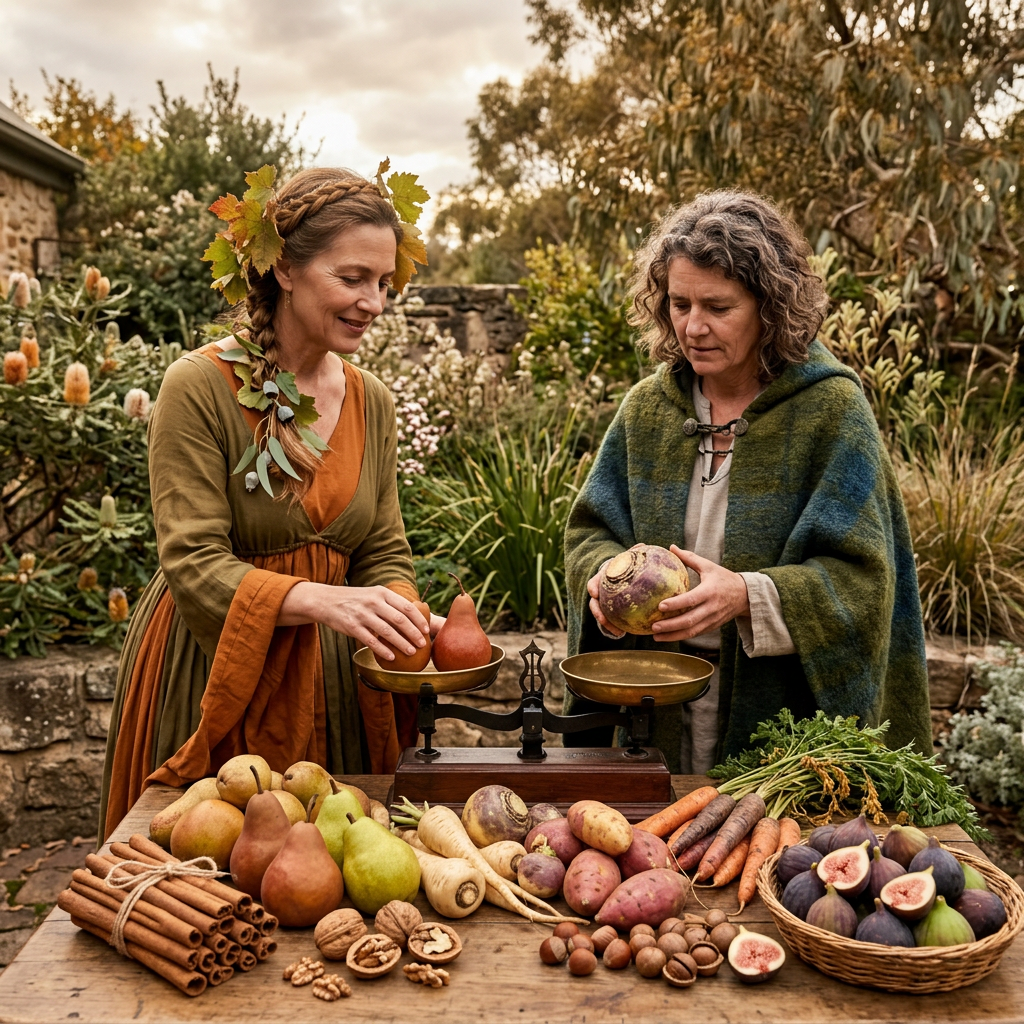
Mabon brings a softer, earthier feeling into the home. The brightness of summer is beginning to fade, evenings are drawing in and the colours and textures around us start shifting towards something warmer and more grounded.
Seasonal Displays
Bring in the colours of the harvest with burnt orange, deep red, gold, brown, burgundy and touches of green. Candles, bowls, linens and other things already around the house can introduce those colours without turning the whole place into an autumn display.
A bowl of seasonal fruit makes one of the simplest Mabon decorations. Apples, pears, grapes, figs or whatever looks particularly good at the market can sit on the kitchen bench or table and then gradually disappear as everyone eats them.
Pumpkins and other seasonal produce can become part of the display too. Add a basket, a few nuts in their shells, seed pods, dried grasses or interesting fallen leaves collected on a walk, and suddenly the ordinary signs of the season become part of the home.
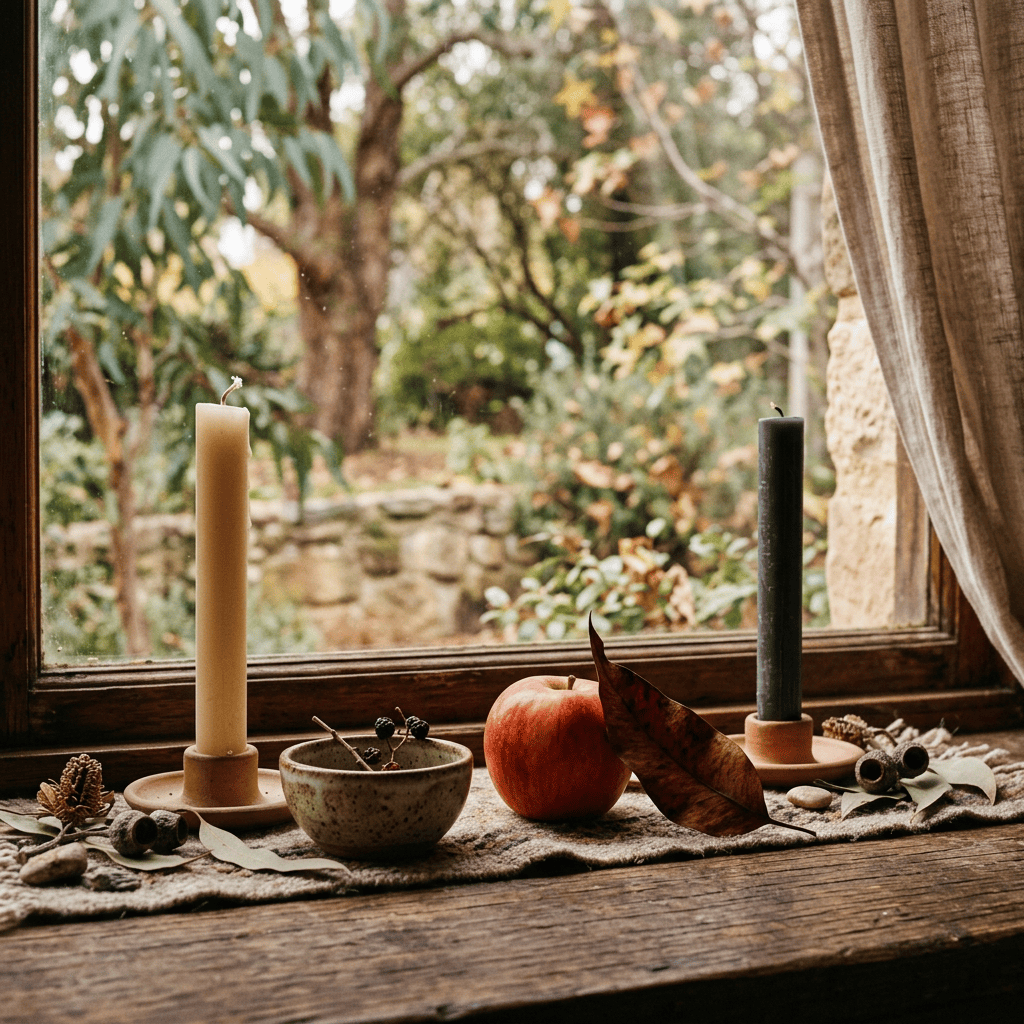
The Equinox itself can be represented very simply with two candles — one light and one dark — placed together to symbolise the brief balance between daylight and darkness.
Creating a Seasonal Atmosphere
Mabon is a lovely time to start bringing a little warmth back into the house without racing ahead into winter. A light throw on the couch, warmer-toned cushions, a tablecloth or a few candles in the evening can gently change the feeling of a room as the days shorten.
The kitchen naturally becomes part of the seasonal atmosphere again. Apples baking, pumpkin roasting, bread in the oven or something slowly cooking for dinner begins to feel appealing after months of summer meals. Cinnamon, rosemary, orange, ginger and other warm scents fit beautifully here.
Open the windows when those first cooler breezes arrive. After a long Queensland summer, there is something ridiculously satisfying about fresh air coming through the house without immediately making everything hotter.
This is also a good season for clearing rather than adding. Put away things that belong to summer, clear crowded surfaces, sort a cupboard or finally deal with the collection of random things that has somehow established itself on the kitchen bench.
As the evenings become darker, start using the softer lights again. Lamps, candles and fairy lights bring warmth back into rooms that have spent months flooded with summer daylight.
Mabon at home can feel like the beginning of a gradual settling in. There is still warmth outside and plenty growing around us, but the house starts becoming somewhere we want to linger again — windows open to cooler air, something good cooking and the lights switched on just a little earlier each evening.

Ways to Celebrate Mabon
Mabon lends itself to cosy, food-filled celebrations, but it is also a lovely time to get outside and notice the quieter changes happening around us. The Equinox gives us balance, the harvest gives us plenty to enjoy, and autumn gives us a good excuse to start slowing the pace after summer.
Have an Autumn Picnic
Pack a simple picnic and enjoy one of those early autumn days when it is finally pleasant enough to sit outside without melting. Bring bread, cheese, apples, grapes, nuts, dips and whatever seasonal food looks good, then find somewhere shady and enjoy the changing light and cooler air.
Visit an Orchard or Farm
If there is somewhere nearby offering apple picking, farm visits or seasonal produce, make a day of it. Otherwise, visit a farmers’ market, farm shop or roadside stall and see what is being harvested locally.
Bake with Autumn Fruit
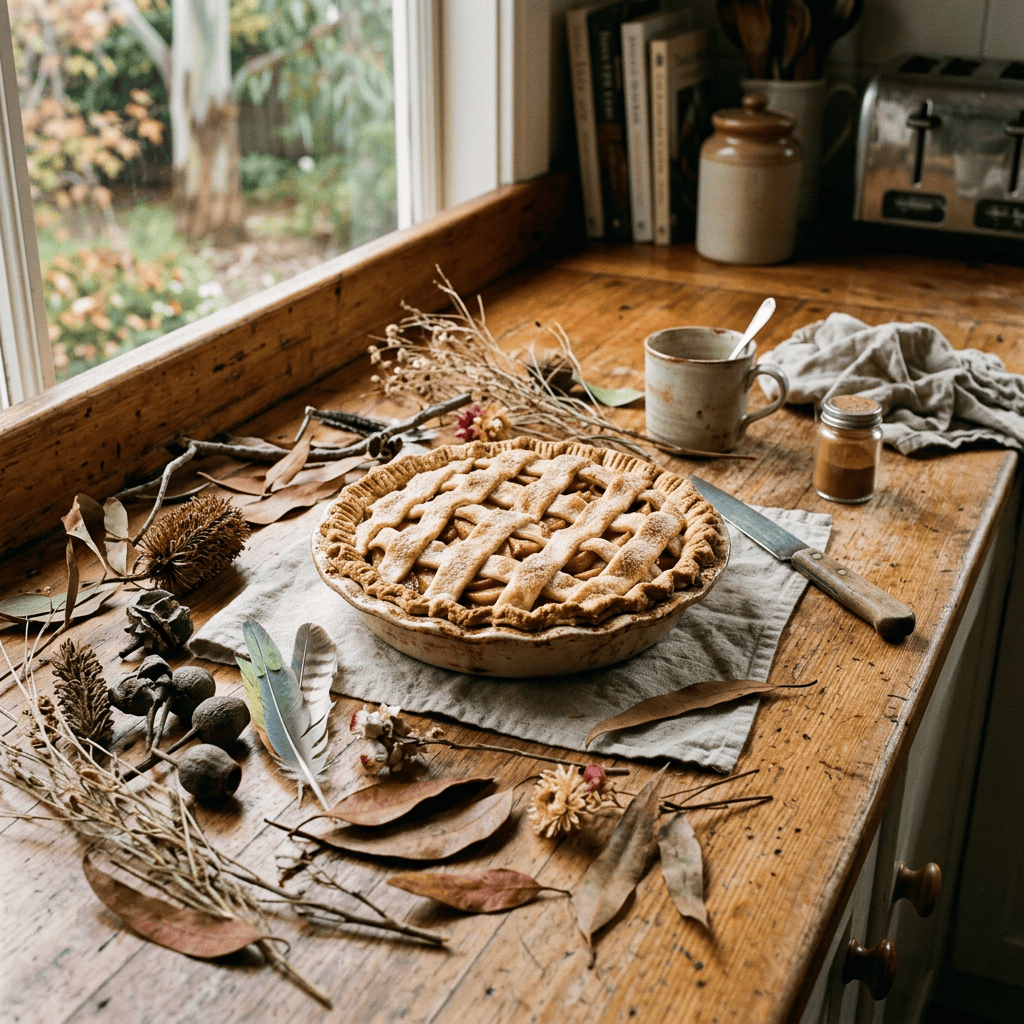
Make an apple or pear crumble, fruit cake, muffins, baked apples or another favourite autumn recipe. If the weather is still far too hot for baking, a simple fruit and cheese platter works just as well until autumn gets its act together.
Create an Equinox Table
Set the table with one light candle and one dark candle to represent the balance of the Equinox. Add seasonal fruit, leaves, seed pods, flowers or a small bowl of nuts and use it as the centrepiece for your Mabon meal.
Share a Harvest Dinner
Invite family or friends for an easy autumn meal. Roast vegetables, bread, salads, seasonal produce and something baked with apples or pears all suit the season. Let everyone bring something if you want the meal itself to become a shared harvest.
Go on an Autumn Walk
Take a walk specifically to look for signs that the season is changing. Notice the temperature, afternoon light, seed pods, changing leaves, birds, flowers and whatever is happening in your own neighbourhood. Take a few photos each year and you’ll gradually build a lovely record of what autumn actually looks like where you live.
Clear Out a Cupboard
Choose one small area rather than launching into an enormous cleaning project. Clear the pantry, a kitchen cupboard, wardrobe shelf or bathroom drawer and get rid of what is expired, unused or no longer wanted. Mabon is a good point for creating space before the darker half of the year.
Make Something with Apples
Apples have become one of the most familiar symbols of Mabon and autumn. Bake with them, make apple sauce, stew them with cinnamon, slice them onto a cheese board or simply fill a bowl with beautiful fresh apples and actually eat them.
Watch the Sunset
The changing light is one of the clearest signs of Mabon in Australia. Go outside in the late afternoon, watch the sun disappear and notice just how much earlier darkness is arriving than it did at Litha.
Gather Something from Nature
Collect fallen leaves, seed pods, feathers, interesting twigs or dried grasses during a walk and bring a few home for your seasonal display. Take only what has already fallen and leave anything that is being used as food or habitat by wildlife.
Give Something Away
Mabon combines abundance with release, making it a particularly good time to pass things on. Donate clothes, books or household items you no longer use, share garden produce or give food to a local food relief organisation.
Mark the Equinox
On the day of the Equinox, take a few minutes to notice the balance between light and darkness. You could light two candles, sit outside at sunset, write a few lines in your journal or simply acknowledge that from here the nights will become longer than the days.
Mabon can be celebrated through the things autumn naturally brings us towards: seasonal food, earlier evenings, cooler air, a little clearing out and more time around the table. Somewhere amongst it all is that brief Equinox balance — summer behind us, winter still ahead and autumn finally having its turn.
Mabon Reflections
Mabon is a natural point for taking stock of where we are. The year has moved beyond its most expansive seasons, the harvest is well underway and the Equinox gives us a moment to consider what feels balanced, what has been worthwhile and what we are ready to leave behind as we move towards the darker half of the Wheel.
Journal Prompts
What am I most grateful to have gathered or experienced this year?
Where in my life do I feel balanced, and where could I use some adjustment?
What has reached its natural ending and is ready to be released?
What do I want to protect, nurture and carry with me into the quieter months?
Where might I already have enough?
Mabon Tarot Spread
A five-card spread for the Autumn Equinox, exploring the balance between what we have gathered and what we are beginning to release.
Card One — The Harvest
What can I acknowledge and appreciate from the season behind me?
Card Two — The Light
What is still nourishing, energising or supporting me?
Card Three — The Shadow
What needs more attention as I turn inward?
Card Four — The Falling Leaf
What am I ready to let go of?
Card Five — The Balance
What will help me move into the next season feeling more centred?
A Small Mabon Gift
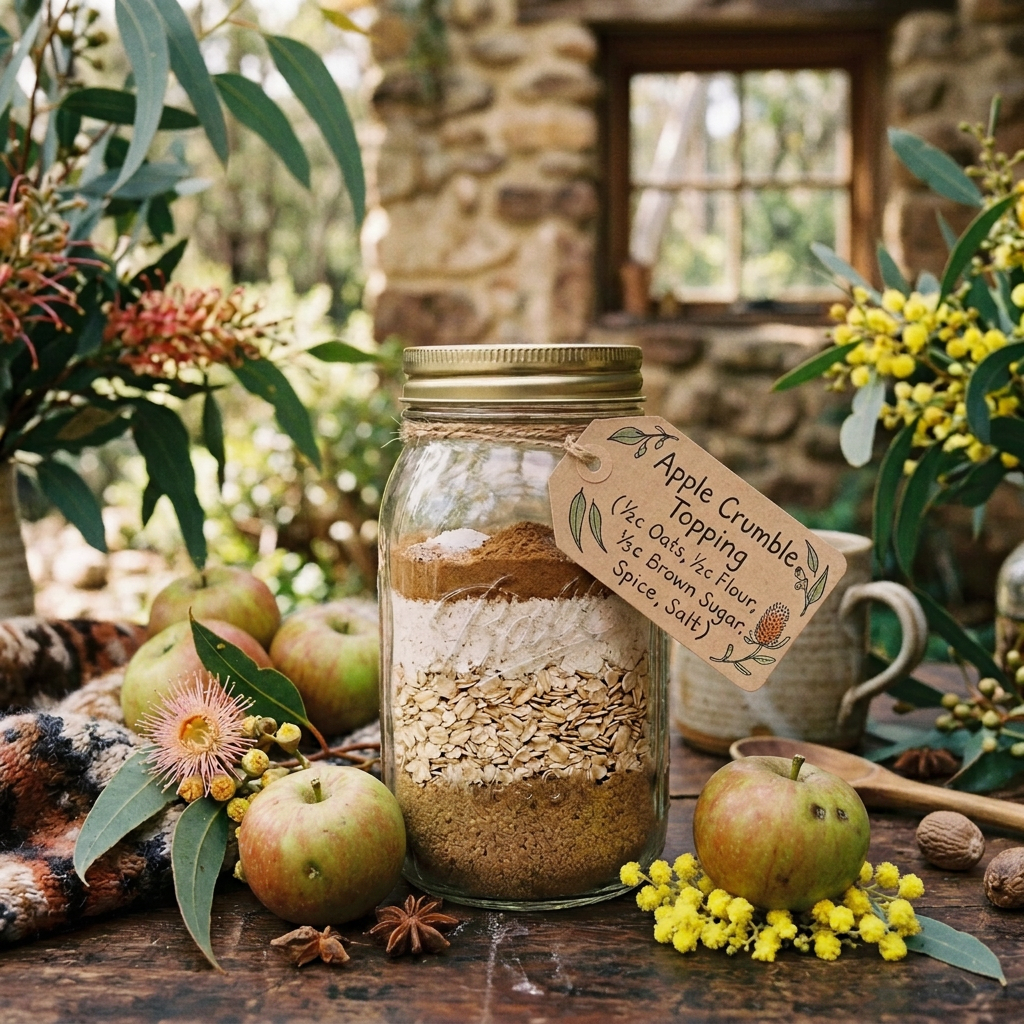
A Little Jar of Apple Crumble Mix
A small jar of apple crumble topping makes a lovely Mabon gift, especially as apples fit the autumn harvest so beautifully. The recipient only needs to add fresh apples and a little butter before baking.
For one small gift jar, combine:
½ cup rolled oats
½ cup plain flour
⅓ cup brown sugar
½ teaspoon cinnamon
A small pinch of nutmeg
A small pinch of salt
Layer the ingredients in a clean jar or mix them together first, then seal the jar and add a little handwritten label.
On the label, include the simple instructions:
To make your crumble: Peel and slice 3–4 apples and place them in a small baking dish. Tip the crumble mix into a bowl and rub through about 75 g softened butter until crumbly. Sprinkle over the apples and bake at 180°C until golden and bubbling.
Tie the jar with string or ribbon and perhaps tuck a cinnamon stick underneath. You could even give it with a couple of beautiful fresh apples from a local orchard or market.
It’s a small gift that actually becomes something — warm apple crumble on an autumn evening, made to be eaten and preferably served with a completely unreasonable amount of custard or ice cream.
Rituals and Seasonal Magic
Mabon magic sits beautifully between gratitude and release. The harvest is still being gathered, but the Equinox also marks the point where darkness begins to outweigh the light. This makes it a lovely time to appreciate what we want to keep while making space for what we are ready to leave behind.
A Simple Mabon Ritual – The Equinox Balance
You will need:
One light-coloured candle
One dark-coloured candle
A small bowl or plate
An apple
Place the two candles beside each other, with the apple between them. The candles represent the light and darkness at the Equinox, while the apple represents the harvest and everything that has nourished you through the brighter half of the year.
Light both candles and sit quietly for a moment.
Think first about what you want to carry forward. The people, routines, experiences, strengths and small comforts that are genuinely good for you.
Then consider what can stay behind. Something that has finished, an expectation you no longer want to meet, a habit that isn’t helping or simply something that has been taking up more space than it deserves.
Cut the apple in half across its middle. Inside, the seeds form the familiar little five-pointed star — a lovely reminder that even within the harvest, the beginnings of another growing season are already waiting.
Eat one half of the apple slowly and save or share the other.
As you do, say:
I give thanks for what has grown.
I keep what nourishes me.
I release what has run its course.
I move with the turning Wheel.
Let the candles burn for a little while longer, then extinguish them safely.
A Simple Mabon Spell – The Falling Leaf Release
You will need:
A fallen leaf
A pen or pencil
A quiet place outside
Find a fallen leaf that is large and dry enough to write on. Choose something that you are genuinely ready to stop carrying into the next part of the year.
Write a single word or short phrase on the leaf.
Hold it for a moment and acknowledge whatever it represents. You don’t need to turn it into something positive or find a lesson in it. Sometimes being finished with something is enough.
Then take the leaf outside and return it to the earth somewhere it can naturally break down.
As you place it down, say:
Your season is finished.
I leave you here
and carry you no further.
Walk away and leave the leaf where it falls.
As autumn continues, weather and time will take care of the rest.
A Mabon Blessing
May there be gratitude for all that has grown,
for what has nourished us
and for the hands that helped bring the harvest home.
May we recognise what is enough,
enjoy what is here
and share generously when we have more than we need.
May we find balance between holding on and letting go,
between doing and resting,
between the light behind us
and the darkness slowly gathering ahead.
May what has reached its ending be allowed to fall away,
making room for quieter days,
slower rhythms
and whatever the next season brings.
As the Wheel turns towards the darker half of the year,
may our homes feel warm,
our tables feel abundant
and our lives hold space for both gratitude and change.
Blessed Mabon.
Seasonal Self-Care
Autumn Hair & Scalp Oil
As the weather begins to change, Mabon is a nice time for a little slower, nourishing self-care. A simple pre-wash hair and scalp oil fits the season without requiring a collection of special ingredients.
You will need:
2 tablespoons jojoba oil or sweet almond oil
1 tablespoon olive oil
2 drops rosemary essential oil, optional
1 drop lavender essential oil, optional
Combine the oils in a small bowl or bottle. Before washing your hair, massage a small amount into your scalp with your fingertips, then smooth whatever remains through the ends of your hair.
Leave it on for around 20–30 minutes before shampooing as usual. If your hair is particularly fine or becomes oily easily, concentrate mainly on the ends and use only a very small amount.
You can also leave out the essential oils completely and simply use the carrier oils. If you do include them, avoid contact with the eyes and stop using the blend if it causes irritation.
There is something quite fitting about giving a little attention to ourselves as Mabon begins turning us inward — a quiet half-hour, something nourishing and no need to turn it into an entire home spa afternoon.
Autumn Honey & Oat Face Mask
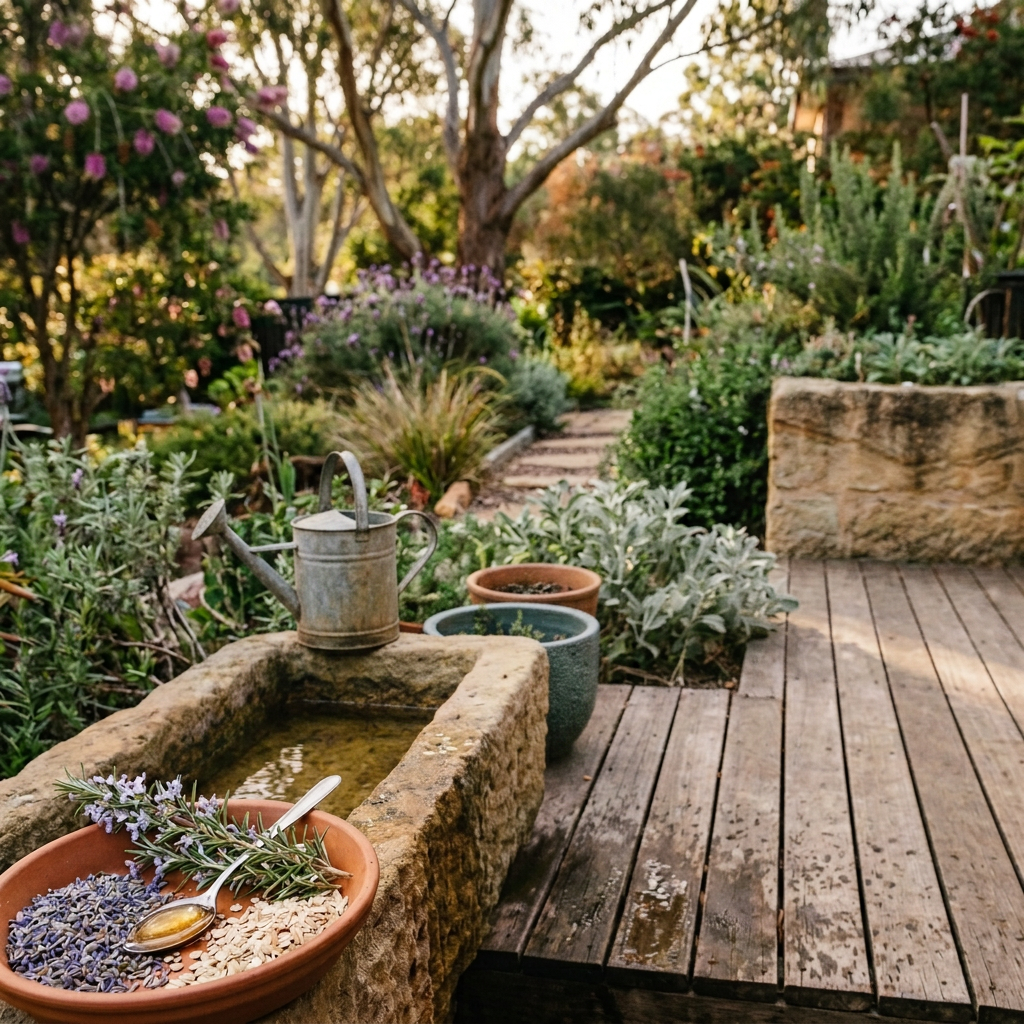
Mabon is a lovely point to shift from the cooling self-care of summer towards something a little more nourishing. Oats and honey also fit naturally with the harvest season, making this an easy bit of autumn self-care using ingredients you may already have in the kitchen.
You will need:
1 tablespoon finely ground rolled oats
1 teaspoon honey
1–2 teaspoons plain natural yoghurt
A tiny splash of water if needed
Mix the oats, honey and yoghurt together until you have a soft, spreadable paste. Add a little water if the mixture is too thick.
Apply a thin layer to clean skin, avoiding the eye area, and leave it on for around 10 minutes. Rinse gently with lukewarm water rather than letting the mixture dry completely hard on your skin.
The oats provide gentle soothing and softening, while the honey acts as a humectant and the yoghurt gives the mask a creamy texture and mild exfoliating effect.
Make only enough for one use rather than preparing a jar to store. Because it contains fresh yoghurt and no preservative, this is definitely one for mixing up when you want it rather than finding a forgotten science experiment in the fridge three weeks later.
Then wash it off, put on your usual moisturiser and enjoy ten minutes of autumn self-care while the evenings outside are beginning to grow a little darker.
Practical Magic for the Season
Mabon Autumn Spice Mix
A little jar of autumn spice is easy to make, keeps well and can be used throughout the season in porridge, baked apples, pancakes, muffins, cakes or anything else that could use a bit of warmth.
You will need:
3 tablespoons ground cinnamon
1 teaspoon ground ginger
1 teaspoon ground nutmeg
½ teaspoon ground allspice
¼ teaspoon ground cloves
Add everything to a small clean, dry jar and shake well to combine.
As you mix the spices, think about what you want your home to hold as the Wheel moves into its darker half — warmth, comfort, balance, abundance and a sense of having enough.
Keep the jar with your other spices and actually use it. Stir a little through porridge, sprinkle it over apples or pears before baking, add it to pancake batter, use it in an apple crumble or mix some through brown sugar for cinnamon toast.
You could even write Mabon Autumn Spice on the label and make a fresh batch each Autumn Equinox. Over time, the scent itself becomes connected with the season.
A Family Tradition
The Mabon Family Simmer Pot
Each Mabon, gather everyone in the kitchen to make the family simmer pot together.
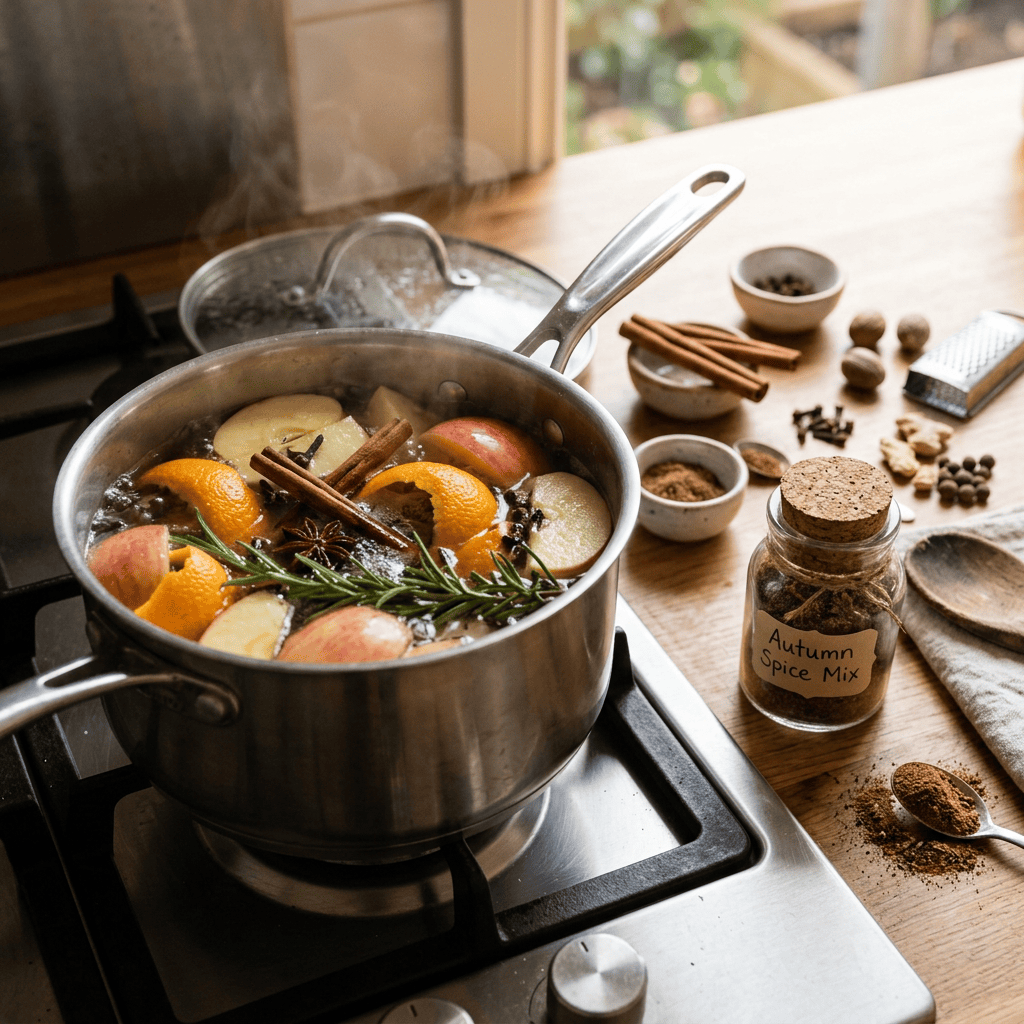
Set out a saucepan of water along with a selection of ingredients such as apple slices, orange peel, cinnamon sticks, cloves, rosemary and any other herbs or spices that feel right for the season.
Let each person choose something to add.
As they drop their ingredient into the pot, they can say something they’re grateful for from the year so far, something they want more of in the home, or simply why they chose that particular ingredient. Younger children can just choose what smells good and throw it in — there doesn’t have to be a profound declaration attached to every cinnamon stick.
Once everyone has contributed, bring the pot to a gentle simmer and let it scent the house while you’re together. Keep topping up the water as needed and never leave it simmering unattended.
The ingredients might change from year to year depending on what you have in the kitchen or garden, but everyone adding something of their own becomes the tradition.
Over time, that familiar warm scent filling the house can become one of those little signals that Mabon has arrived and autumn is beginning. 🍎🍂
And I think that’s actually a much stronger final family tradition for Mabon.
 The Wheel at Home