Litha — The Summer Solstice
Litha at a Glance
Pronunciation: LEE-tha
Date: Around 21–22 December in the Southern Hemisphere
Season: Summer
Wheel Position: Summer Solstice — between Beltane and Lughnasadh
Themes: Light, abundance, vitality, joy, warmth, celebration, strength and fullness
Litha marks the Summer Solstice, the longest day and shortest night of the year. It is the point on the Wheel when daylight reaches its peak, with the sun at the height of its annual journey before the days gradually begin to shorten again.
By Litha, the lively energy of Beltane has ripened into the fullness of summer. Growth is well established, the sun is strong and the natural world is busy with life. It is a bright, expansive part of the Wheel, associated with abundance, vitality and enjoying what has reached its fullest expression.
There is an interesting turning point within the Summer Solstice. Although it celebrates the greatest amount of daylight in the year, it also marks the moment when that light begins its gradual retreat. The change is almost imperceptible at first, with long summer days still stretching ahead, but the Wheel has quietly begun moving towards the darker half of the year.
For those of us in the Southern Hemisphere, Litha arrives in December, right amongst the heat, long evenings, Christmas gatherings, school holidays and the unmistakable beginning of an Australian summer. The Solstice gives us a seasonal moment within all that busyness — the sun at its height, summer properly here and the Wheel reaching its brightest point.
Litha in the Southern Hemisphere
In the Southern Hemisphere, Litha falls around 21–22 December, at the Summer Solstice. This is the longest day and shortest night of our year, when daylight reaches its annual peak and summer has well and truly arrived.
December can look remarkably different across Australia. Southern regions may still have pleasantly warm days mixed with sudden bursts of heat, while further north the combination of high temperatures and humidity can be intense. Tropical areas are moving into the wet season, with heavy rain and storms becoming part of the summer rhythm, while other parts of the country may already be dry and facing increasing bushfire conditions.
The Solstice itself gives us a definite point within all of those different climates. The sun reaches its most southerly position in our sky and we experience our greatest stretch of daylight. From the following day onwards, the days begin their very gradual shortening, although it will be some time before we really notice the difference.
That makes Litha an interesting moment on the Wheel. It celebrates the height of the light while quietly containing the first movement back towards darkness. Summer is only beginning in the way we experience the seasons, yet astronomically the sun has already reached its turning point.
Here in Australia, the strength of the sun is difficult to ignore. By December, shade becomes precious, afternoons can be fiercely hot and daily routines often shift around the temperature. Summer means hats, sunscreen, swimming, cold drinks, fans and air conditioning as much as it means sunshine and outdoor living.
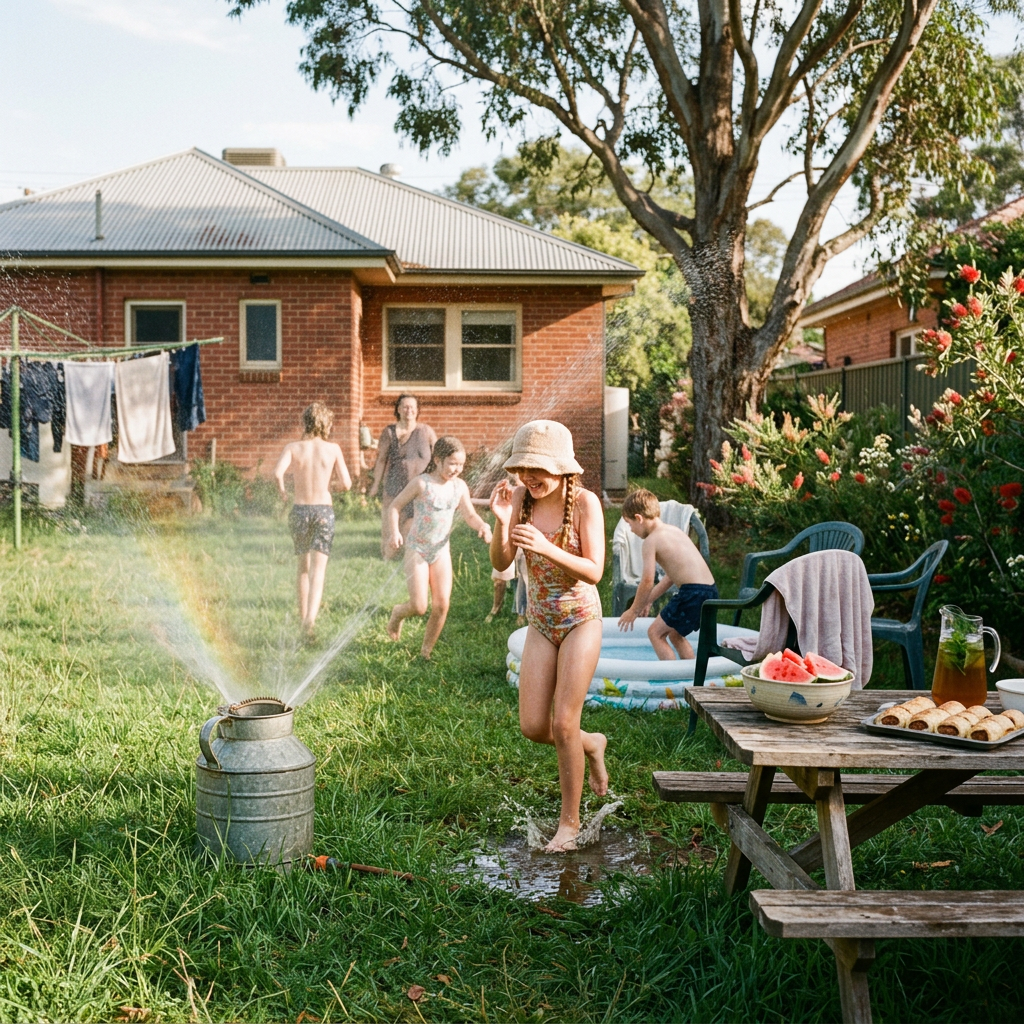
It is also a season shaped by water. Beaches, pools, rivers and backyard sprinklers become places of relief from the heat, while summer storms can transform a hot afternoon within minutes. In some regions, rain brings extraordinary growth and abundance; elsewhere, water becomes something to conserve carefully.
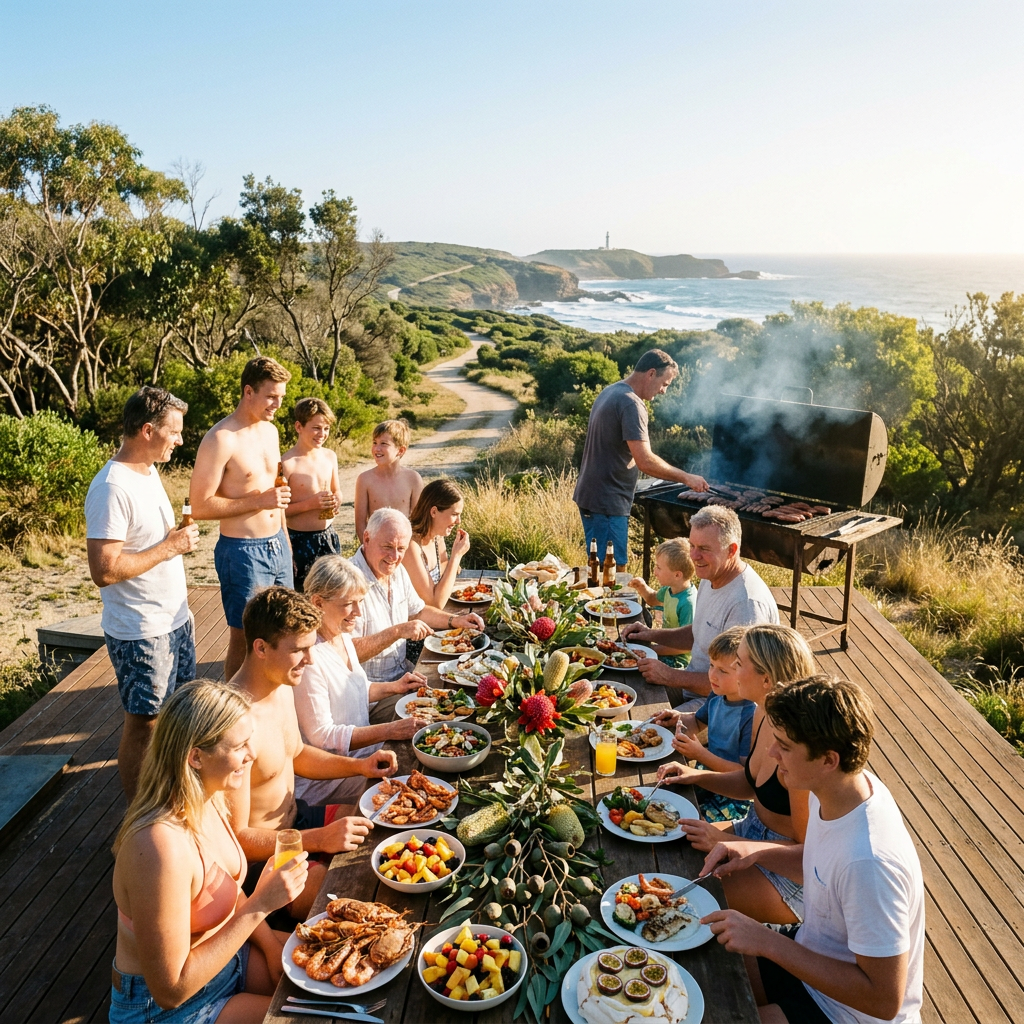
Litha also falls into one of the busiest and most social times of the Australian year. Christmas is only days away, schools have finished or are finishing for the year, holidays are beginning and evenings are filled with barbecues, gatherings, Christmas lights and meals that stretch well beyond sunset. There is already a natural sense of celebration surrounding the Solstice, even when we don’t call it that.
The traditional fire and solar symbolism of the Summer Solstice certainly still makes sense here, but our relationship with the summer sun is complicated. We can appreciate its warmth, energy and extraordinary light while also respecting how powerful it is. At an Australian Litha, water, shade and the cool relief of evening can feel every bit as significant as fire.
Celebrating Litha in the Southern Hemisphere gives us a chance to notice the height of our own summer light in the middle of an already busy season. Beneath the Christmas rush and end-of-year celebrations, the sun has reached its peak, the longest day has arrived and the Wheel has quietly turned once again.
What We Notice Here
By Litha, there is absolutely no mistaking summer in Southeast Queensland. The sun is up early, the days are long and the heat has settled in properly. Even mornings can feel warm, and by the middle of the day we are often looking for shade rather than sunshine.
The light itself feels different. It is bright, strong and almost glaring at times, bleaching the colour from the middle of the day before everything softens again towards evening. Sunrise comes early, sunset seems to take forever, and there can still be plenty of light in the sky when dinner is being organised.
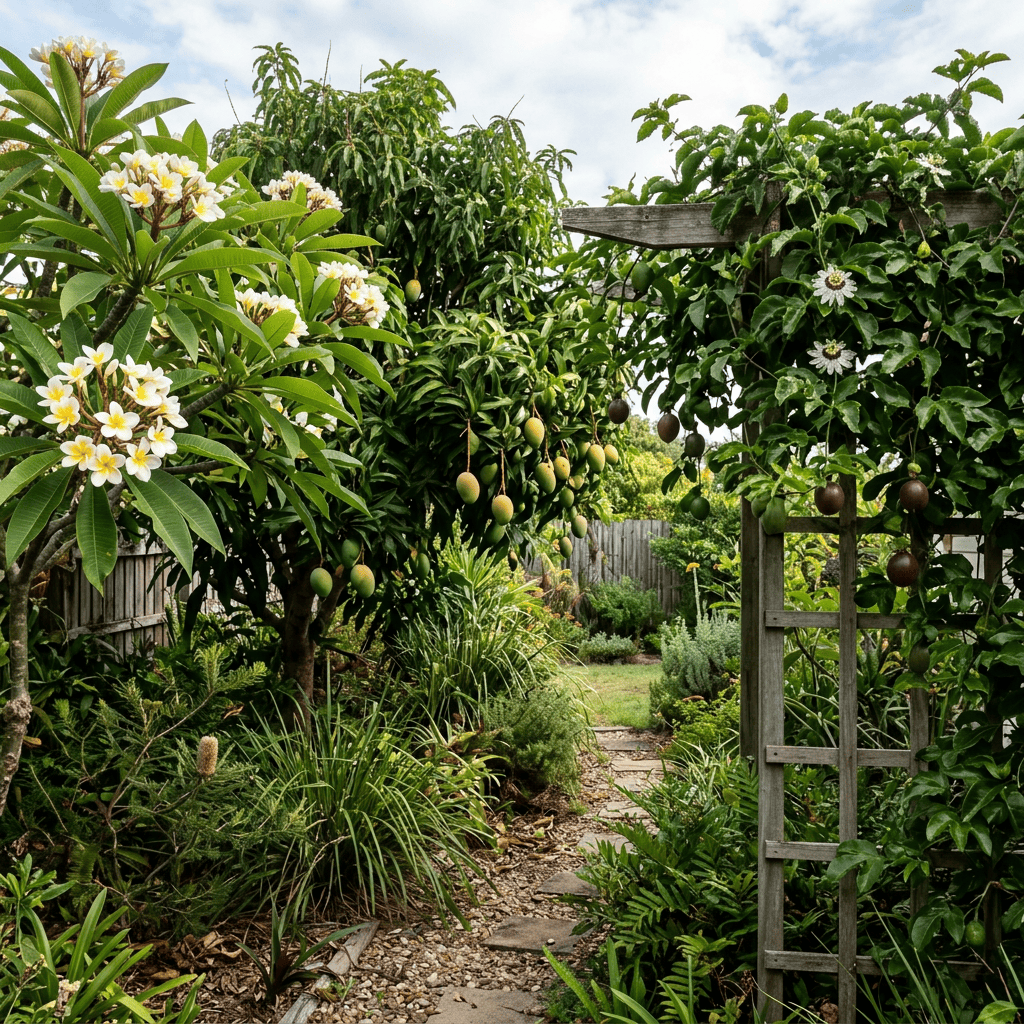
Gardens are incredibly active, although the heat changes the way we care for them. Plants can grow rapidly after summer rain, lawns seem to need mowing constantly and tropical and subtropical plants are thriving. Frangipanis are flowering, poincianas bring huge splashes of red and orange, and flowering gums, grevilleas and other natives keep birds and insects busy.
Mangoes are appearing on trees and at roadside stalls, passionfruit vines are growing enthusiastically and summer fruit begins taking over kitchens and markets. There is something very Australian about this kind of seasonal abundance — mango juice running down your hands, watermelon straight from the fridge and bowls of cherries appearing as Christmas approaches.
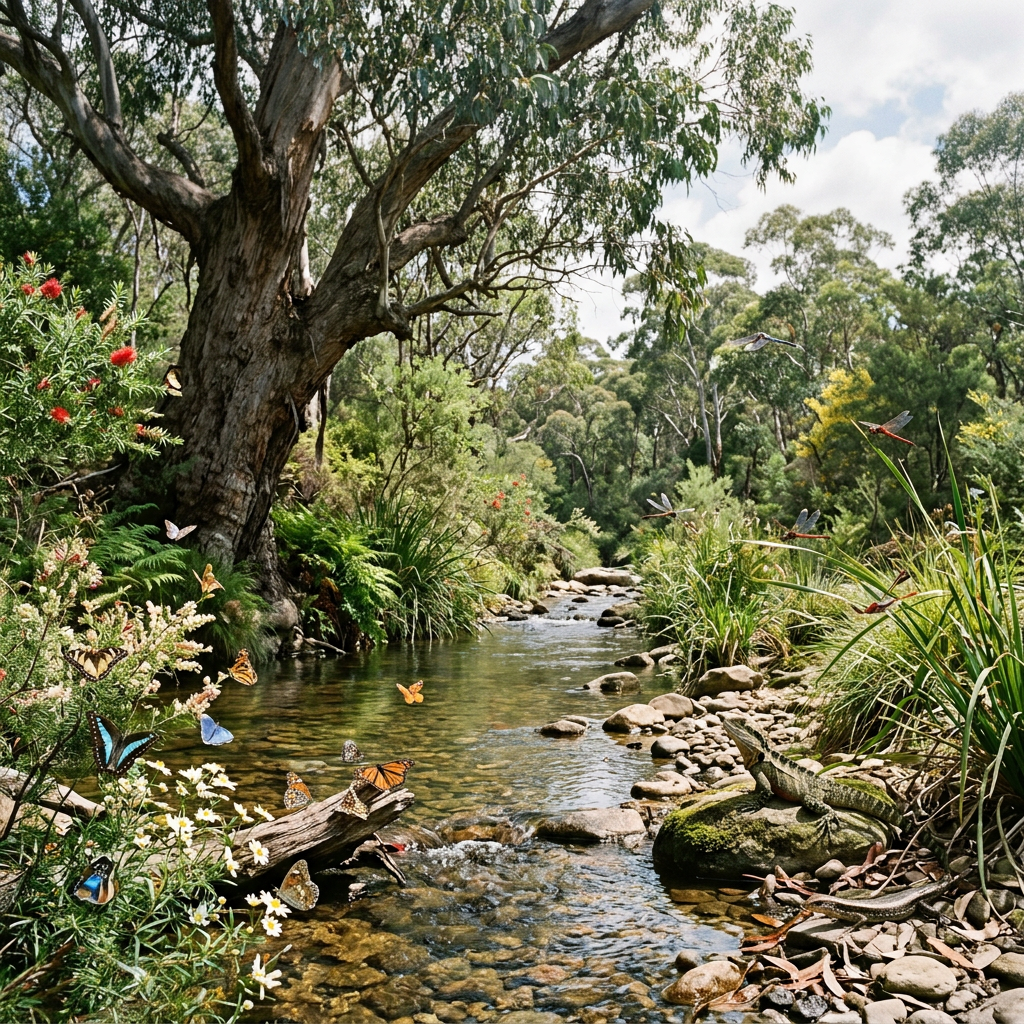
Wildlife has changed with the season too. Cicadas can become almost deafening, particularly towards evening, while lorikeets descend noisily on flowering and fruiting trees. Lizards bask in warm spots, butterflies and dragonflies appear around gardens and waterways, and the nighttime soundtrack becomes increasingly loud with insects and frogs after rain.
Then there are the storms. Hot, heavy afternoons can build towards towering clouds, thunder and sudden downpours, sometimes with spectacular lightning and strong winds. Afterwards, the temperature drops, the air smells completely different and frogs seem to start calling from everywhere at once.
Water becomes part of daily life in a way it simply isn’t during winter. Pools, beaches, creeks and sprinklers offer relief from the heat, while gardens need regular watering between rain. Even something as ordinary as standing under a cool shower at the end of a hot day can feel particularly good at this time of year.
Our routines begin working around the temperature. Gardening and walking happen earlier or later, blinds are closed against the afternoon sun and ceiling fans seem to run constantly. Outdoor tables that are unbearable at midday become beautiful places to sit once the sun drops lower and the evening breeze arrives.
And of course, December brings its own unmistakable atmosphere. Christmas lights appear on houses, gatherings fill the calendar, school holidays begin and there are barbecues, seafood, cold drinks and people coming and going. The whole month can feel busy, bright and slightly chaotic.
Amongst all of that activity, the Solstice itself can easily slip past unnoticed. Yet the signs of it are everywhere: the incredibly early sunrise, the long evening light, the intensity of the midday sun and the way life naturally rearranges itself around heat and daylight.
This is our Litha: blazing sunlight, mangoes and cherries, flowering poincianas and frangipanis, noisy cicadas, afternoon storms, warm nights, Christmas lights and those wonderfully long summer evenings when the day seems reluctant to end.
Themes of the Season
Litha carries themes of light, abundance, vitality, joy, strength, celebration and fullness. The Summer Solstice brings us to the brightest point on the Wheel, when daylight has reached its peak and the season feels expansive and alive. Yet tucked quietly within all that brightness is a turning point — from here, the days will slowly begin to shorten.
Light
Light is at the very heart of Litha. The Summer Solstice gives us the longest stretch of daylight in the year, and the strength of the sun is impossible to ignore.
This is a very different light from the small returning flame we celebrated at Yule. It is bold, strong and abundant. Litha can be a time to enjoy that brightness while also noticing what feels clear in our own lives — what we understand better now, what has come into focus and what no longer feels hidden or uncertain.
Abundance
The natural world is producing, flowering, fruiting and growing, and the abundance of summer can be seen everywhere from gardens and markets to flowering trees and bowls of seasonal fruit.
Abundance can also be something we recognise in ordinary life. Enough food to share, people around the table, a garden producing something we can eat, time spent with people we love or simply having more than we need of something and being able to pass a little of it on.
Vitality
There is tremendous energy in the landscape at Litha. Plants grow quickly, insects hum, storms build and the long daylight stretches activity well into the evening.
Vitality does not necessarily mean being constantly busy. In the heat of an Australian summer, knowing when to seek shade, water and rest is part of living with the season too. Energy has its rhythms, and Litha can hold both the lively morning and the slow afternoon.
Joy
Litha has a naturally joyful quality. Long evenings, swimming, summer fruit, holidays, gatherings, music, cold drinks and meals outside all bring their own small pleasures.
Joy does not always arrive through something extraordinary. Sometimes it is simply recognising a good moment while we are actually in it rather than realising afterwards how lovely it was.
Strength
The sun at the Summer Solstice is traditionally a symbol of strength and power. Here in Australia, that power is particularly tangible. Summer sunlight can nourish and sustain life, but it can also burn, dry and overwhelm.
There is something useful in that understanding of strength. Real strength is not always about pushing harder. It can include knowing our limits, protecting what matters and recognising when enough really is enough.
Fullness
Earlier points on the Wheel carried potential, beginnings and growth. By Litha, much of that movement has reached a stage of fullness. The season is no longer preparing to become something else — summer is here.
This can be a lovely point to look back at what has developed since winter. Something that was only an idea at Imbolc or beginning to grow at Ostara may look quite different now. Litha gives us a moment to appreciate what has actually come from those earlier beginnings.
Celebration
The Summer Solstice has been marked with gatherings, fires, feasting and festivities in many different places and periods of history. Our Australian Litha arrives during an already celebratory part of the year, with Christmas, holidays and end-of-year gatherings happening all around us.
Rather than adding another obligation to an already crowded month, Litha can simply become part of that celebration — another reason to enjoy the long evening, share food, raise a glass or spend time with people we care about.
The Turning Point
Perhaps the most interesting theme of Litha is the contradiction at its centre. This is the longest day of the year, but it is also the point from which daylight begins to decrease.
Nothing suddenly becomes dark. Summer does not disappear and the change will barely be noticeable for some time. The Wheel simply begins moving in another direction.
That gives Litha a slightly bittersweet quality beneath all its brightness. We can enjoy something fully while knowing it will not last forever. In fact, knowing that may be exactly what makes us pay closer attention while it is here.
Together, these themes make Litha more than a celebration of sunshine. It holds abundance and limits, energy and rest, fullness and change — all beneath the brilliant light of the longest day.
Seasonal Invitation
Litha invites us to enjoy the fullness of summer while it is here.
The sun has reached its highest point on the Wheel, the days are wonderfully long and life has spilled well beyond the walls of the house. This is a season that can be experienced with the whole body — warm air, cool water, bare feet, summer fruit, noisy evenings and the enormous relief of a breeze after a hot day.
Make use of the extra daylight. Get up early and enjoy the cool part of the morning before everyone else is moving. Take dinner outside once the heat has eased. Go for an evening walk, swim late in the afternoon or sit somewhere with a drink and watch the sky change colour. There is something lovely about reaching the end of the day and still having daylight left to enjoy.
This is also a good time to appreciate what is already full in your life. We spend so much time thinking about what we are working towards that it is easy to miss the things that have actually arrived. Look at what has changed since winter, what you have accomplished, what has grown stronger and what is simply going well. Let yourself enjoy some of it before immediately deciding what needs to happen next.
Share a little of that abundance where you can. Give someone mangoes from an overloaded tree, take something homemade to a gathering, invite an extra person to the table, share flowers or herbs from the garden or give your time to someone who could use the company. Summer abundance feels particularly good when it moves between people.
Litha can also be a good excuse to do things that feel unmistakably like summer. Go somewhere for a swim. Buy cherries and eat far too many of them. Have fish and chips by the water. Take a picnic somewhere shady. Stay outside after dark listening to the cicadas. Put your feet in the sprinkler while watering the garden. Enjoy the season in ways that have absolutely nothing to do with being productive.
And in the middle of December’s inevitable busyness, find a little space for nothing. Christmas preparations, work, family gatherings and end-of-year jobs can turn this part of the year into a blur. An afternoon nap under the fan, half an hour with a book or a quiet swim can belong to Litha just as much as celebration and activity.
The Solstice itself offers an interesting moment to notice. The light has reached its greatest extent, and from here it will slowly begin to retreat. There is no sadness required in that. It simply gives us a reason to appreciate where we are before the Wheel moves on again.
So for Litha, the question might be:
What is already good that I want to enjoy more?
Notice it while it is happening. Eat the fruit. Get in the water. Stay at the table. Watch the sunset. Enjoy the people around you and the things that have grown well.
The longest day only comes once a year. Make some room to actually be in it.
Litha Correspondences
These correspondences bring together associations commonly used for Litha and the Summer Solstice, older European midsummer traditions and modern Pagan practice, along with Australian alternatives that reflect the intensity and abundance of our own summer season.
Colours & Candles
Gold — sunlight, abundance, strength and vitality
Yellow — joy, optimism, warmth and solar energy
Orange — creativity, enthusiasm, fire and energy
Red — strength, passion, courage and vitality
Green — growth, abundance and the flourishing natural world
White — illumination, clarity and protection
Blue — water, cooling, calm and balance
For candles, gold, yellow, orange and red are particularly suited to Litha and its solar associations. Blue can also be a lovely addition to an Australian Litha, acknowledging the importance of water and coolness during the height of summer.
Crystals & Stones
Sunstone — vitality, confidence, joy and solar energy
Citrine — optimism, abundance, creativity and warmth
Carnelian — motivation, courage, creativity and vitality
Tiger’s Eye — confidence, strength, protection and courage
Clear Quartz — clarity, energy and amplification
Amber — warmth, sunlight and protection
Green Aventurine — abundance, growth and optimism
Aquamarine — water, calm, cooling and clarity
Traditional Herbs, Plants, Flowers & Trees
St John’s Wort — protection, sunlight and European midsummer traditions
Chamomile — sunlight, calm and prosperity
Lavender — purification, peace and protection
Rose — love, beauty and abundance
Elder — protection, folklore and seasonal tradition
Oak — strength, endurance and solar symbolism
Fern — protection, folklore and midsummer magic
Mugwort — protection, dreams and divination
Yarrow — protection, healing and courage
Rosemary — protection, clarity and vitality
Many plants now associated with Litha come from a much broader collection of European midsummer and folk traditions rather than from one historical festival called Litha.
Australian Herbs, Plants, Flowers & Trees
Poinciana — vitality, brilliance and the height of summer
Frangipani — warmth, beauty and summer abundance
Grevillea — vitality, abundance and connection
Bottlebrush — resilience, vitality and adaptability
Banksia — strength, endurance and regeneration
Eucalyptus — protection, cleansing and strength
Lemon Myrtle — brightness, cleansing and vitality
Native Mint — freshness, cooling and renewal
Macadamia — abundance, nourishment and the Australian landscape
What flourishes around the Summer Solstice varies greatly across Australia. Flowers, foliage, herbs and fruit growing locally can provide correspondences that are much more closely tied to the season we are actually experiencing.
Animals
Bees — abundance, productivity, community and pollination
Butterflies — transformation, beauty and change
Dragonflies — movement, transformation and adaptability
Birds — freedom, activity and communication
Lizards — warmth, sunlight and adaptability
Cicadas — summer, transformation and renewal
Frogs — water, rain, fertility and renewal
For an Australian Litha, cicadas, frogs, lizards and the birds filling flowering and fruiting trees can become particularly recognisable signs of the season.
Essential Oils
Sweet Orange — joy, optimism and warmth
Lemon — freshness, clarity and brightness
Bergamot — vitality, confidence and joy
Lemon Myrtle — freshness, energy and an Australian summer connection
Peppermint — cooling, clarity and refreshment
Lavender — calm, balance and relaxation
Rosemary — vitality, clarity and energy
Frankincense — grounding, reflection and spiritual practice
Essential oils should always be used appropriately and diluted when required. Some oils are unsuitable for certain people, pets or methods of use, and some citrus oils can increase sensitivity to sunlight when applied to the skin, so check the safety information for the individual oil.
Food & Drinks
Summer Fruits — abundance, sweetness and vitality
Cherries — abundance, pleasure and celebration
Mangoes — sweetness, abundance and summer
Watermelon — refreshment, water and summer abundance
Honey — sweetness, prosperity and the work of bees
Fresh Herbs — vitality, growth and freshness
Tomatoes — abundance, warmth and the summer garden
Bread — nourishment, community and sharing
Edible Flowers — beauty, celebration and abundance
Cold Herbal Teas — refreshment, herbs and cooling
Fruit Punches — celebration, abundance and sharing
Symbols
The Sun — light, vitality, strength and the Summer Solstice
Sun Wheels — the solar cycle and turning of the year
Bonfires — protection, celebration and European midsummer traditions
Candles — light, warmth and illumination
Sunflowers — sunlight, joy and abundance
Flowers and Garlands — celebration, fertility and the flourishing season
Oak Leaves — strength, endurance and midsummer folklore
Water — cooling, renewal and balance
Herbs — protection, healing and traditional midsummer gathering
Sunrise — the Solstice, illumination and the height of the light
Tarot
The Sun — vitality, joy, confidence and illumination
Strength — courage, energy and inner strength
The Empress — abundance, creativity and flourishing life
Six of Wands — achievement, recognition and confidence
Nine of Pentacles — abundance, enjoyment and appreciating what has grown
Four of Wands — celebration, gathering and community
Ace of Cups — emotional abundance, joy and connection
Moon Phases
Litha is not tied to a particular moon phase, but the moon occurring at the time can add another layer to personal ritual or reflection.
New Moon — intentions, possibility and beginnings
Waxing Moon — growth, vitality and building energy
Full Moon — abundance, illumination and celebration
Waning Moon — gratitude, release and gradual transition
Dark Moon — rest, reflection and restoration
Deities of Litha
As with Ostara, there was no single historical European festival called Litha with an established group of deities worshipped at the Summer Solstice. The deities now associated with Litha come from different cultures, historical traditions and modern Pagan practice.
Belenus — A Celtic deity known from inscriptions found across parts of ancient Europe and often associated with brightness, healing and solar qualities. His connection with the modern Summer Solstice celebration is largely thematic rather than evidence of historical Litha worship.
Áine — An Irish goddess strongly associated with the land, sovereignty, fertility and summer. Traditions surrounding Áine are particularly connected with midsummer in County Limerick, making her one of the more historically appropriate figures to include among Litha correspondences.
Ra — The ancient Egyptian sun god and one of the most important solar deities of Egyptian religion. Ra was not connected with a festival called Litha, but is sometimes included in modern Pagan Summer Solstice practice because of his strong association with the sun.
Apollo — The Greek god associated with prophecy, music, healing and, in later tradition, the sun and light. Although Helios was the earlier Greek personification of the sun itself, Apollo’s later solar associations have made him a common modern correspondence for Litha.
Sunna/Sól — The personified sun in Germanic and Norse tradition. Sól appears in Old Norse mythology as the goddess who drives the sun across the sky, while related Germanic traditions preserve the name Sunna. Her solar nature makes her a natural modern association with the Summer Solstice.
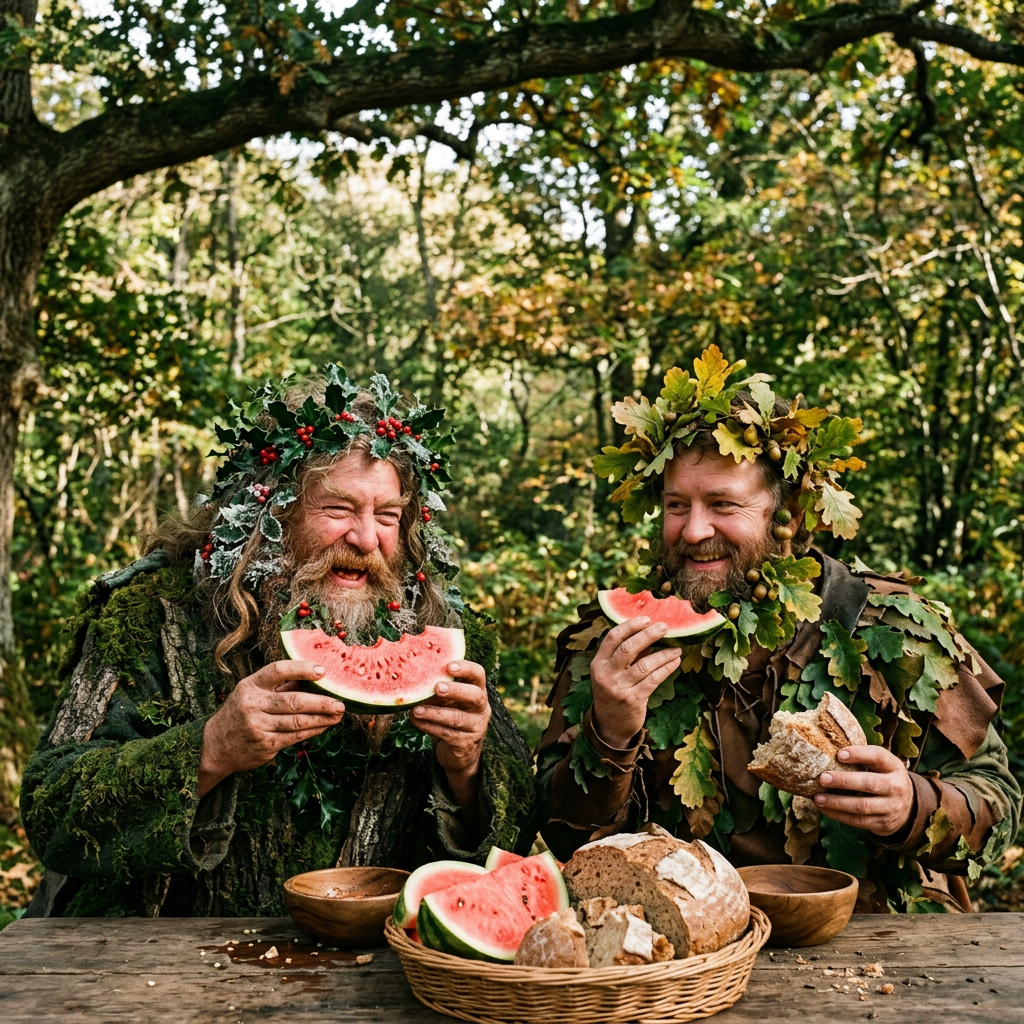
The Oak King and Holly King — These figures are popular within modern Pagan seasonal mythology rather than documented ancient Celtic deities. In the familiar modern story, the Oak King reaches the height of his power at the Summer Solstice before the Holly King begins to ascend as the days shorten. The story provides a beautiful symbolic expression of the Solstice turning point, but its modern origins are worth keeping clear.
Bringing the Season Home
Litha arrives at a time when the home naturally begins to feel different. Doors open onto warm evenings; cold drinks gather condensation on the table and outdoor spaces become almost another room of the house. Bringing Litha home can be bright and summery, but it can also celebrate the things we appreciate most at this time of year — shade, water, fresh fruit and somewhere cool to retreat when the day gets too hot.
Seasonal Displays
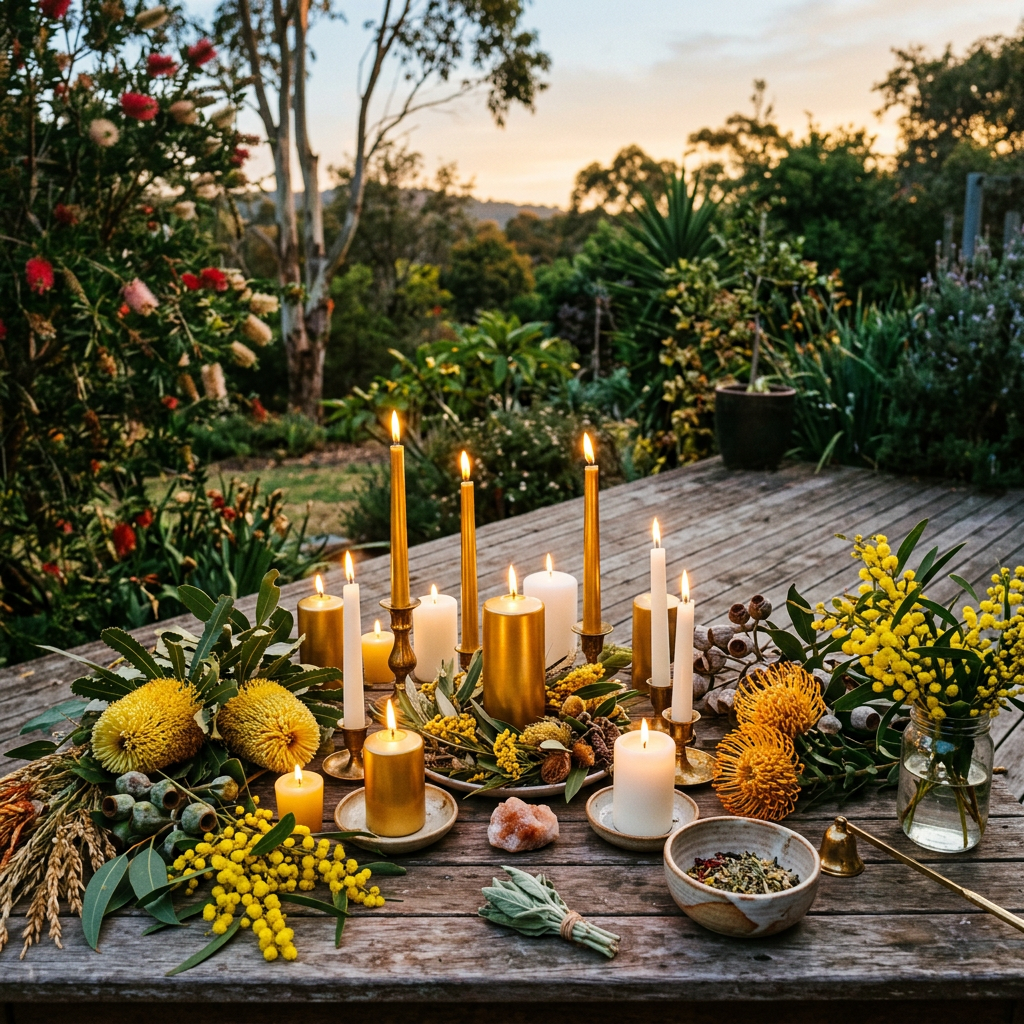
Create a Litha display filled with sunlight and summer colour. Gold, yellow, orange and white candles work beautifully with fresh greenery, flowers, citrus, crystals or other little pieces that capture the brightness of the Solstice.
Summer flowers can take centre stage. Frangipani, poinciana, grevillea, bottlebrush or whatever happens to be flowering in your garden can bring the season straight indoors. Even a few frangipani flowers floating in a shallow bowl of water make a beautiful simple display.
Fruit works wonderfully as decoration at Litha too. A bowl overflowing with mangoes, lemons, peaches, nectarines or cherries is colourful, useful and completely at home in an Australian summer kitchen.
Bring water into your display with a small bowl filled with fresh water, flowers or floating candles. While Litha is strongly associated with the sun and fire, water has a special place in our summer — cooling, refreshing and balancing the intensity of the heat.
Sun shapes can appear in small ways too. A round golden candle, sunflower, citrus slices, woven placemat or something handmade can quietly echo the Solstice without turning the house into a sea of sun decorations.
Creating a Seasonal Atmosphere
Let the house work with the summer light. Open everything up during the cooler morning, then close blinds or curtains where the afternoon sun becomes too strong. As evening arrives, open the doors again and let whatever breeze there is move through.
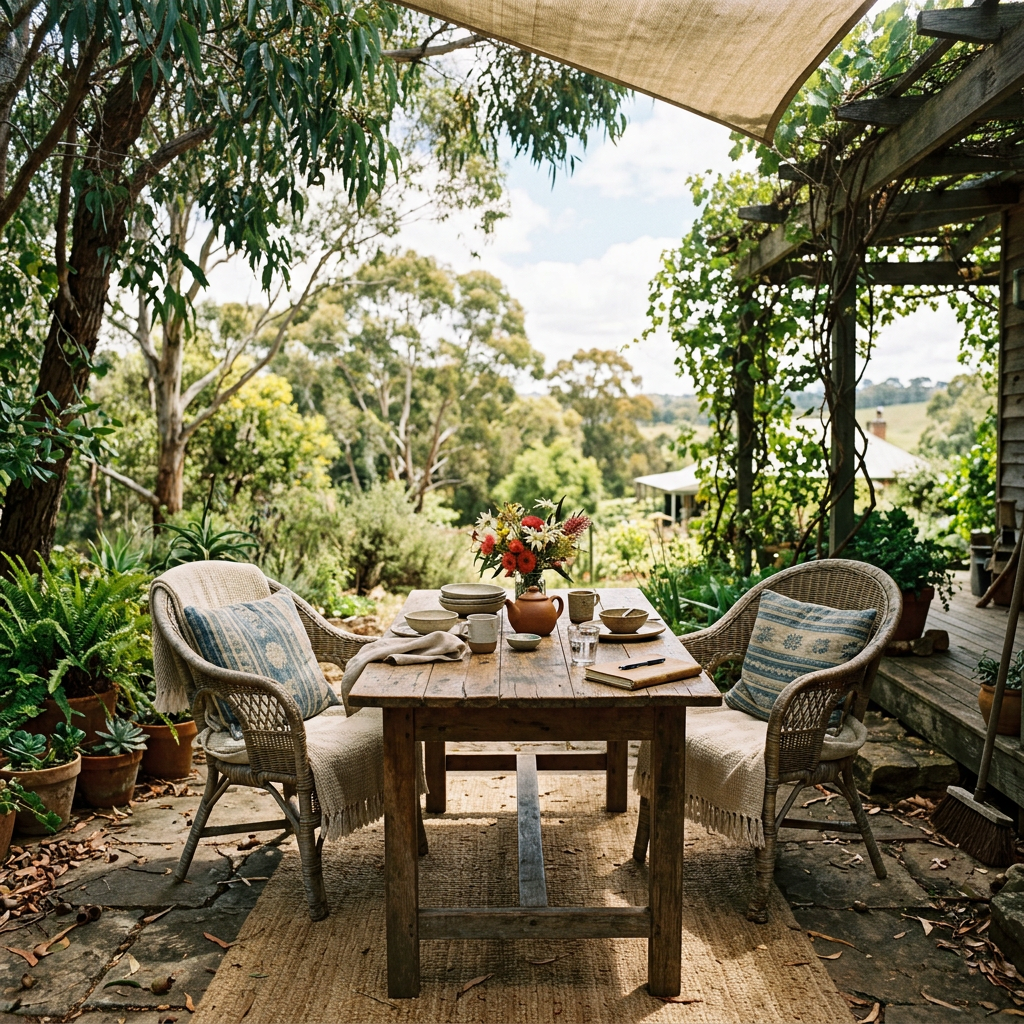
Make outdoor spaces inviting during the cooler parts of the day. A shady table, comfortable chair, outdoor cushions, lanterns or fairy lights can turn a verandah or patio into somewhere you genuinely want to spend those long summer evenings.
Fresh, bright scents suit Litha beautifully. Lemon, lime, mint, rosemary, lavender and lemon myrtle can come from fresh herbs and foliage, candles or other home fragrance. A jug of water filled with citrus slices, mint and plenty of ice brings those same scents and flavours to the table.
Keep flowers and greenery loose and summery rather than formal. A few branches in a large vase, flowers floating in water or herbs sitting in jars on the kitchen bench can feel much more suited to December than anything heavily arranged.
This is also a lovely time to bring out the things that only seem to belong to summer — colourful glassware, big salad bowls, woven baskets, linen tablecloths, outdoor serving platters and the jug you always use for cold drinks.
And as evening arrives, soften everything. Turn off the bright lights, light a few candles or lanterns, put something cold in a glass and take it outside. The long evening light is one of Litha’s simplest pleasures, and the house can become the place from which we actually stop and enjoy it.
Ways to Celebrate Litha
Litha falls right in the middle of an already lively time of year, so celebrating the Summer Solstice can fit easily into the things we naturally enjoy about an Australian summer. Long days, water, seasonal food, outdoor gatherings and warm evenings give us plenty of ways to mark the brightest point on the Wheel.
Watch the Solstice Sunrise
Get up early and watch the sun rise on the longest day of the year. Take a coffee outside, head to the beach or find somewhere with a clear view of the horizon and enjoy the beginning of the Solstice while the morning is still cool.
Have a Summer Solstice Picnic
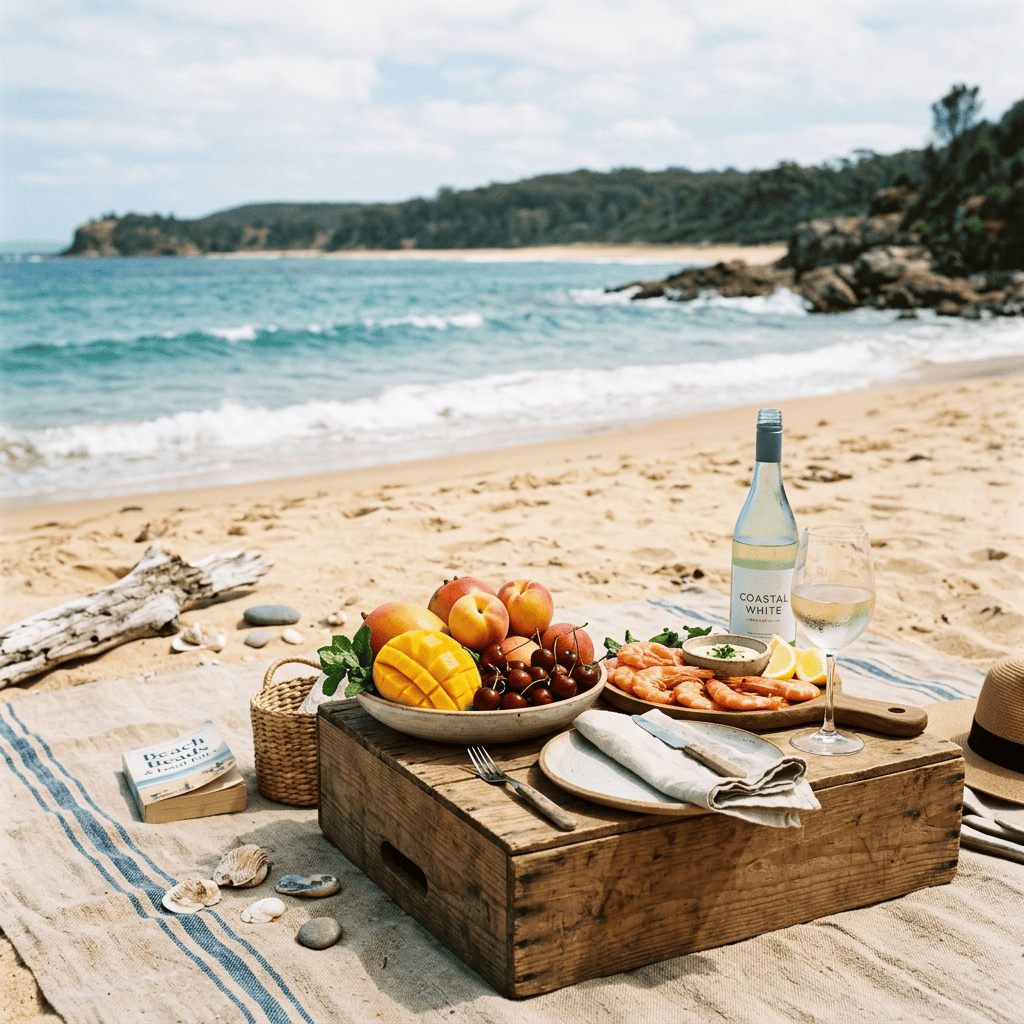
Pack fresh fruit, salads, bread, cheese and plenty of cold drinks and find somewhere shady for lunch. A park, botanical garden, beach or spot beside the water makes a beautiful place to spend part of the longest day.
Go for a Solstice Swim
Celebrate the height of summer with water rather than fire. Swim at the beach, float around the pool, visit a creek or waterfall, or simply put your feet in the water somewhere beautiful.
Make a Sun Catcher
Use beads, crystals, shells, coloured glass or other translucent materials to make something that catches the strong summer light. Hang it near a sunny window or outside where you can watch the light move through it during the day.
Gather Summer Herbs
Pick herbs from the garden while they are flourishing. Rosemary, lavender, mint, lemon myrtle or whatever you are growing can be dried for later, used in cooking, made into iced tea or tied into small bundles.
Eat Something Straight From Summer
Make the most of whatever is abundant locally. Slice up mangoes, chill a watermelon, buy a bag of cherries, make a tomato and herb salad or put together a platter of fresh summer fruit.
Have Dinner Outside
Wait until the heat begins to ease and take dinner outdoors. Put flowers on the table, light a few lanterns, serve something fresh and summery and stay outside as the daylight slowly disappears.
Make a Flower and Herb Wreath
Use flexible greenery, herbs and flowers to make a simple summer wreath. Hang it on the door, place it flat around a candle or use it as the centrepiece for a Solstice table.
Spend the Longest Day Outdoors
Choose something you genuinely enjoy and give yourself a good stretch of the day for it. Go to the beach, garden in the cooler hours, visit somewhere new, take a bushwalk suited to the weather or find a shady spot and read.
Share Something Abundant
If your garden is producing more herbs, fruit or vegetables than you can use, share some with someone else. If the garden isn’t cooperating, abundance can just as easily be a homemade treat, a bunch of flowers or an invitation to join you for a meal.
Watch the Solstice Sunset
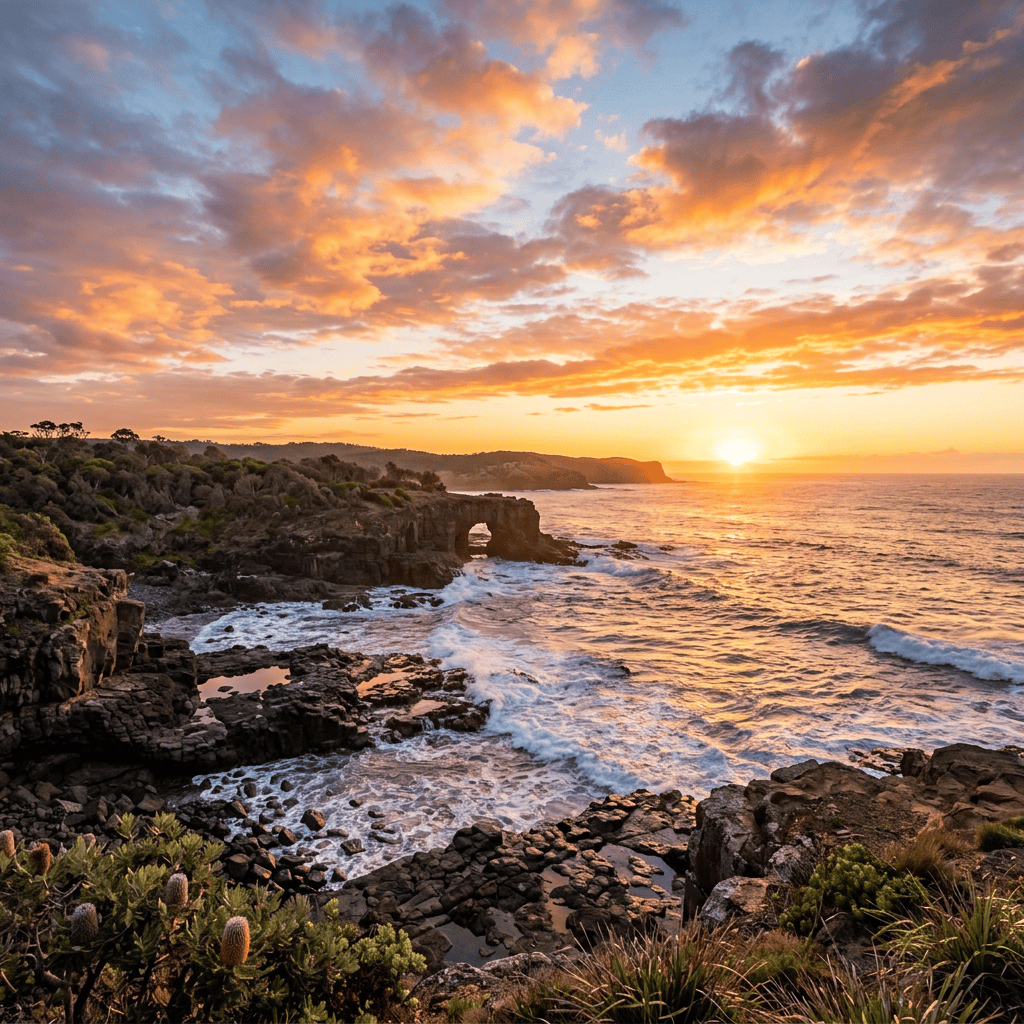
If sunrise is never going to happen, sunset counts too. Take a drink outside, head somewhere with a good view and watch the longest day finally come to an end.
Stay Outside After Dark
Once the heat has gone out of the day, stay outside for a while. Listen to the cicadas and frogs, watch for bats overhead, look at the stars or enjoy the relief of the cooler night air after a blazing summer day.
Litha doesn’t need another event squeezed into an already packed December calendar. It can simply become part of summer itself — a swim, a beautiful meal, ripe fruit, an evening outside and a little time spent noticing just how much light surrounds us at this point on the Wheel.
Litha Reflections
Litha is a lovely point on the Wheel to notice what has reached its fullness. The year has travelled from the darkness of winter to the longest day, and there can be something satisfying about recognising what has grown alongside it — without immediately turning our attention to the next thing.
Journal Prompts
What has grown or changed in my life since Yule?
Where do I feel most energised and alive at the moment?
What is already abundant in my life that I sometimes overlook?
What deserves to be celebrated or enjoyed rather than improved?
As the light begins its slow return towards darkness, what do I want to carry with me?
Five-Card Summer Solstice Tarot Spread
1. What is shining brightly?
Something in your life that is flourishing, working well or ready to be appreciated.
2. What has reached its fullness?
Something that has grown, developed or come further than you may have realised.
3. What deserves celebrating?
An achievement, relationship, strength or part of your life worth enjoying right now.
4. Where do I need some shade?
An area where you may need rest, protection, boundaries or a little less intensity.
5. What will I carry beyond the Solstice?
Guidance for moving forward as the Wheel turns and the light gradually begins to change.
Rituals and Seasonal Magic
A Simple Litha Ritual – Welcoming the Solstice Sun
The Summer Solstice marks the sun at its strongest and the longest stretch of daylight in the year. This simple ritual is best done outside in the early morning or late afternoon, when you can spend a little time with the light without roasting yourself in the process.
Find somewhere comfortable to sit with a yellow, gold or white candle and a glass or small bowl of water. The candle represents the sun at its height, while the water brings balance, cooling and refreshment to an Australian Litha.
Light the candle and spend a few moments thinking back over the journey from Yule to now. Think about what has grown, what has changed and what you have managed to bring into your life during the increasing-light half of the Wheel.
Then turn your attention to what is here right now. Choose one thing you are proud of, grateful for or simply really happy to have in your life. Give yourself a moment to appreciate it without immediately thinking about what comes next.
Hold the glass or bowl of water between your hands and say:
At the height of the light,
I honour all that has grown.
I welcome the warmth,
I welcome the abundance,
and I give thanks for what is here now.
As the Wheel turns once more,
may I carry this light with me.
When you are ready, extinguish the candle and take the water outside. Pour it onto a plant or into the garden as a small offering back to the season.
Then go and enjoy your longest day.
A Simple Litha Spell – Sun Water for Joy and Vitality
Litha is the perfect time to make a simple jar of sun water that can be used throughout summer whenever you want to bring a little of that bright Solstice energy into your day.
Fill a clean glass jar or bottle with drinking water and place it somewhere it can sit safely in the morning sun for an hour or two. Avoid leaving it out through the intense middle of an Australian summer day, particularly in a sealed glass container.
As you place it in the sunlight, think about what you would like the water to represent. For Litha, you might choose joy, confidence, energy, courage, abundance or simply light.
When you bring the water inside, refrigerate it and use it within a day or two. Drink it cold, add it to iced tea, use it to water a special plant or add a little to a bath or foot soak.
It is wonderfully simple magic: sunlight, water and an intention you can actually use.
A Small Litha Gift
A Little Jar of Summer Tea
A small jar of iced-tea blend makes a lovely Litha gift, especially in the middle of an Australian summer when something cold and refreshing is particularly welcome.
Choose a small clean jar and fill it with a simple dried blend such as:
Peppermint
Lemon myrtle
Chamomile
A little dried hibiscus for colour
And there is absolutely nothing wrong with buying the tea for your blend. We don’t all have a garden full of herbs conveniently waiting to be harvested, and good-quality loose-leaf herbal teas work perfectly. Buy individual teas and mix your own combination, or find a blend you already love and simply make it into a lovely little Litha gift.
Fill the jar with your tea, then tie a piece of ribbon or twine around the lid. Add a handwritten tag with simple instructions:
Steep, chill, add plenty of ice and enjoy a little taste of summer.
You could also add:
A little sunshine for your Litha.
For an extra touch, tuck a dried citrus slice beneath the ribbon or add a small wooden spoon.
If you’re making several, prepare one larger batch and divide it between little jars. It makes a useful seasonal gift that can actually be enjoyed during those hot December afternoons.
Extra Summer Gift Ideas
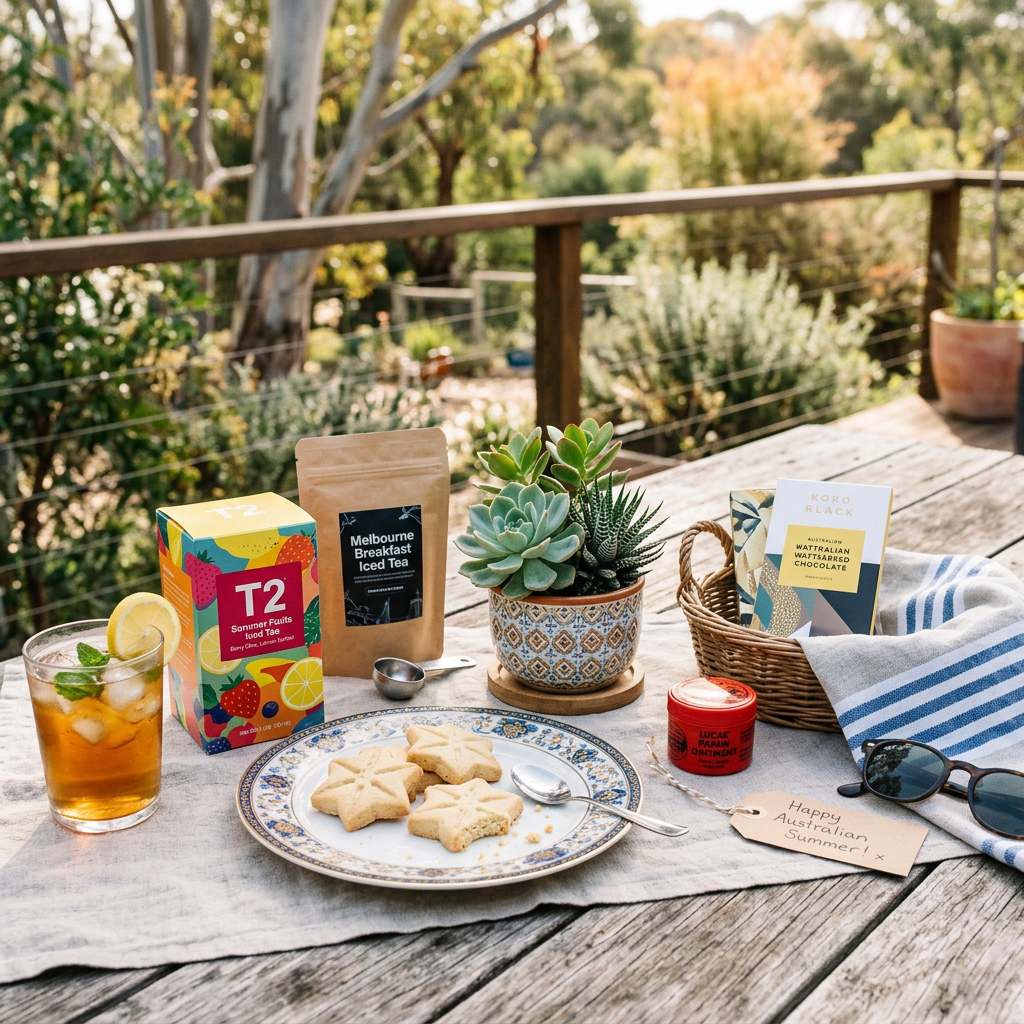
Because our Litha falls only days before Christmas, this is one Sabbat where a few extra handmade or thoughtfully chosen gifts make perfect sense. They can be made from scratch, partly homemade or simply bought and put together beautifully — December is busy enough already.
Summer Tea Jars — the Litha tea blend above, or a favourite bought loose-leaf fruit or herbal tea packaged into a pretty jar.
Lemon Myrtle Sugar — caster sugar mixed with culinary-grade dried lemon myrtle, lovely for baking, sprinkling over fruit or rimming summer drink glasses.
Herb Pots — basil, mint, rosemary or another useful summer herb in a small terracotta pot.
Summer Cooking Salt — good-quality salt mixed with dried rosemary, lemon zest and herbs for seasoning vegetables, fish or barbecue dishes.
A Little Summer Produce Basket — mangoes, cherries, peaches, nectarines or whatever looks beautiful and seasonal where you live.
Homemade Shortbread or Biscuits — wrapped in baking paper or packed into a jar with a ribbon and a little Solstice tag.
A Summer Reading Gift — a book, pretty bookmark and a packet of iced tea for somebody who would happily spend Christmas afternoon reading under the fan.
Seed Packets — flowers, herbs or vegetables suited to the recipient’s climate, bundled together with a handwritten note.
A Small Potted Native — choose something suited to the person’s garden and local conditions rather than simply buying whatever looks pretty at the nursery.
Cold-Drink Kit — a pretty glass or reusable tumbler with herbal tea, dried citrus, a little jar of honey or another favourite summer drink tucked inside.
Homemade Jam, Chutney or Relish — particularly good if you have an excess of summer produce to use up, although there is absolutely no rule saying you can’t buy a beautiful locally made one instead.
A Summer Night Gift — a candle or lantern, something nice to drink and a little packet of nibbles for enjoying outside once the heat of the day has disappeared.
Seasonal Self-Care
Cooling Aloe & Cucumber Summer Gel
After a hot summer day, this simple cooling gel is lovely to keep in the fridge and smooth onto warm, tired skin.
You Will Need
½ cup pure aloe vera gel
¼ cup peeled cucumber
1 teaspoon jojoba oil
1–2 drops lavender essential oil, optional
Blend the cucumber until smooth and strain out the pulp. Stir a couple of tablespoons of the cucumber liquid into the aloe vera gel, then add the jojoba oil and lavender if using.
Keep it chilled in a clean container and smooth a little over your arms, legs or other areas that could use some cooling down after a hot day.
For an even easier version, forget the recipe altogether and keep a bottle of pure aloe vera gel in the fridge. Cold aloe on hot summer skin is pretty hard to beat.
Practical Magic for the Season
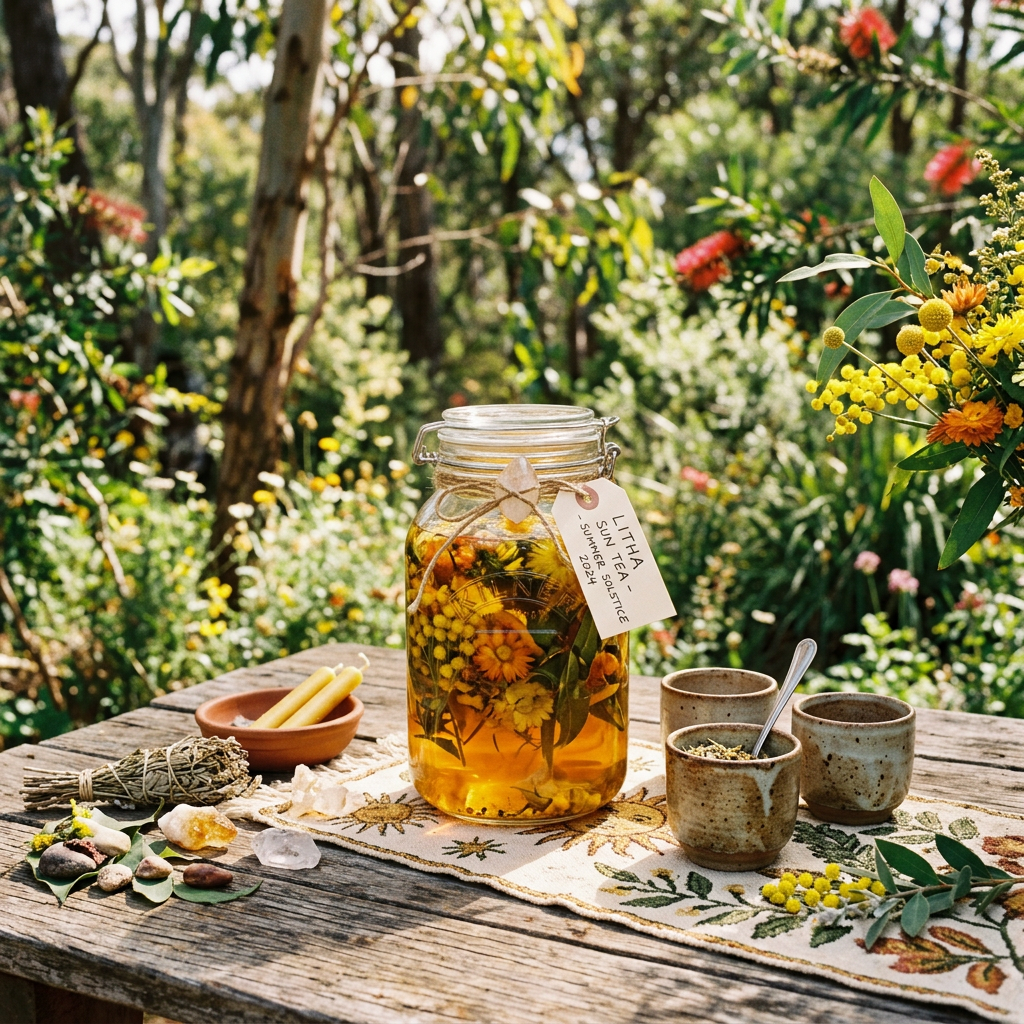
Litha Sun Tea
Sun tea is a lovely piece of practical summer magic because the sun actually does part of the work for you. Make a jug in the morning and you have something cold and refreshing to drink later in the day.
You Will Need
A large glass jar or jug with a lid
4–6 tea bags or several teaspoons of loose-leaf tea
Fresh herbs or citrus, optional
Water
Choose a tea you enjoy. Peppermint, lemon myrtle, hibiscus, chamomile or fruity herbal blends all work beautifully, and bought tea bags are absolutely fine.
Fill the jar with water, add your tea and any extras such as mint, lemon or lime, then place it somewhere bright and warm for a couple of hours while the tea infuses.
While you prepare it, choose something you’d like to bring into the day — energy, happiness, calm, confidence, gratitude or whatever feels right — and let that become the little bit of magic you’re adding to the ordinary act of making tea.
Once it has brewed, remove the tea and refrigerate it until properly cold. Serve over plenty of ice, with fresh citrus or herbs if you have them.
A practical note: Because tea brewed slowly in warm water can allow bacteria to grow, the safer option is to let your jar sit in the sunshine as part of the ritual, then brew the tea properly with freshly boiled water before chilling it. You still get your Litha sunshine without giving your summer magic an unwanted side effect.
A Summer Solstice Family Tradition
The Longest Day Dinner
Litha falls at such a busy time of year that a family tradition can be something everyone is probably doing anyway — eating together. The difference is simply making one summer meal each year your Longest Day Dinner.
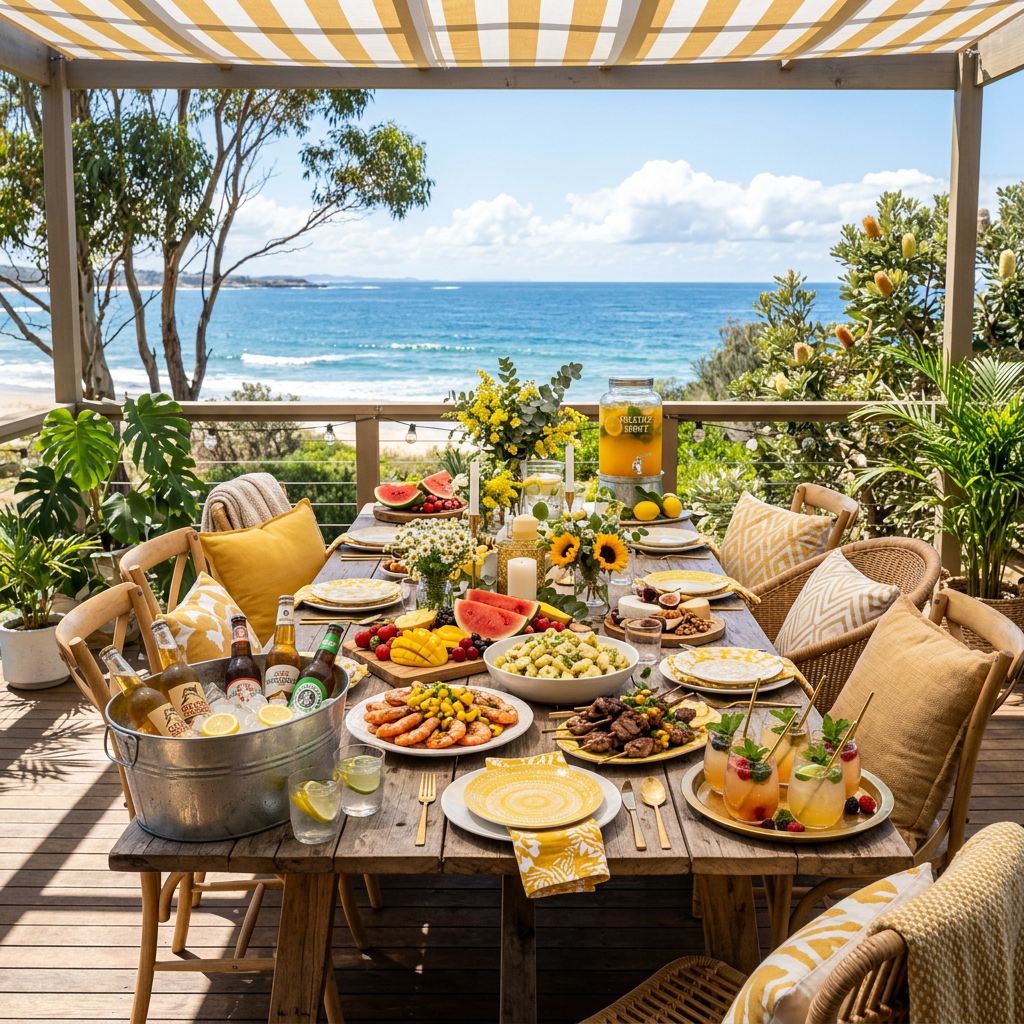
Have it outside if the weather allows, preferably later in the afternoon when the heat has eased but there is still plenty of daylight left. It could be a barbecue, seafood, salads, pizzas, a picnic-style spread or whatever your family actually enjoys eating.
Put summer fruit on the table, add a jug of something cold, pick a few flowers or greenery from the garden and let everyone settle in without rushing away once the food is finished.
At some point during the meal, go around the table and have everyone share one good thing from the year so far. It can be something important, something funny, somewhere you’ve been, something you’re proud of or simply a moment you really enjoyed.
Then stay outside together as the longest day finally begins to fade. Bring out dessert, put some music on, watch the sunset, turn on the fairy lights and enjoy the cooler part of the evening.
As the years pass, the food and the people around the table may change, but the Longest Day Dinner stays — one meal each summer when everyone gathers to enjoy the light before the Wheel begins turning back towards the dark.
 The Wheel at Home