Lammas — Lughnasadh
Lammas at a Glance
Pronunciation: LAM-us / LOO-nuh-suh
Date: Around 1–2 February in the Southern Hemisphere
Season: Late Summer
Wheel Position: Between the Summer Solstice (Litha) and Autumn Equinox (Mabon)
Themes: Harvest, abundance, gratitude, work, skill, community, change and the first signs of autumn
Lammas, or Lughnasadh, marks the first of the three harvest festivals on the modern Wheel of the Year. It arrives in late summer, when the great brightness of Litha has passed and the season begins its gradual movement towards autumn.
There are actually two different traditions sitting behind the names we commonly use for this Sabbat. Lughnasadh is the older Gaelic festival, traditionally celebrated at the beginning of August and associated with harvest gatherings, games, feasting and the god Lugh. Lammas comes from the Old English hlāfmæsse, or “loaf-mass”, a Christian celebration connected with the first grain harvest and the blessing of bread made from the new crop.
Modern Pagan practice has brought these traditions together, which is why both names are often used for the same point on the Wheel today.
There is a noticeable change of mood here after Litha. Summer is still very much present, particularly in Australia, but the sun has begun its slow retreat and the days are gradually shortening. The emphasis moves from the fullness of summer towards harvest — recognising what has grown, appreciating what we have and beginning to gather the results of the work that came before.
Lammas is therefore both celebratory and transitional. There is food on the table and plenty to be grateful for, but the Wheel is moving again. It is a season of enjoying what has ripened, acknowledging the effort behind it and noticing the first quiet hints that summer will not last forever.
Lammas in the Southern Hemisphere
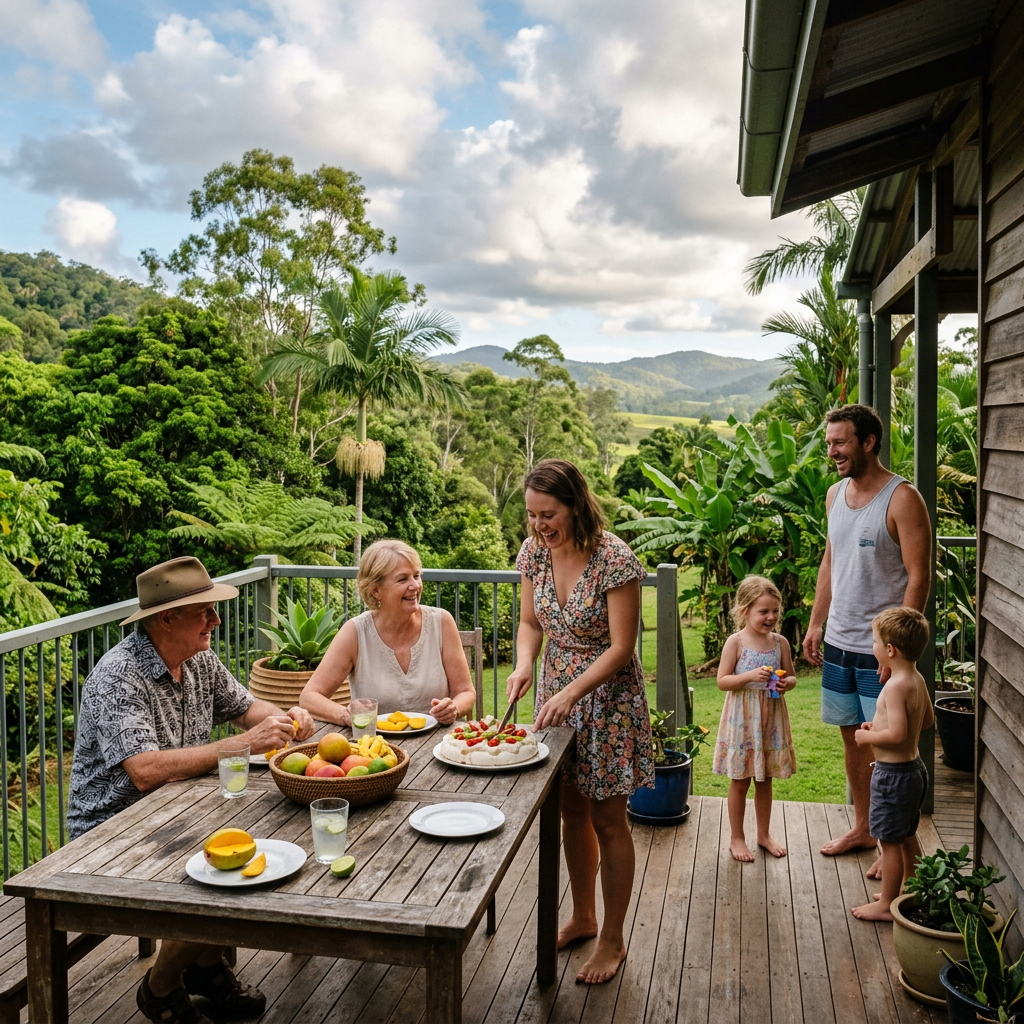
In the Southern Hemisphere, Lammas falls around 1–2 February, when summer is still very much in charge but the first movement towards autumn has begun. The long days around the Summer Solstice have been gradually shortening for several weeks, even though February can bring some of the hottest weather of the year.
Across Australia, this point in the season can look dramatically different. Southern regions may be experiencing hot, dry conditions and heightened bushfire risk, while northern and tropical areas can be deep in the wet season, with humidity, heavy rain and storms shaping daily life. In subtropical areas, February often brings a mixture of intense heat, humid nights, thunderstorms and sudden downpours.
This can make the idea of an approaching autumn seem slightly ridiculous. Our seasonal experience doesn’t always follow the neat progression suggested by a four-season calendar. February may feel far more intensely summery than December did, yet the changing daylight tells another story. The sun is setting earlier, sunrise is creeping later and the Wheel has already moved well beyond the Solstice.
Lammas is traditionally associated with the beginning of the grain harvest, but Australia’s agricultural calendar is far too varied for us to describe February as one universal harvest season. Wheat and other cereal crops are generally harvested earlier across many Australian growing regions, while completely different crops are being planted, ripening or harvested elsewhere.
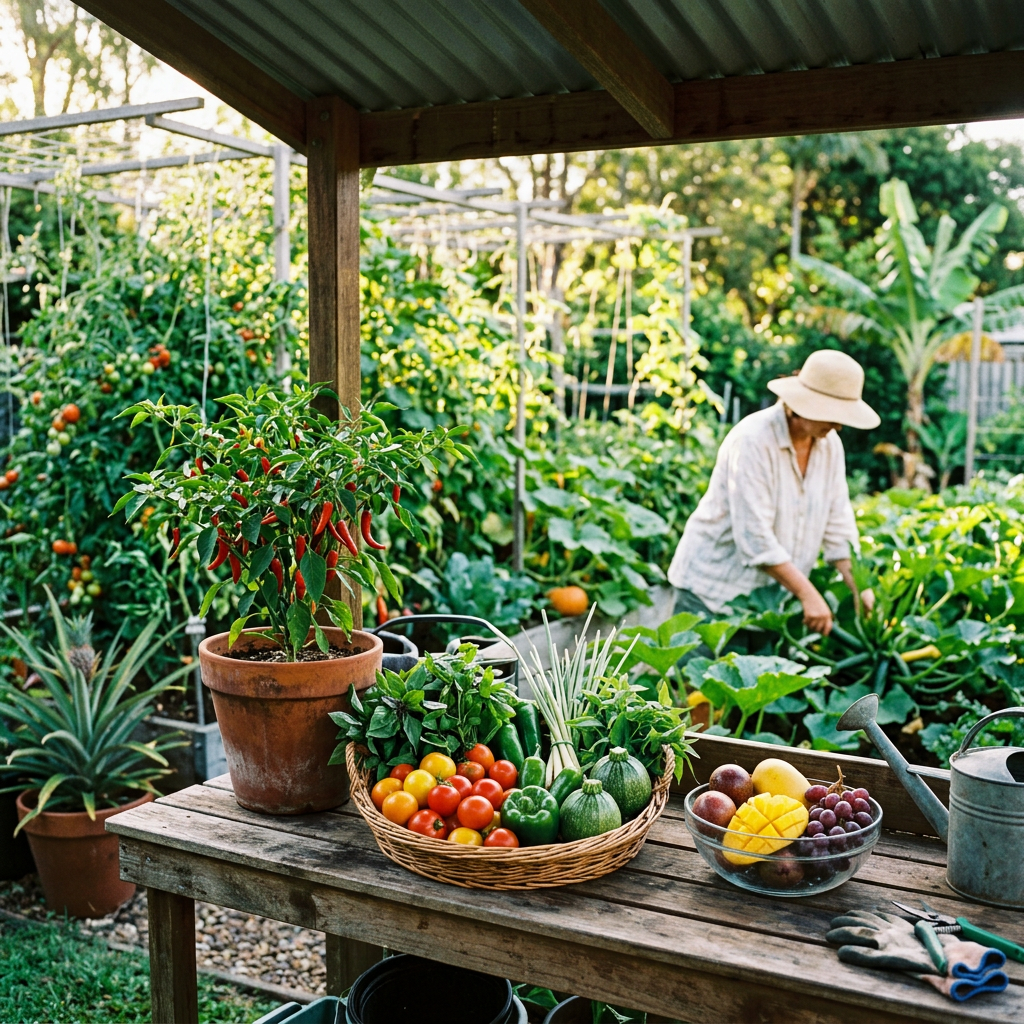
There is still plenty of abundance around us, though. Summer gardens can be overflowing with tomatoes, herbs, chillies, zucchini and other produce, while markets and shops are filled with stone fruit, grapes, melons and late-summer favourites. In tropical and subtropical areas, the combination of heat and rain can produce astonishingly fast growth.
This makes an Australian Lammas less about pretending we are bringing in the first sheaves of wheat and more about noticing what our landscape is producing. What is ripe? What is plentiful? What are farmers growing locally? What is appearing at roadside stalls, farmers’ markets or in our own gardens?
The traditional emphasis on harvest also gives us an opportunity to think about where our food actually comes from. Bread may still be a meaningful Lammas symbol, but so can the mango grower, grain farmer, market gardener, baker or backyard vegetable patch behind the food on our table.
There is another side to late summer here as well. The landscape can be lush and overflowing after rain in one place while dry, brown and vulnerable to fire in another. Storms, floods, heatwaves and bushfires can all belong to this part of the Australian seasonal story. Harvest and abundance exist alongside an awareness of how dependent we remain on weather, water and the land.
Lammas in the Southern Hemisphere therefore sits at an interesting threshold. Summer has not finished with us yet, but the light is changing. The first harvest festival gives us a moment to enjoy what the season has produced, acknowledge the work behind it and begin watching for the quieter changes that will eventually carry us into autumn.
The Story of Lammas and Lughnasadh
Lammas and Lughnasadh are often treated as two names for the same Sabbat on the modern Wheel of the Year, but their histories are actually quite different. Both belong to the beginning of the harvest season in the Northern Hemisphere, and over time modern Pagan practice has brought them together into the celebration we recognise today.
Lughnasadh is one of the four traditional Gaelic seasonal festivals, alongside Samhain, Imbolc and Beltane. Traditionally observed around 1 August in Ireland, it marked the beginning of the harvest season and was a time of large communal gatherings, feasting, games, trade and social activity.
The name Lughnasadh is connected with Lugh, an important figure in Irish mythology associated with extraordinary skill and mastery of many arts. In medieval Irish tradition, Lugh was described as establishing funeral games and gatherings in honour of his foster mother, Tailtiu, who died after clearing the land so that it could be used for agriculture.
The gatherings associated with Lughnasadh were known as óenach, large assemblies that could bring people together for athletic competitions, horse racing, trading, legal matters, entertainment and feasting. They were social and political occasions as well as seasonal ones, and some continued in various forms long after Ireland became Christian.
Hilltops, mountains and other significant places also became associated with Lughnasadh gatherings. Pilgrimages and communal celebrations held around the beginning of August survived in Irish tradition, sometimes becoming connected with Christian feast days while retaining elements of older seasonal customs.
Harvest naturally sits at the centre of Lughnasadh, but the festival was not simply a celebration of having plenty. The beginning of the harvest carried uncertainty as well as relief. The success of crops could determine how comfortably a community would survive the months ahead, and the first food gathered from the fields represented the beginning of an important period of work.
Lammas, meanwhile, comes from a different tradition. The name derives from the Old English hlāfmæsse, meaning “loaf-mass”. In medieval England, 1 August became associated with bringing a loaf made from the first harvested grain to church to be blessed. Bread therefore became one of the strongest symbols of Lammas.
The two celebrations share an obvious connection through grain, food and the beginning of harvest, but Lammas should not be described simply as another ancient Celtic name for Lughnasadh. One developed from Gaelic seasonal tradition; the other belongs to Anglo-Saxon Christian tradition.
As the modern Pagan Wheel of the Year took shape during the twentieth century, these different strands were gradually brought together. Today, some people call the Sabbat Lughnasadh, some prefer Lammas and others use both names.
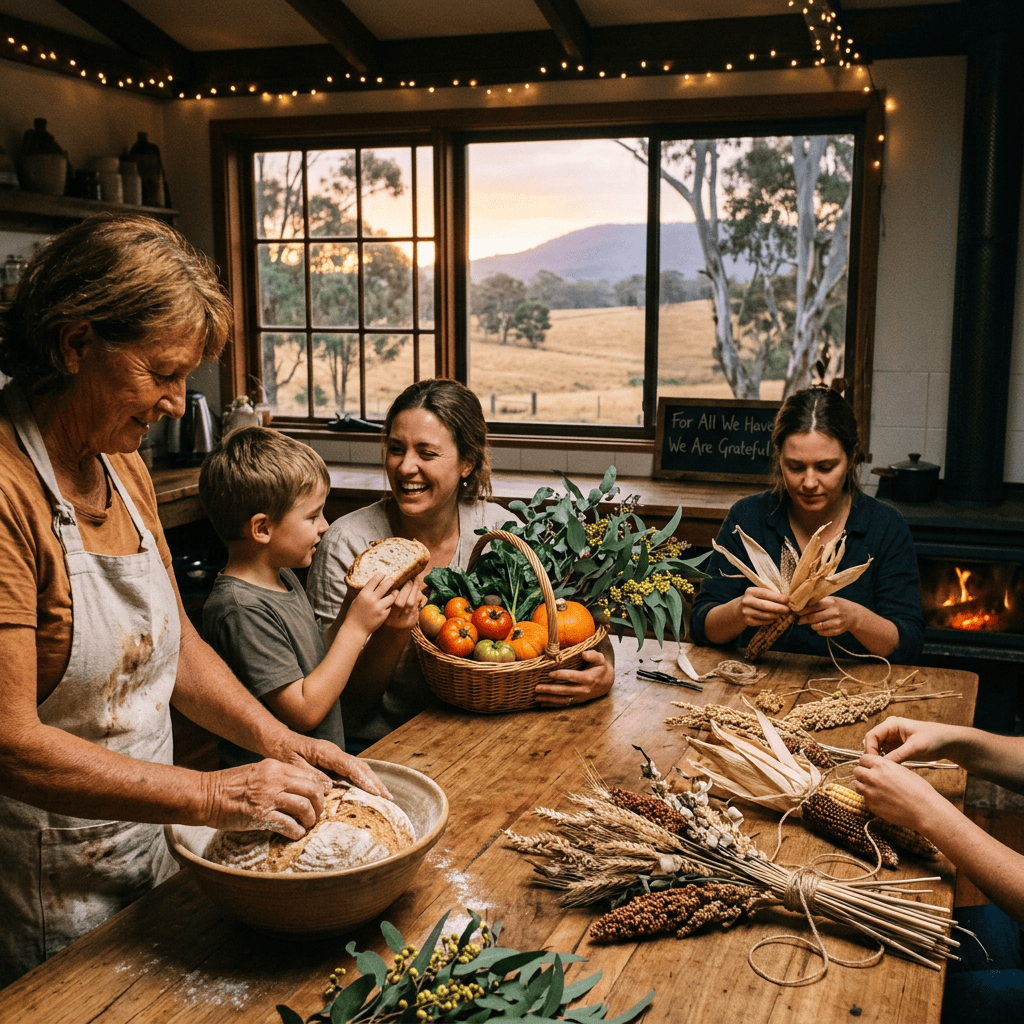
Modern celebrations often include baking bread, sharing seasonal food, gathering herbs or produce, making corn or grain decorations and giving thanks for what has been provided. Themes of abundance, gratitude and harvest have also expanded beyond agriculture to include the results of our own work and effort.
Lugh’s association with skill and craftsmanship gives the festival another interesting dimension. Lughnasadh can celebrate what we have learned to do well — the skills we have developed, things we have made and the time and practice behind them. The harvest can therefore be something grown in a field, but it can also represent the results of work that has taken months or even years to develop.
For those of us in the Southern Hemisphere, Lammas or Lughnasadh moves to around 1–2 February so that it retains its position between the Summer Solstice and Autumn Equinox. This separates it from the historical Irish Lughnasadh and Christian Lammas observances of August, but keeps its seasonal place on our Wheel.
At its heart, this point in the year brings together two old traditions shaped by the importance of harvest. One gives us Lugh, Tailtiu, gatherings, games and community; the other gives us the first grain made into bread and brought forward in thanks.
Together, they have become our first harvest festival — a time to recognise what has ripened, appreciate the work that brought it here and share some of what we have gathered.
What We Notice Here
By Lammas, summer in Southeast Queensland has reached that heavy, unmistakable stage where the heat seems to settle over everything. February can be hot, humid and exhausting, with warm mornings, blazing afternoons and nights that sometimes never seem to cool down properly.
The light has changed since Litha, although the temperature might suggest otherwise. Sunrise is arriving later and sunset is noticeably earlier than it was around Christmas. There is still plenty of daylight, but those extraordinarily long summer evenings are beginning to pull back.
Rain can have an enormous influence on what the landscape looks like now. After a run of summer storms, everything can become ridiculously green almost overnight. Lawns grow faster than anyone wants to mow them, vines take off, weeds appear from nowhere and gardens can look lush and almost tropical.
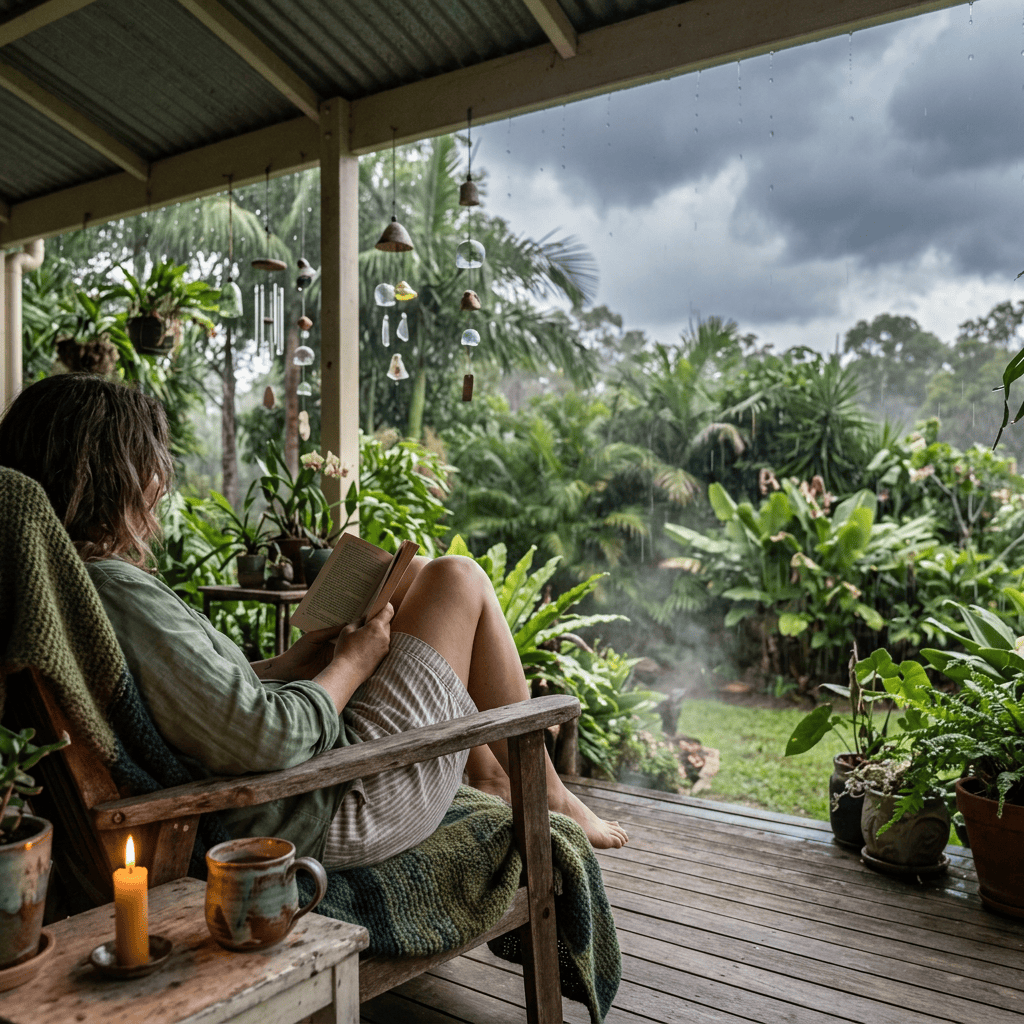
Storms remain part of the rhythm too. Humid afternoons build into dark skies, thunder, lightning and sudden heavy rain. Sometimes the storm brings wonderful relief from the heat; other times it seems to leave the air even heavier than it was before.
Late-summer abundance is easy to find in gardens and kitchens. Tomatoes, chillies, cucumbers, herbs and other warm-season crops may be producing well, while passionfruit vines can be loaded with fruit. Markets are colourful with grapes, melons, peaches, nectarines, plums and other produce that belongs unmistakably to this end of summer.
The wildlife is still noisy and active. Cicadas continue their summer chorus, frogs call after rain and dragonflies appear around gardens and waterways. Birds take advantage of flowering and fruiting plants, while butterflies, bees and countless other insects make the most of everything the warm, wet season provides.
There are little signs of strain in the season as well. Gardens can become overgrown, leaves look tired after weeks of heat and some plants begin finishing their summer flowering or fruiting. The brilliant freshness of early summer has matured into something fuller, messier and slightly worn around the edges.
Our own energy can feel a bit like that too. By February, the novelty of summer has well and truly worn off. Christmas and the holidays are behind us, school and work routines have returned, and there can be a collective feeling of being rather over the heat. Shade, air conditioning, cold drinks and the promise of a cooler evening become increasingly attractive.
Yet there is something satisfying about this part of the season. Gardens are producing food, fruit is plentiful and all that growth we watched gathering through spring and early summer has become something tangible. Lammas gives us a reason to notice the result rather than only noticing the heat required to get there.
And somewhere amongst the humidity, thunderstorms and relentless mowing, the first tiny hints of the next season begin appearing. The afternoon light shifts. The sun disappears a little earlier. A morning occasionally feels unexpectedly pleasant. Autumn isn’t here yet, but the Wheel is clearly moving towards it.
This is our Lammas: heavy summer air, afternoon storms, overflowing gardens, passionfruit on the vine, bowls of late-summer fruit, noisy frogs and cicadas, shortening evenings and the occasional little whisper that cooler days are somewhere ahead.
Themes of the Season
Lammas carries themes of harvest, gratitude, abundance, effort, skill, community, change and sharing. It is the first harvest point on the modern Wheel, arriving when summer is still strong but the light has begun to shift. There is satisfaction here, but also an awareness that everything we enjoy has a season and that the Wheel is already moving towards autumn.
Harvest
Harvest is at the heart of Lammas and Lughnasadh. Historically, this was a crucial point in the agricultural year, when the work of growing food finally began producing something that could be gathered, eaten and stored.
Most of us are no longer harvesting fields of grain, but the idea translates easily into everyday life. A harvest is simply the result of something we have put time and effort into. It might be something growing in the garden, a project finally completed, a qualification earned, a skill developed or a change that took months to achieve.
Gratitude
Lammas gives gratitude a particularly practical quality. Bread on the table represents grain, weather, land, labour, milling, baking and countless hands and processes that brought something very ordinary to us.
This is a lovely season to notice those everyday things a little more closely. Food, shelter, people who help us, skills we rely upon and the things that make life easier can become so familiar that we barely see them until they are missing.
Abundance
At Litha, abundance was connected with the fullness of summer. At Lammas, we begin gathering some of that abundance and seeing what it has actually produced.
Abundance doesn’t always mean having more and more. Sometimes it is recognising that there is enough. Enough to eat, enough to share, enough experience to help someone else, enough time for what matters or enough of something growing in the garden that we’re desperately trying to give it away before it spoils.
Effort
Harvest doesn’t appear from nowhere. Behind it are preparation, repetition, patience, mistakes and plenty of ordinary work that nobody particularly celebrates while it is happening.
Lammas makes space for acknowledging that effort. There can be value in looking at something we have achieved and remembering how much went into getting there, particularly when we have a habit of reaching the finish line and immediately moving on to the next thing.
Skill and Craft
Lugh’s connection with skill and mastery gives Lughnasadh a theme that sets it apart from the other harvest festivals. The old gatherings celebrated competition and ability as well as the harvest itself.
This can be a season for appreciating what we know how to do. Cooking, gardening, sewing, building, writing, caring for people, fixing things, making music or knowing exactly how to grow a decent tomato all come from experience and practice. Skills are their own kind of harvest.
Community
Historically, Lughnasadh gatherings brought people together for feasting, games, trade, entertainment and community business. Harvest itself was also something that depended heavily upon cooperation.
That makes Lammas a natural time for sharing. Cook for people, swap excess garden produce, support a local grower, teach someone something you know how to do or accept help when somebody offers it. What we have becomes more useful when it can move between people.
Change
Lammas sits in an interesting place on the Wheel. Summer is still unmistakably here, yet the days have been shortening since the Solstice and the first subtle movement towards autumn has begun.
Change at this point isn’t dramatic. It is the slightly earlier sunset, a different quality to the afternoon light or the first morning that doesn’t feel quite as hot. Lammas belongs to those gradual transitions we often only recognise once they are already underway.
Sharing the Harvest
There is little point in abundance that simply sits untouched. Harvest traditions have always involved eating, storing, trading, giving and sharing what has been produced.
Our own harvest can work the same way. Food can be shared, knowledge passed on, creativity enjoyed by others and good fortune used generously. Sometimes the nicest part of having enough is discovering that we have something to give.
Together, these themes give Lammas its earthy, satisfying character. It is a point on the Wheel for looking at what our efforts have produced, appreciating the people and work behind what we have, sharing some of it around and recognising that even while we gather the harvest, another seasonal change has already begun.
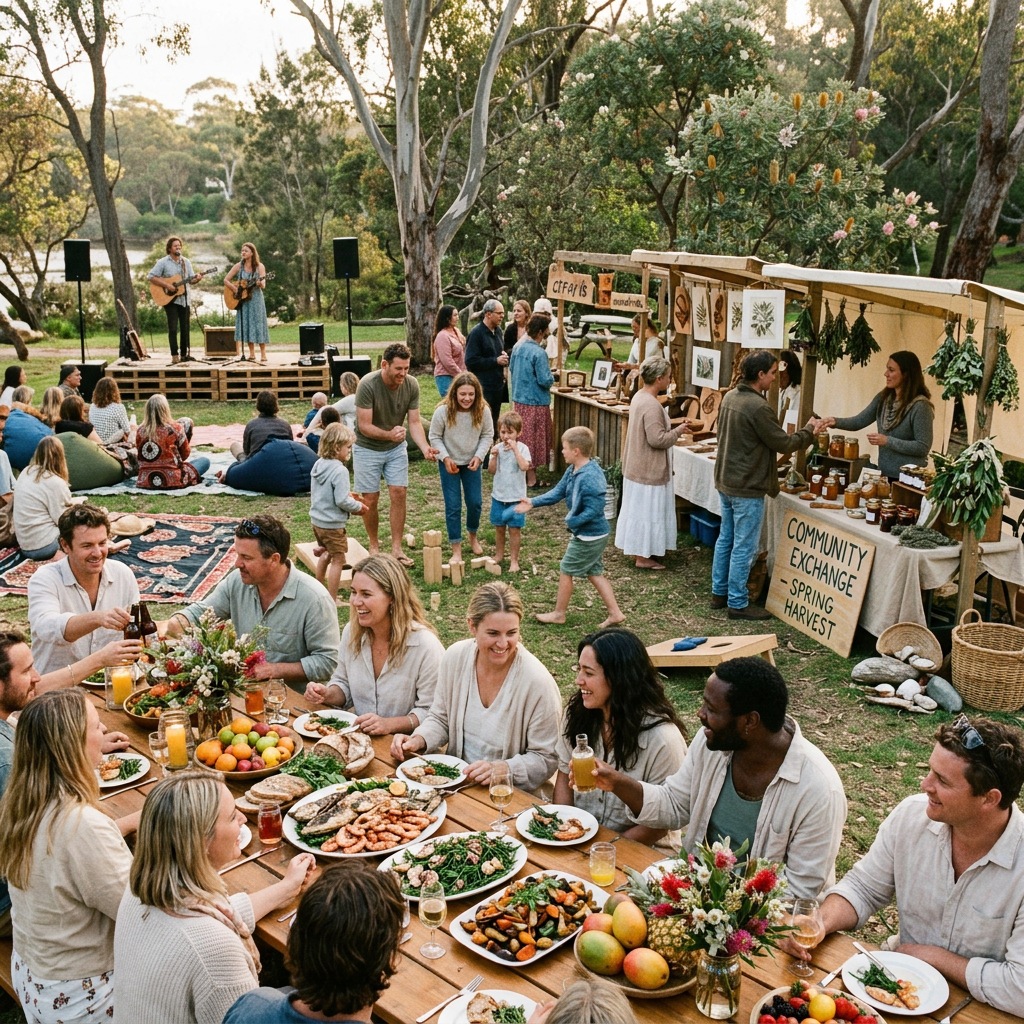
Seasonal Invitation
Lammas invites us to notice what all that growing has actually produced.
So much of the Wheel until now has looked forward. We have planted, planned, started things, encouraged growth and watched the year expand towards summer. Lammas shifts the focus slightly. Instead of asking what comes next, we can spend some time looking at what is already here.
Start with the ordinary things. Pick something from the garden and use it for dinner. Visit a farmers’ market and buy whatever looks particularly good. Bake bread, make something with late-summer fruit or cook a meal around ingredients that are plentiful where you live. There is something satisfying about eating with the season rather than simply reading about harvest as an idea.
This is also a good time to acknowledge your own work. Think back over the past few months and notice what you have actually done. The jobs you finished, things you learned, difficult situations you handled, relationships you tended and small changes you kept going with all count. We are often much better at noticing what remains unfinished than giving ourselves credit for what has already taken effort.
Lughnasadh’s connection with skill gives us another lovely way into the season. Use something you are good at. Cook the recipe everyone asks you to make. Pick up the craft you’ve practised for years. Fix something, grow something, write something, play music, make something with your hands or teach somebody a skill you know well. There is pleasure in recognising that practice has turned into ability.
And share some of what you have. Give away the excess passionfruit before the entire kitchen disappears beneath it. Take baking to work. Swap herbs with a neighbour. Share a recipe, lend a hand or pass on something you know. Harvest has always made more sense when it moves beyond one person.
Lammas also arrives when summer can feel a little worn out around the edges. The heat has been hanging around for months, routines are back in full swing and the energetic beginning of the year may already be losing some of its shine. You don’t have to squeeze every last drop out of summer simply because it is still here. Slower evenings and an early night can be just as welcome as another day packed with plans.
So for Lammas, the question might be:
What have I grown that is ready to be enjoyed?
Use it. Eat it. Celebrate it. Share it. Give yourself some credit for the work behind it.
There will always be another seed to plant. Lammas gives us a chance to enjoy the harvest first.
Lammas Correspondences
These correspondences bring together traditional Lughnasadh and Lammas associations, harvest customs and modern Pagan practice, along with Australian alternatives that reflect our own late-summer landscape and seasonal abundance.
Colours & Candles
Gold — harvest, abundance, sunlight and achievement
Yellow — grain, warmth, optimism and vitality
Orange — late-summer warmth, creativity and change
Green — growth, nourishment and the land
Brown — earth, grounding, stability and harvest
Red — vitality, strength and the remaining summer heat
Deep Green — maturity, endurance and established growth
For candles, gold, yellow, orange and brown work particularly well for Lammas. Gold and yellow reflect grain and harvest, orange carries the warmth of late summer, while brown brings in the earthier feeling of the season beginning to turn.
Crystals & Stones
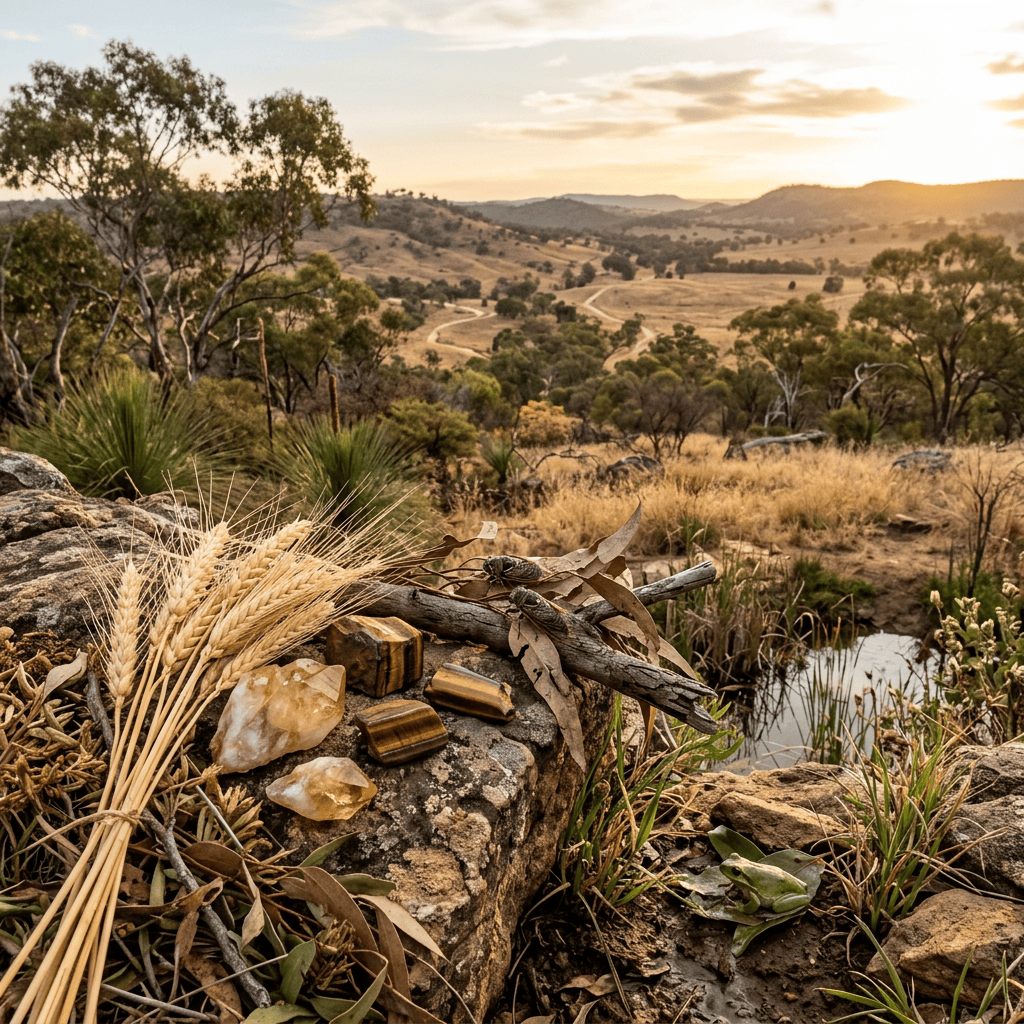
Citrine — abundance, prosperity, optimism and success
Tiger’s Eye — confidence, strength, grounding and achievement
Carnelian — creativity, skill, motivation and vitality
Moss Agate — agriculture, nature, growth and abundance
Green Aventurine — prosperity, opportunity and gratitude
Peridot — abundance, growth and positive change
Smoky Quartz — grounding, transition and stability
Pyrite — prosperity, confidence and recognising value
Traditional Herbs, Plants, Flowers & Trees
Wheat — harvest, nourishment and abundance
Barley — grain, sustenance and prosperity
Oats — nourishment, harvest and plenty
Corn — abundance, fertility and harvest symbolism
Heather — protection, good fortune and the late-summer landscape
Blackberry — abundance, protection and seasonal harvest
Bilberry — nourishment and wild harvest
Hazel — wisdom, knowledge and skill
Oak — strength, endurance and abundance
Rosemary — remembrance, protection and gratitude
Grains naturally feature heavily in Lammas correspondences because both Lughnasadh and Lammas developed around the beginning of the Northern Hemisphere harvest season. Wheat and bread are especially prominent in modern celebrations, although the crops actually being harvested at this point in Australia will depend entirely on location.
Australian Herbs, Plants, Flowers & Trees
Macadamia — abundance, nourishment and the Australian landscape
Lemon Myrtle — vitality, freshness and abundance
Finger Lime — abundance, nourishment and native produce
Lilly Pilly — nourishment, abundance and resilience
Wattleseed — nourishment, endurance and connection with the land
Eucalyptus — strength, protection and resilience
Banksia — endurance, regeneration and change
Native Mint — freshness, nourishment and vitality
Passionfruit — abundance, productivity and late-summer growth
For an Australian Lammas, locally grown food can be just as meaningful as traditional grain symbolism. What is overflowing from gardens, appearing at farmers’ markets or being harvested locally gives us a direct connection with abundance where we actually live.
Animals
Cattle — nourishment, agriculture and abundance
Horses — strength, skill and Lughnasadh gatherings
Bees — productivity, community and abundance
Birds — movement, communication and seasonal change
Frogs — rain, fertility and renewal
Dragonflies — change, adaptability and transformation
Cicadas — summer, transition and the passing season
Horses have a particular connection with the traditional games and gatherings surrounding Lughnasadh, where horse racing formed part of some celebrations. Our local wildlife can provide another layer, particularly the creatures still filling Australian gardens and waterways at the end of summer.
Essential Oils
Frankincense — gratitude, reflection and grounding
Cedarwood — stability, grounding and strength
Rosemary — clarity, remembrance and appreciation
Sweet Orange — abundance, optimism and warmth
Ginger — energy, warmth and motivation
Patchouli — earth, grounding and prosperity
Bergamot — optimism, confidence and gratitude
Lemon Myrtle — freshness, vitality and Australian summer
Essential oils should always be used appropriately and diluted when required. Some oils are unsuitable for certain people, pets or methods of use, and some citrus oils can increase sensitivity to sunlight when applied to the skin, so check the safety information for the individual oil.
Food & Drinks
Bread — harvest, nourishment, community and Lammas tradition
Grains — harvest, abundance and sustenance
Oats — nourishment, abundance and traditional grain crops
Corn — harvest, abundance and fertility
Late-Summer Fruit — sweetness, abundance and seasonal harvest
Grapes — abundance, celebration and fruitfulness
Blackberries — wild harvest, abundance and nourishment
Honey — sweetness, prosperity and abundance
Nuts — nourishment, harvest and stored abundance
Fresh Herbs — growth, flavour and the summer garden
Seasonal Vegetables — nourishment, harvest and gratitude
Symbols
Bread — harvest, nourishment and Lammas
Sheaves of Grain — harvest, agriculture and abundance
Sickles and Scythes — harvesting, work and gathering
Baskets — gathering, sharing and abundance
Corn Dollies — grain, harvest and traditional folk craft
The Sun — remaining summer warmth and the changing light
Wheels — seasonal change and the turning year
Harvest Tables — food, gratitude and community
Seeds — continuation, future growth and potential
Hands — work, skill, craftsmanship and creation
Tarot
The Empress — abundance, nourishment and the fruits of growth
Nine of Pentacles — achievement, independence and enjoying what has been cultivated
Seven of Pentacles — patience, effort and assessing the results of our work
Eight of Pentacles — skill, craftsmanship and practice
Three of Cups — community, sharing and celebration
Six of Pentacles — generosity, giving and receiving
The Wheel of Fortune — cycles, change and the turning season
Moon Phases
Lammas is not tied to a particular moon phase, but the moon occurring at the time can add another layer to personal ritual or reflection.
New Moon — planting new intentions after the harvest
Waxing Moon — continued growth and building upon what is working
Full Moon — abundance, gratitude and celebration
Waning Moon — gathering, completing and beginning to let go
Dark Moon — rest, reflection and considering what comes next
Deities of Lammas and Lughnasadh
Lughnasadh has a much clearer historical connection with particular figures from Irish tradition than some of the solar festivals on the modern Wheel. Even here, however, it is useful to distinguish the figures actually found in surviving Lughnasadh traditions from deities added through later modern Pagan associations.
Lugh — One of the most important figures in Irish mythology and the deity most directly associated with Lughnasadh. Lugh is renowned for his mastery of many skills and arts and is sometimes called Samildánach, referring to his many talents. Medieval tradition connects him with the establishment of the Lughnasadh games in honour of his foster mother, Tailtiu.
Tailtiu — A significant figure in Irish mythology whose story is closely connected with Lughnasadh. According to medieval tradition, Tailtiu died after clearing land for agriculture, and Lugh established funeral games in her honour. Her story gives the festival particularly strong connections with the land, agriculture, sacrifice and harvest.
The Dagda — An important Irish deity associated with abundance, fertility and sustenance. He does not have the same direct historical connection with Lughnasadh as Lugh and Tailtiu, but his associations with plenty and nourishment have made him a natural figure within some modern celebrations.
Demeter — The Greek goddess of agriculture, grain and harvest. She has no historical connection with Lughnasadh or Lammas, but is often included in modern Pagan harvest correspondences because of her strong agricultural associations.
Ceres — The Roman goddess of agriculture, grain and fertility, from whose name we derive the word cereal. Like Demeter, she was not historically part of Lughnasadh or Lammas, but her connection with cultivated grain makes her a common modern harvest association.
For Lammas and Lughnasadh, Lugh and Tailtiu give us something especially valuable: a genuine connection with the surviving stories behind the festival itself, while the other figures show how modern Pagan practice has broadened the harvest symbolism over time.
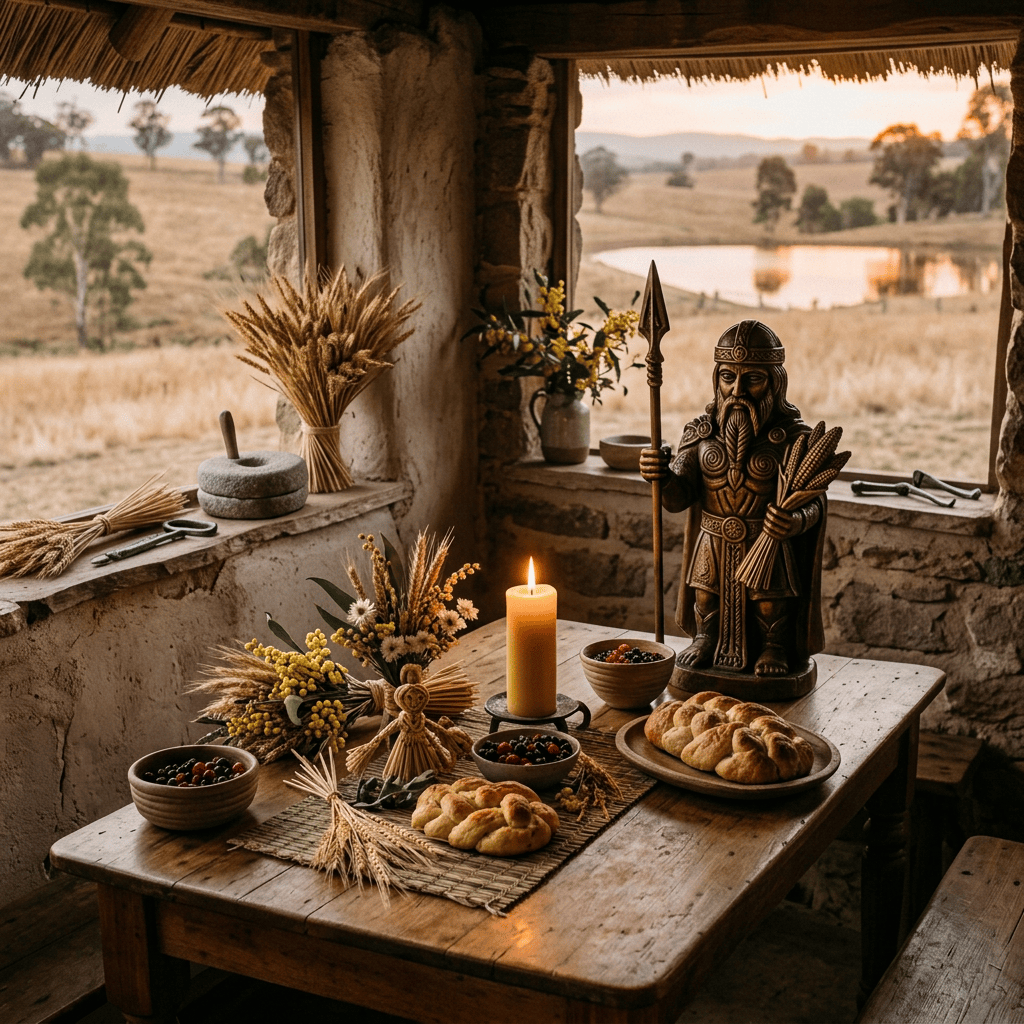
Bringing the Season Home
Lammas brings a warmer, earthier feeling into the home. The brightness of Litha is beginning to soften, summer produce is plentiful and the first harvest festival lends itself beautifully to bread, baskets, herbs, fruit and the simple things we use every day.
Seasonal Displays
Create a Lammas display using late-summer colours and things connected with harvest. Gold, ochre, orange, brown and deep green candles can sit alongside a basket of fruit, herbs from the garden, grains, seeds or a freshly baked loaf of bread.
Food can become part of the display rather than being purely decorative. A wooden board with bread, a bowl piled with grapes or stone fruit, a basket of garden produce or jars of preserves all capture the feeling of harvest while still being things that will actually be eaten.
Grains are one of the most recognisable Lammas symbols. A few stalks of wheat or oats can be placed in a jug, tied into a small bundle or added to a wreath. If grain isn’t something you have lying around — which, realistically, most of us don’t — dried grasses, seed heads or other natural materials can give a similar late-summer feel.
This is also a lovely time to display things made by hand. A piece of pottery, knitting, embroidery, woodwork, painting or something else you’ve created fits particularly well with Lughnasadh’s connection with skill and craftsmanship.
Creating a Seasonal Atmosphere
Let the kitchen become the heart of Lammas. Keep seasonal fruit where it can be seen, bring herbs in from the garden, fill a basket with produce and make use of the things that are plentiful rather than saving them for something special.
Wood, linen, woven baskets, pottery and natural textures work beautifully at this point on the Wheel. After the bright colours of midsummer, these slightly earthier textures can begin hinting at the seasonal change ahead without pretending autumn has already arrived.
Late-summer flowers and foliage can still fill the house, but they can sit alongside dried grasses, seed heads and herbs beginning to go to flower. The combination reflects the season nicely — some things still flourishing while others are already completing their cycle.
Warm, earthy scents begin to feel at home again too. Rosemary, cedarwood, sweet orange, ginger and a little cinnamon can gradually replace some of the lighter scents of high summer. And of course, very little smells more like Lammas than bread, biscuits or something else baking in the kitchen.
Lammas is also a good excuse to actually use the things we have. Bring out the serving board that’s been sitting in the cupboard, use the nice bowls, put homemade jam on the table and cook with the herbs threatening to take over the garden.
There is something satisfying about a Lammas home feeling used — food being prepared, things being made, people sitting around the table and the results of our work becoming part of everyday life.
Ways to Celebrate Lammas
Lammas is a wonderfully practical Sabbat to celebrate. Food, making, sharing and enjoying the results of the season all belong here, so many of the simplest celebrations are things we might already be doing at this time of year.
Bake Bread
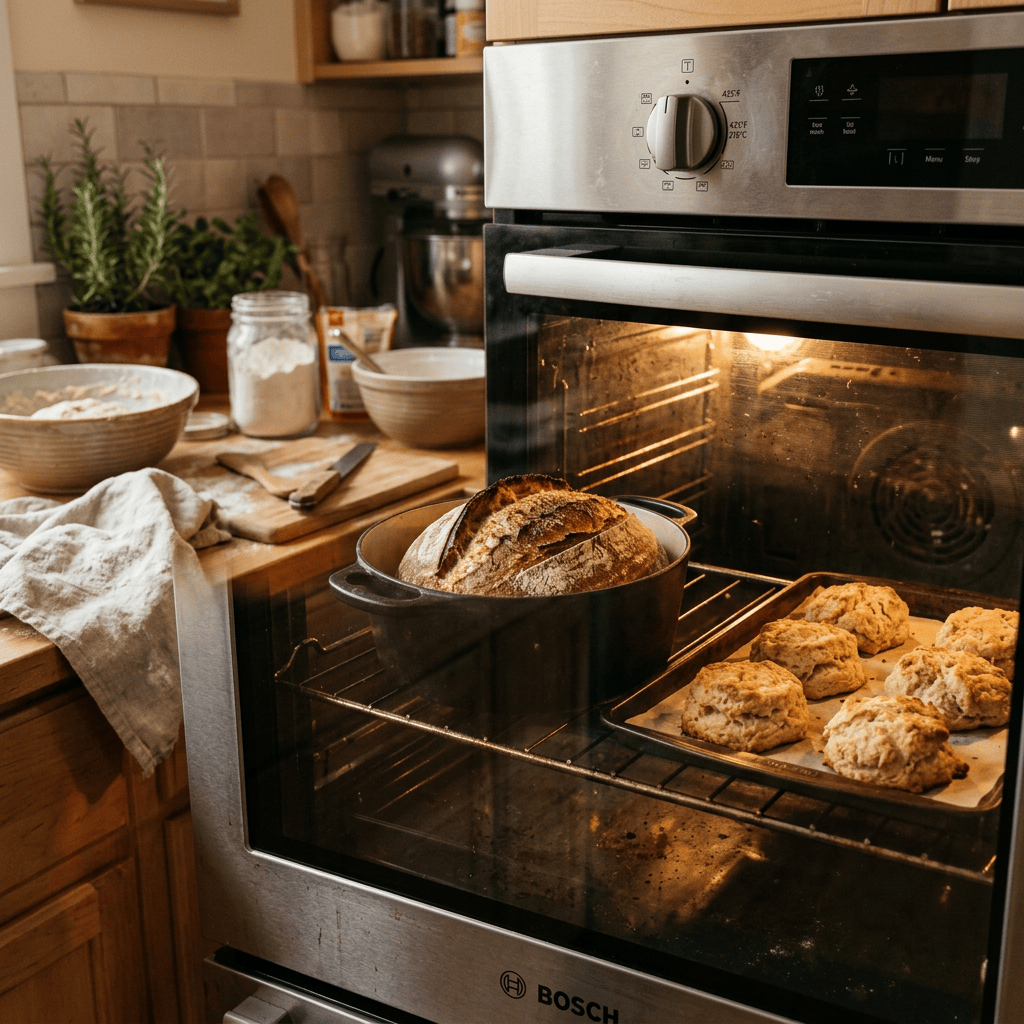
Bread is probably the best-known symbol of Lammas, thanks to the old tradition of hlāfmæsse, or loaf-mass. Bake a loaf from scratch, make damper, rolls, focaccia or even use a bread mix if that’s what suits you. Eat it warm with butter, honey, cheese, soup or whatever else is on the table.
Cook with What Is Plentiful
Choose something that is particularly good or abundant right now and make it the centre of a meal. Tomatoes can become sauce or bruschetta, passionfruit can go over dessert, herbs can become pesto, and an excess of zucchini can finally meet its destiny.
Visit a Farmers’ Market
Take a slow wander around a local farmers’ market or produce stall and see what is actually in season. Buy something grown nearby, talk to the people selling it and let the produce decide what you cook rather than arriving with the entire meal already planned.
Share Some Food
Bake an extra loaf, take something homemade to work, give away excess garden produce or invite someone over for a casual meal. Sharing the harvest fits beautifully with the communal history of Lughnasadh.
Make Something with Your Hands
Lughnasadh’s connection with Lugh and skill makes this a perfect time for making. Sew, knit, paint, garden, cook, preserve, carve, draw, repair or return to a craft you enjoy. It doesn’t have to be something traditionally “witchy” to belong to the season.
Celebrate a Skill
Choose something you have become genuinely good at and use it. Make your signature dish, play an instrument, tend your garden, take photographs, decorate a cake or teach someone how to do something you know well. Lughnasadh has a lovely tradition of celebrating ability rather than hiding it.
Hold Some Friendly Games
The old Lughnasadh gatherings were known for games and competitions, which gives us a much more playful celebration than harvest symbolism alone might suggest. Have a backyard game, play cards, organise family trivia, go bowling or create a completely ridiculous competition where the prize is mostly bragging rights.
Gather the Garden
Pick herbs, fruit, vegetables or flowers that are ready. Trim back what has finished, collect seeds where appropriate and make use of produce before the heat gets to it. Even a few herbs from a pot on the windowsill can become a tiny harvest.
Make or Buy Something from a Local Producer
Pick up bread from a local bakery, honey from a beekeeper, jam from a market stall or produce grown nearby. Lammas offers a lovely opportunity to appreciate the skill and work involved in the food and handmade things we often take for granted.
Have a Lammas Meal
Put bread at the centre of the table and build a relaxed meal around seasonal produce. Add fruit, cheese, salads, roasted vegetables, dips or whatever suits a hot February evening. A Lammas feast can feel abundant without being enormous.
Watch the Changing Light
Spend some time outside towards the end of the day and notice how much earlier the sun is setting than it did at Litha. Summer may still be blazing away, but the shortening days are one of the clearest signs that the Wheel has moved on.
Give Something Away
Harvest naturally leads into sharing. Donate food, pass along something you no longer need, give someone a cutting from the garden or simply be generous with your time. Lammas abundance feels particularly good when some of it is allowed to travel.
Lammas can be celebrated through the very ordinary pleasure of making good use of what is here: baking bread, eating seasonal food, creating something with your hands, sharing with other people and appreciating the work that sits behind the things we enjoy. It is a warm, generous little pause at the end of summer before the Wheel begins carrying us more noticeably towards autumn.
Lammas Reflections
Lammas is a natural point for looking at what has grown, what our effort has produced and what we are now ready to enjoy. These reflections are less about setting new intentions and more about recognising what is already here.
Journal Prompts
What am I harvesting in my life right now?
What have I worked hard for that I haven’t properly acknowledged?
What skill have I developed that I am proud of?
Where do I already have enough?
What do I have that I can share with others?
Lammas Tarot Spread
A five-card spread for taking stock of your own harvest and recognising the work behind it.
Card One — The Harvest
What has come to fruition for me?
Card Two — The Work
What effort or experience brought me here?
Card Three — The Gift
What skill, strength or ability should I recognise in myself?
Card Four — The Sharing
What do I have enough of to give or share?
Card Five — The Turning Wheel
What is beginning to change as I move towards the next season?
A Small Lammas Gift
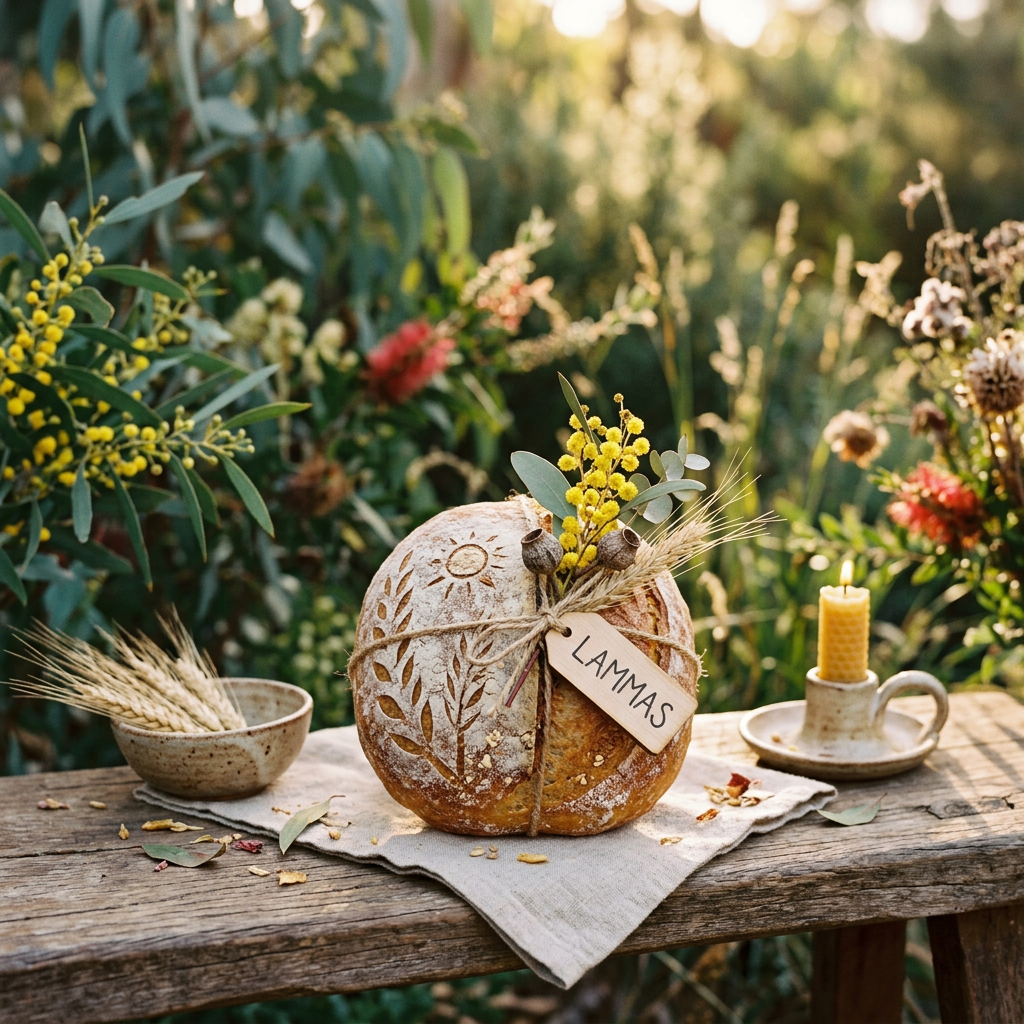
A Little Loaf of Bread
A small loaf of freshly baked bread makes a beautiful Lammas gift and carries one of the oldest symbols of the season with it. Bread represents the grain harvest, nourishment and the work that turns simple ingredients into something that can be shared.
Bake a small loaf of bread, damper, focaccia or whatever you enjoy making. It certainly doesn’t need to be fancy — a simple homemade loaf wrapped while still wonderfully fresh is part of the charm.
Wrap it in brown paper, baking paper or a clean tea towel and tie it with kitchen string or ribbon. A sprig of rosemary tucked underneath the string makes a lovely finishing touch.
You could add a tiny jar of local honey, homemade jam or relish if you wanted to make the gift a little bigger, but the loaf itself is enough.
There is something particularly lovely about giving bread at Lammas: something made by hand, intended to be eaten and shared, and carrying the harvest straight into someone else’s home.
Rituals and Seasonal Magic
Lammas magic naturally centres around harvest, gratitude, skill and the results of our own effort. Bread and grain fit beautifully here, but the harvest can also represent anything we have worked towards and are finally beginning to see come to fruition.
A Simple Lammas Ritual – Breaking Bread
You will need:
A small loaf or piece of bread
A candle in gold, yellow, orange or white
A plate or wooden board
Light the candle and place the bread in front of you.
Take a moment to think about everything that went into bringing this food to your table — the land, weather, grain, growers, makers and all the work along the way.
Then turn your thoughts towards your own harvest. Think of something you have worked for, learned, created, overcome or patiently tended since the beginning of this turn around the Wheel.
Break off a piece of bread and say:
I honour the work that brought me here.
I am grateful for what has grown.
I welcome the harvest and share in its abundance.
Eat the bread slowly, enjoying it as part of the ritual rather than simply placing it on an altar and forgetting about it.
When you’re finished, extinguish the candle and share the remaining bread with someone else if you can. The sharing is a lovely part of Lammas in its own right.
A Simple Lammas Spell – Harvest Gratitude Jar
You will need:
A small jar
Small pieces of paper
A pen
A few grains of rice, oats or wheat
Place a small handful of grain in the bottom of the jar to represent harvest and abundance.
Write down several things that have come from your efforts over the past year. They don’t need to be enormous achievements. Include things you’ve learned, problems you’ve worked through, relationships you’ve cared for, things you’ve made, habits you’ve changed or moments when you kept going even when it would have been easier not to.
Fold each piece of paper and place it into the jar.
As you add the final one, say:
For what I have planted,
for what I have tended,
for what has grown,
I give thanks.
Keep the jar somewhere you will see it during the rest of the Lammas season. Whenever you think of another part of your harvest, add it.
At Mabon, you can open the jar and read everything again, giving yourself a chance to see just how much has accumulated before moving into the second harvest festival.
A Lammas Blessing
May there be gratitude for what has grown,
and pride in the work that brought it here.
May there be enough on the table,
enough to enjoy
and enough to share.
May the skills shaped through practice be valued,
the small achievements be noticed
and the larger ones be properly celebrated.
May we appreciate the hands that grow, make, bake, build, mend and care,
and remember how much of what sustains us
comes through the work of others.
As summer begins its slow turn towards autumn,
may we enjoy what is ripe and ready now,
without rushing towards whatever comes next.
May this first harvest bring abundance,
warmth, generosity and gratitude
to our homes and to our tables.
Blessed Lammas.
Seasonal Self-Care
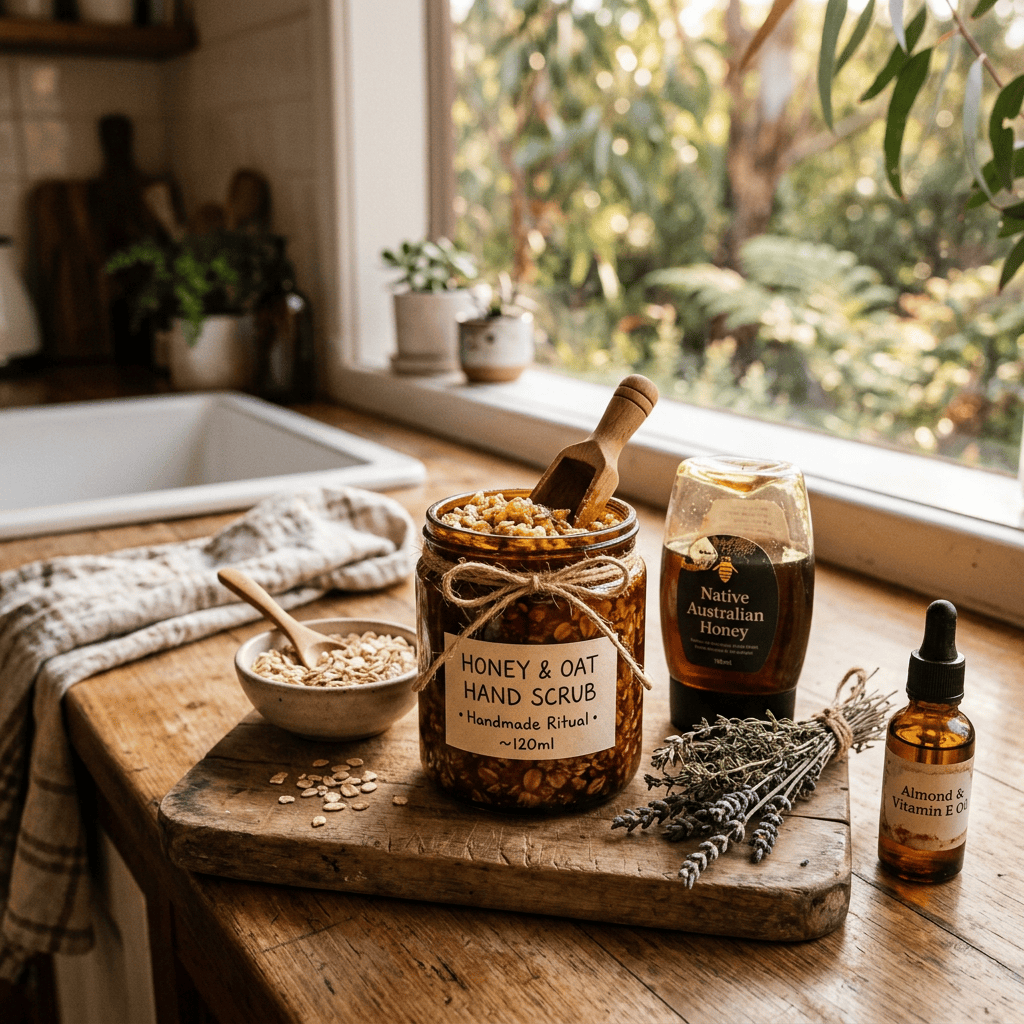
Honey & Oat Hand Scrub
Lammas is a season of making, baking, gardening and working with our hands, so a little hand care feels particularly fitting. Oats and honey also tie beautifully into the grain, nourishment and harvest themes of the season.
You will need:
2 tablespoons finely ground rolled oats
1 tablespoon honey
1 tablespoon olive, jojoba or sweet almond oil
A small pinch of cinnamon, optional
Mix everything together in a small bowl until you have a soft, slightly grainy paste. If it feels too thick, add another tiny drizzle of oil.
Massage the mixture gently over clean, damp hands for a minute or two, paying a little extra attention to dry areas around the fingers and knuckles. Rinse with warm water, pat dry and finish with your usual hand cream if you like.
The oats provide very gentle exfoliation while the honey and oil leave hands feeling soft and conditioned. If your skin is particularly sensitive, leave out the cinnamon and don’t use the scrub over broken or irritated skin.
This one is best made fresh rather than stored, which also makes it easy to mix up whenever your hands need a little attention.
Practical Magic for the Season
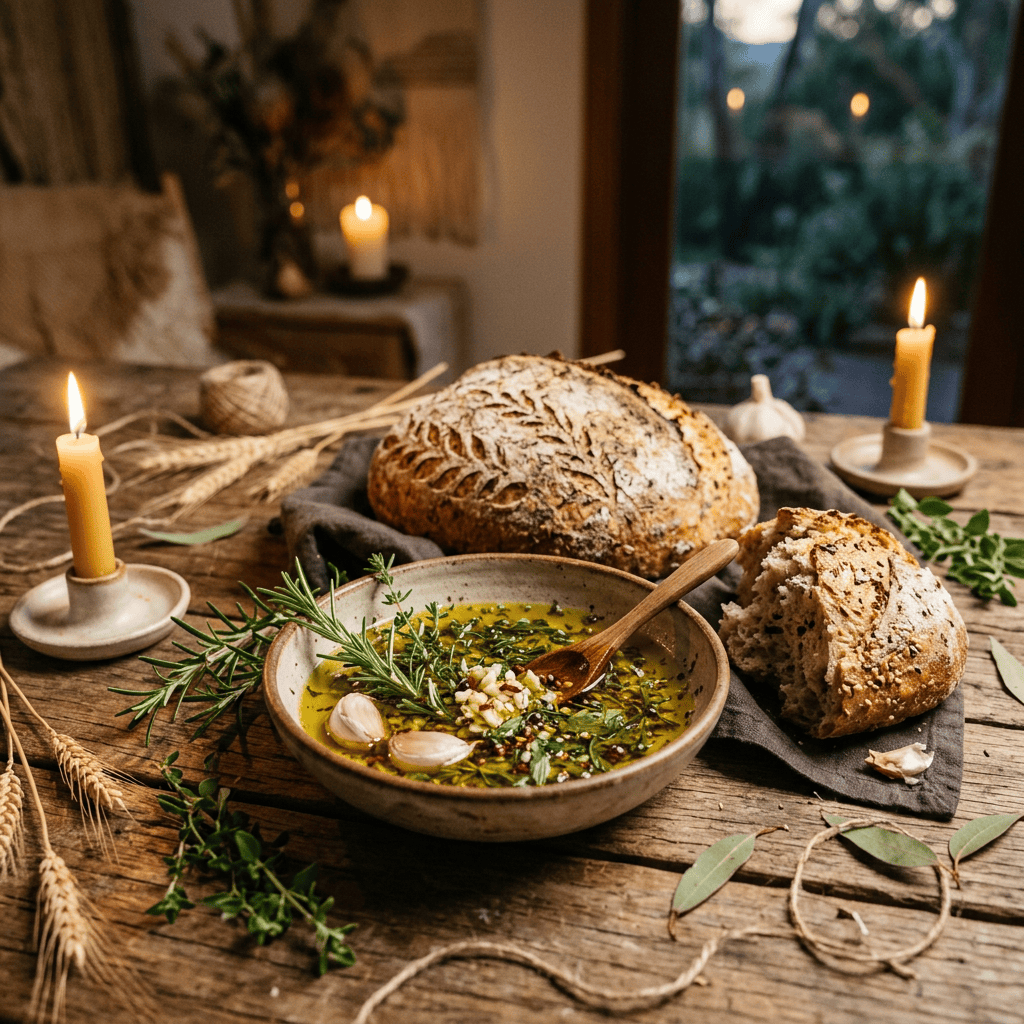
Lammas Herb & Bread Dipping Oil
For Lammas, practical magic can be something that actually ends up on the table. A simple herb-infused dipping oil brings together the season’s themes of food, herbs, harvest and sharing, and it goes rather perfectly with all that Lammas bread.
You will need:
¼ cup good-quality olive oil
1 teaspoon dried rosemary
1 teaspoon dried oregano or thyme
½ teaspoon dried garlic
A small pinch of salt
Freshly cracked black pepper
A pinch of chilli flakes, optional
Pour the olive oil into a shallow dish and add the herbs, garlic, salt and pepper. Stir everything together and leave it to sit for about 15–20 minutes so the dried herbs can soften and the flavours begin to infuse.
As you stir, think about the things that have sustained you through this part of the year — food, home, people, work, creativity, friendship or simply your own ability to keep things moving.
You might quietly give each turn of the spoon a simple intention: gratitude for what I have, appreciation for what I’ve grown, and generosity with what I can share.
Serve it with fresh bread as part of a Lammas meal, or put it in the middle of the table for everyone to tear, dip and share.
Because this contains oil and dried ingredients, make only what you plan to use at the time rather than preparing a jar to keep in the cupboard. If you want leftovers, refrigerate them promptly and use them within a few days.
It’s practical Lammas magic in its most useful form: good bread, herbs, olive oil and something delicious to pass around the table.
A Family Tradition
The Lammas Bread Picnic
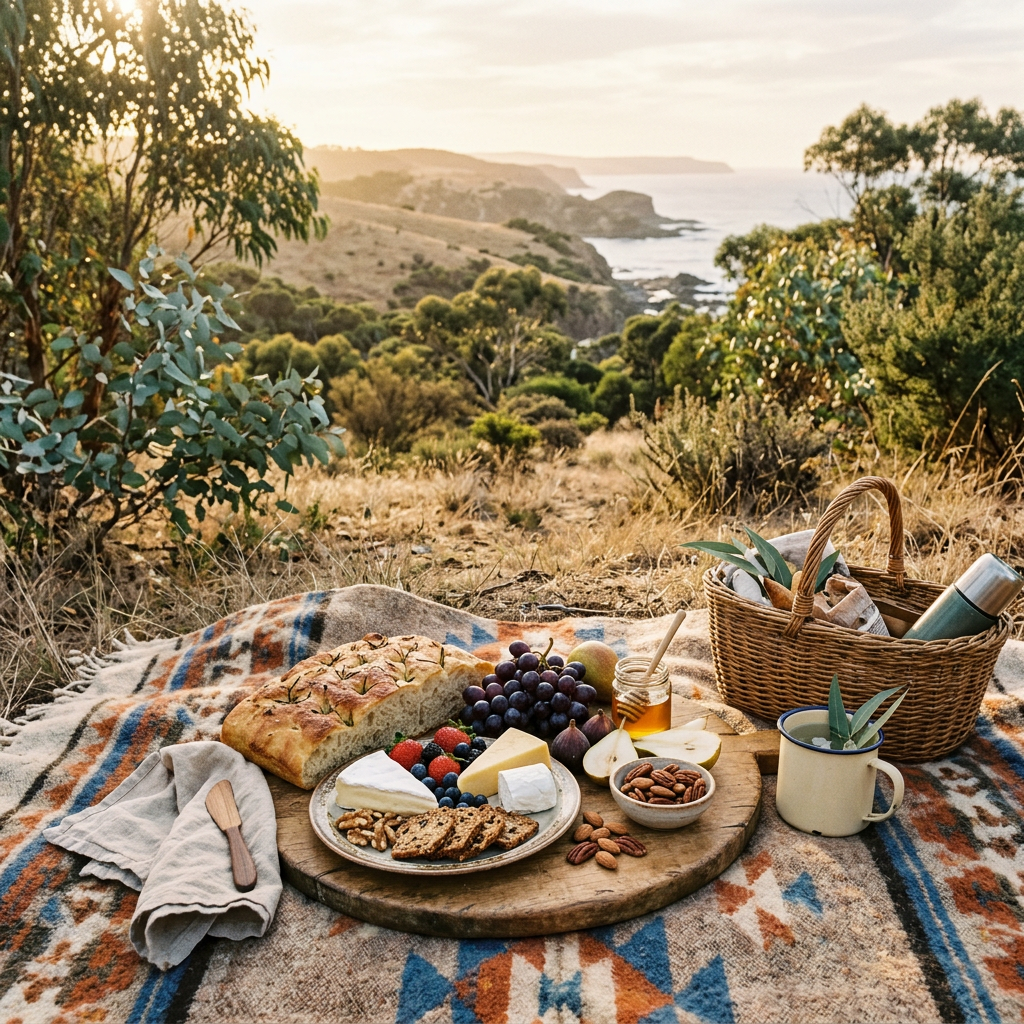
Make a Lammas bread picnic an annual late-summer tradition — a relaxed picnic built around fresh bread, good cheese and seasonal food, enjoyed somewhere outside together.
Choose a shady spot in the garden, a local park, beside the water or somewhere you enjoy spending a summer afternoon. Pack a freshly baked or bakery-bought loaf of bread and make a simple bread and cheese platter to share.
Add whatever looks good and plentiful at the time: a couple of cheeses, crackers, grapes or other late-summer fruit, tomatoes, olives, dips, nuts, local honey, jam or relish. Something homemade or picked from the garden is lovely if you have it, but the important part is choosing food everyone will actually enjoy.
Bring cold drinks, a picnic rug and perhaps a few cards or an easy outdoor game as a little nod to the games and gatherings traditionally associated with Lughnasadh.
Then tear the bread, pass everything around and enjoy a long, lazy picnic together.
As the years go by, you could return to the same picnic spot or choose somewhere different each Lammas. The food will change depending on what is in season and what everyone loves at the time, but fresh bread at the centre of the picnic becomes the part that stays.
Fresh bread, good cheese, summer fruit and the people you love — our Lammas Bread Picnic.
 The Wheel at Home