Beltane
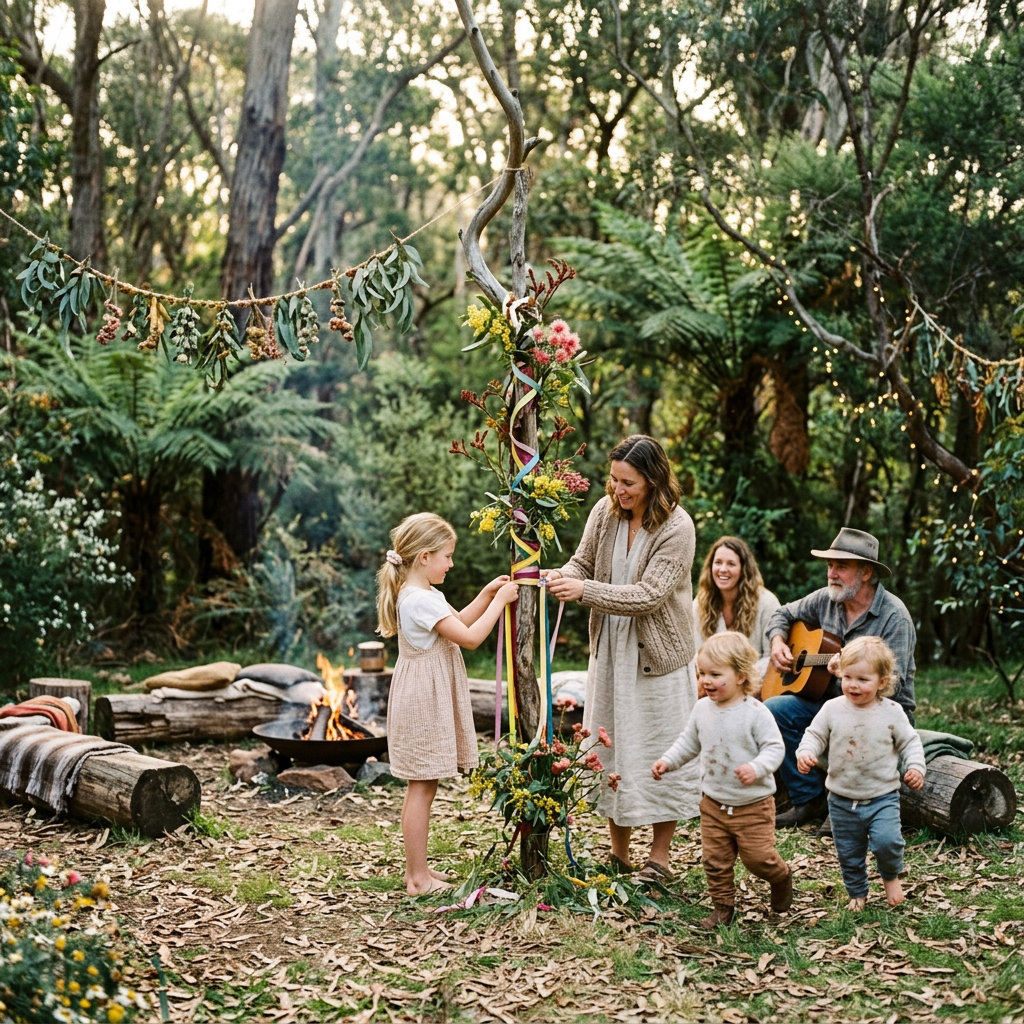
Beltane at a Glance
Pronunciation: BEL-tayn
Date: Around 31 October–1 November in the Southern Hemisphere
Season: Late Spring
Wheel Position: Between the Spring Equinox (Ostara) and Summer Solstice (Litha)
Themes: Vitality, passion, fertility, abundance, pleasure, love, creativity, connection and celebration
Beltane is one of the four traditional Gaelic seasonal festivals, alongside Samhain, Imbolc and Lughnasadh. Traditionally celebrated at the beginning of May in Ireland, it marked the beginning of summer and a significant shift into the warmer, more abundant part of the year.
On the modern Wheel of the Year, Beltane sits opposite Samhain. Where Samhain carries us towards darkness, rest and the inward half of the year, Beltane moves in the other direction — towards light, warmth, activity and the approaching height of summer.
There is an exuberance to Beltane that sets it apart from the earlier spring festivals. Ostara carries the energy of growth and possibility; by Beltane, that growth is well underway. The season feels fuller, warmer and more alive, and the focus moves towards enjoying what is flourishing rather than simply waiting to see what will emerge.
Beltane is also strongly associated with fire. Historically, great fires formed part of the festival in Ireland, connected with protection and the wellbeing of livestock as they were moved into summer pastures. Fire remains one of Beltane’s most recognisable symbols today, representing vitality, warmth, passion and life at its most energetic.
Within the modern Wheel, Beltane has also become closely associated with love, sensuality, fertility, creativity and celebration. It is a lively point in the seasonal cycle — a time for enjoying the warmth, gathering with others and embracing the abundance of the season as the Wheel turns towards summer.
Beltane in the Southern Hemisphere
In the Southern Hemisphere, Beltane falls around 31 October–1 November, as spring moves towards summer. By this point in the seasonal year, the gentler beginnings of spring have given way to warmth, longer days and a landscape that can feel full of life and activity.
Across Australia, this time of year varies enormously. In cooler southern regions, November can bring beautiful mild days, flowering gardens and comfortably warm evenings. Further north, the heat may already be well established. In subtropical areas, humidity begins to build and afternoon storms can return, while tropical regions are moving towards the wet season.
The position of Beltane on the Wheel gives us a shared seasonal point even when our climates differ. It falls approximately halfway between the Spring Equinox and Summer Solstice, as daylight continues to increase and the sun moves towards its strongest point in the year.
For many parts of Australia, this is also a season of extremes. Hot days can arrive suddenly, storms can roll through after a humid afternoon and dry landscapes can carry an increasing bushfire risk. Beltane here can hold both the pleasure and the power of the approaching summer, rather than presenting warmth and fire as purely symbolic ideas.
Traditional Beltane celebrations centred strongly around fire, livestock, protection and the beginning of the summer grazing season. Those agricultural rhythms may not be part of our everyday lives, but the festival’s connection with warmth, vitality and the flourishing natural world translates easily to this point in our own year.
Celebrating Beltane here can take its cues from what late spring actually brings. Outdoor gatherings, flowers, shared food, gardens, evening light and time spent outside all suit the season, while Beltane’s traditional fire symbolism can be approached with an awareness of local conditions and fire restrictions.
There is something wonderfully Australian about allowing Beltane to be shaped by both the beauty and unpredictability of this time of year. Warm evenings, flowering gardens, noisy birds, approaching storms, intense sunlight and the first real taste of summer can all become part of the celebration.
Beltane in the Southern Hemisphere belongs to this point of expansion on our Wheel — late spring giving way to summer, the days still lengthening and the year approaching its brightest, warmest peak.
The Story of Beltane
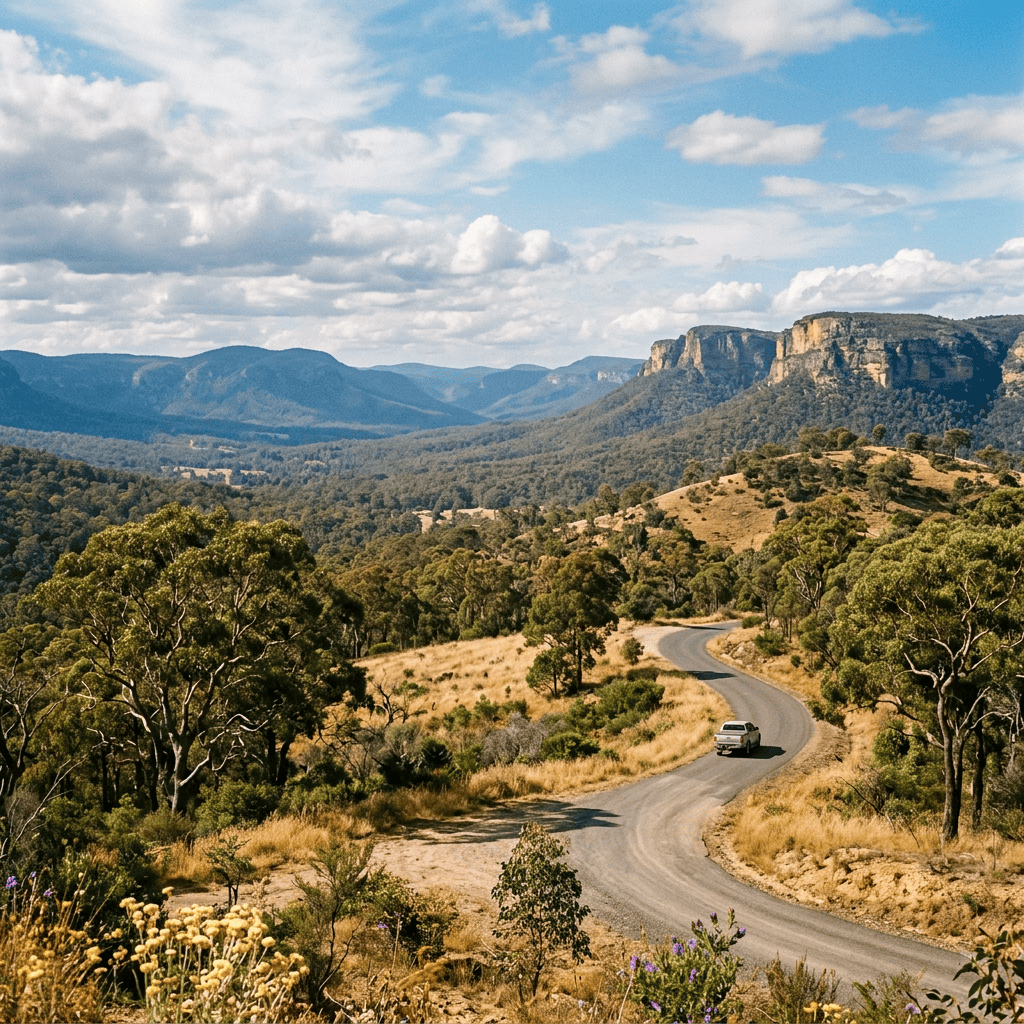
Beltane is one of the four traditional Gaelic seasonal festivals, alongside Samhain, Imbolc and Lughnasadh. Traditionally observed around 1 May in Ireland, it marked the beginning of summer and an important turning point in the agricultural year. On the modern Wheel of the Year, it sits approximately halfway between the Spring Equinox and the Summer Solstice.
Its origins reach back into pre-Christian Ireland, although, as with the other Gaelic festivals, much of what we know comes from medieval Irish literature and later folklore rather than detailed accounts of ancient celebrations. Beltane was closely connected with livestock, protection, fire and the movement into the summer season.
The name comes from the Irish Bealtaine, the name traditionally given to both the festival and the month of May. Its precise etymology is debated, although it has long been associated with the idea of a bright or sacred fire. Claims that Beltane literally means “fires of Bel” and was dedicated to a Celtic sun god named Bel or Belenus are commonly repeated, but the historical evidence is much less certain.
Fire was certainly central to Beltane traditions. Medieval Irish sources describe great fires being kindled, and later customs involved driving cattle between two fires or past the smoke before they were taken to summer grazing. The fires were believed to offer protection from illness and misfortune and to safeguard the animals during the months ahead.
Household fires also became part of Beltane tradition. In some accounts, hearth fires were extinguished before being relit from the communal Beltane fire. Fire therefore carried more than one meaning: protection, purification, community and the beginning of a new seasonal phase were all bound together.
Livestock were especially important because Beltane marked the time when cattle could be moved from winter shelter and lower pastures towards summer grazing. Protecting the herd mattered enormously in communities whose survival depended upon healthy animals, milk and the success of the agricultural year.
Flowers and greenery also became an important part of Beltane customs. Homes, doorways, windows and livestock could be decorated with seasonal flowers and branches, particularly yellow flowers such as primrose, rowan and marsh marigold. These decorations were connected with protection as well as celebration and reflected the flourishing landscape of early summer.
May bushes were another tradition found in Ireland. A branch or small tree might be decorated with flowers, ribbons, shells and other colourful objects. Maypoles are now strongly associated with modern Beltane celebrations too, although their history belongs more broadly to European May Day customs rather than being a specifically ancient Irish Beltane tradition.
Beltane was also considered a liminal time, when the boundaries between the ordinary world and the Otherworld could feel particularly close. Like Samhain, which sits opposite it on the Wheel, Beltane occupied a threshold between seasonal halves of the year. Folklore surrounding fairies and supernatural beings became particularly important, and protective customs were used around homes, animals and food.
Many of the romantic and sexual associations surrounding modern Beltane developed from the wider symbolism of spring and early summer, fertility, courtship and May Day celebrations. Love, sensuality and sexuality are now prominent themes within contemporary Pagan Beltane, but it is worth distinguishing these from the surviving historical evidence. Beltane was certainly concerned with fertility and flourishing life, although it was not simply an ancient festival of sex and romance.
With the development of modern Wicca and Paganism during the twentieth century, Beltane became one of the eight Sabbats of the modern Wheel of the Year. Traditional Gaelic Beltane customs were combined with British and European May Day traditions, folklore and newer Pagan practices to create the festival many people recognise today.
Bonfires, maypoles, flower crowns, dancing, feasting and decorating with flowers have all found a place within modern celebrations. Beltane has also become associated with creativity, pleasure, love, abundance and embracing life at its fullest as the seasonal cycle moves towards summer.
For those of us in the Southern Hemisphere, Beltane moves to around 31 October–1 November so that it retains its seasonal position between the Spring Equinox and Summer Solstice. The traditional Irish festival of Bealtaine remains connected with May, but our seasonal Beltane belongs to the opposite side of the calendar.
At its roots, Beltane is a festival of crossing into the abundant half of the year. Fire, flowers, protection, livestock, community and celebration all tell the story of people recognising an important seasonal threshold and preparing for the summer ahead.
What We Notice Here
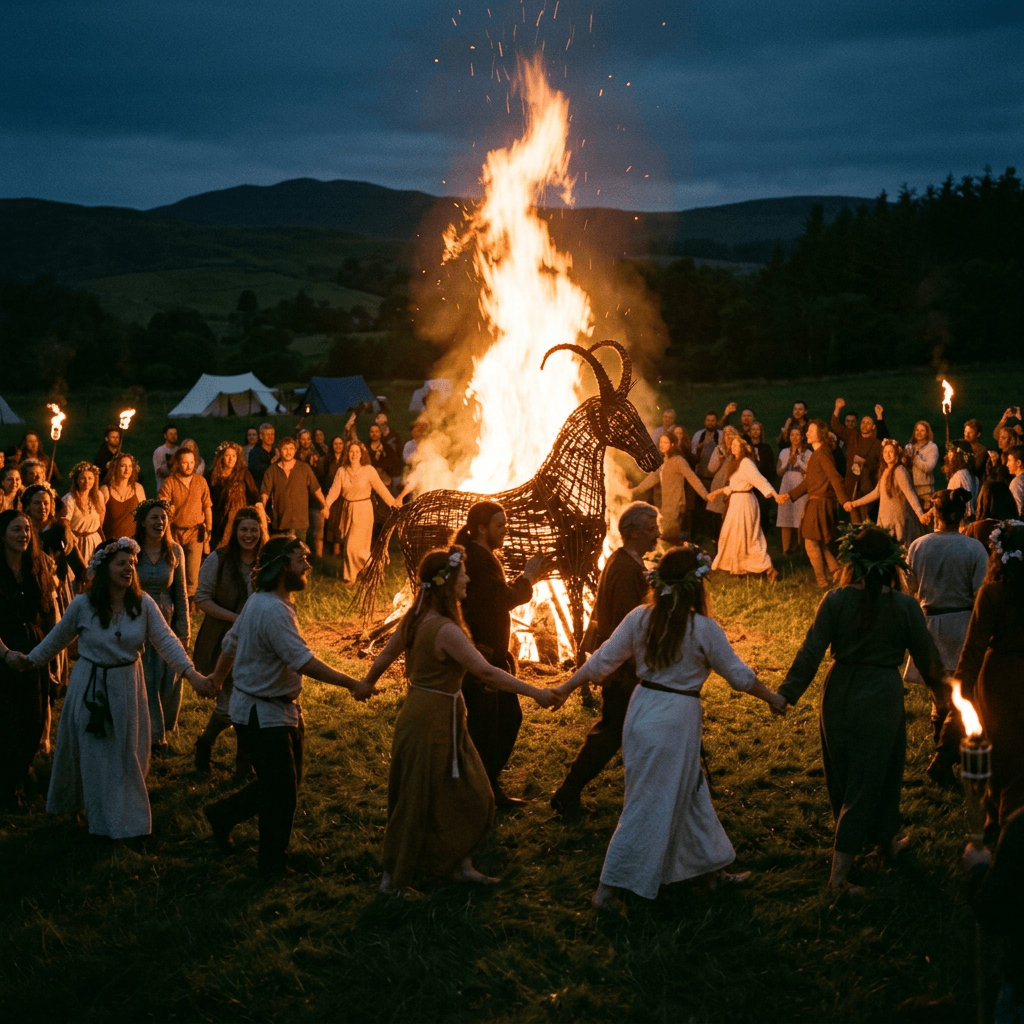
By Beltane, Southeast Queensland is beginning to feel much closer to summer than spring. The gentle warmth of September has built into hotter days, stronger sunshine and evenings that stay light well after the working day is finished. The change since Ostara can happen surprisingly quickly.
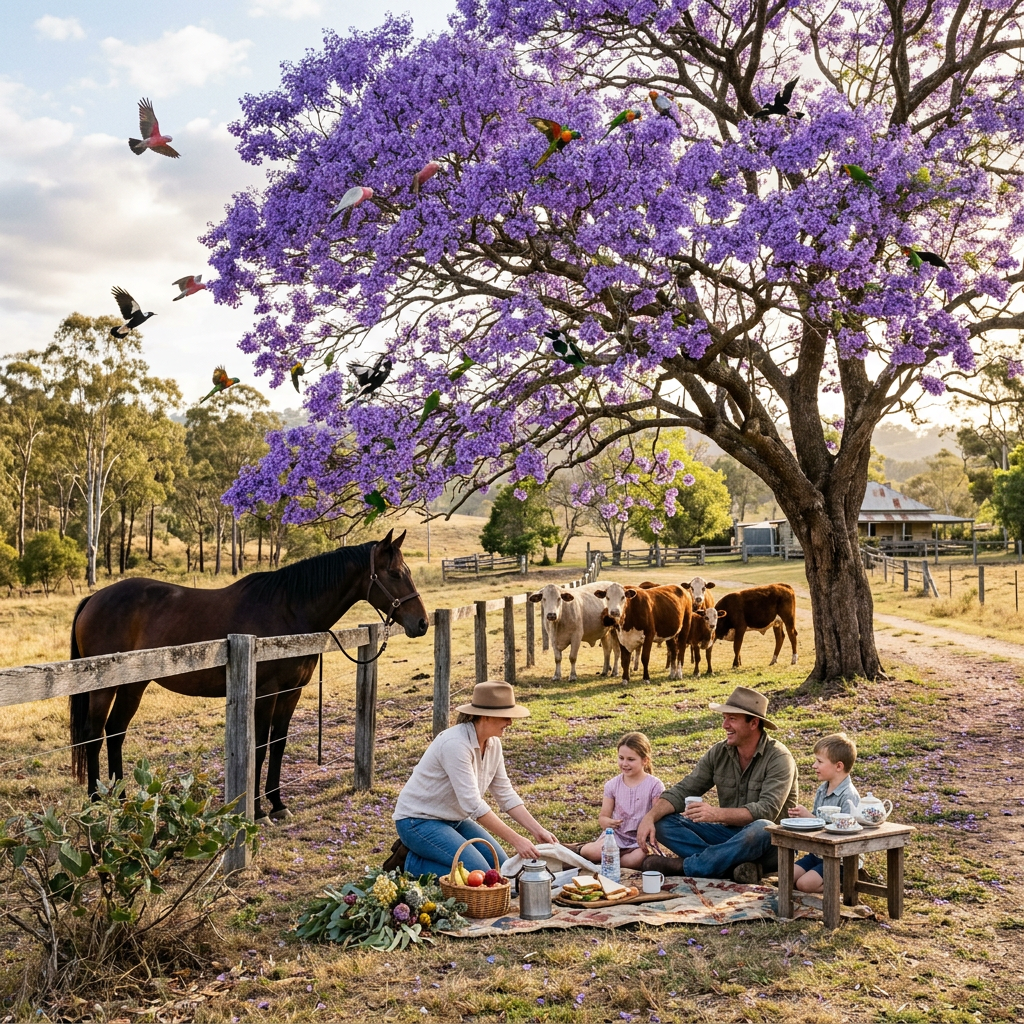
Gardens are growing at full speed. Herbs, vegetables and flowering plants can put on new growth almost faster than we can keep up with them, while regular watering becomes increasingly important. Jacarandas bring their unmistakable purple across Brisbane and surrounding areas, and flowering trees and shrubs continue to draw birds and insects into gardens.
The birdlife that became so busy during early spring is still very much present. Young birds are appearing, parents are constantly searching for food and flowering trees can become gathering places for lorikeets, honeyeaters and other nectar-feeding birds. There is noise and movement everywhere, particularly in the early morning.
Insects are impossible to miss now. Bees move constantly through flowering plants, butterflies are more abundant and the evening chorus of insects begins to return. Mosquitoes also make their less-magical seasonal appearance, particularly once warmer weather and rain begin arriving together.
The weather becomes one of the most noticeable parts of this time of year. Warm, still mornings can build into hot and humid afternoons, followed by dramatic thunderstorms that darken the sky, bring sudden wind and rain and leave that distinctive cool, earthy smell afterwards. The first proper storms of the warmer season can feel like an event in themselves.
There is also a different quality to the sun. Shade becomes valuable again, bare feet quickly discover how hot paving can get and gardening jobs start moving towards the cooler ends of the day. Sunscreen, hats, water bottles and fans quietly return to everyday life.
Our homes begin changing with the heat as well. Windows and doors might be opened early before the day warms up, ceiling fans come back into regular use and outdoor areas become especially inviting in the late afternoon and evening. Meals often become lighter and colder drinks start replacing some of the warming comforts of winter.
Beltane also falls at a time when gathering outside feels particularly natural. Evening barbecues, picnics, drinks on the verandah, garden lunches and weekends spent near the water fit easily into the rhythm of late spring. The long daylight gives us room to linger outside without needing to turn it into a special occasion.
There is a fullness to the landscape now that feels very different from Ostara. Spring’s new growth has matured, flowers have opened, birds have raised young and the warmth has become established. At the same time, the approaching Australian summer is beginning to make itself known through heat, storms and the need to pay attention to the conditions around us.
This is our Beltane: jacarandas overhead, warm evenings, noisy birds, buzzing gardens, afternoon storms, bare feet, outdoor meals and that unmistakable feeling that summer is almost here.
Themes of the Season
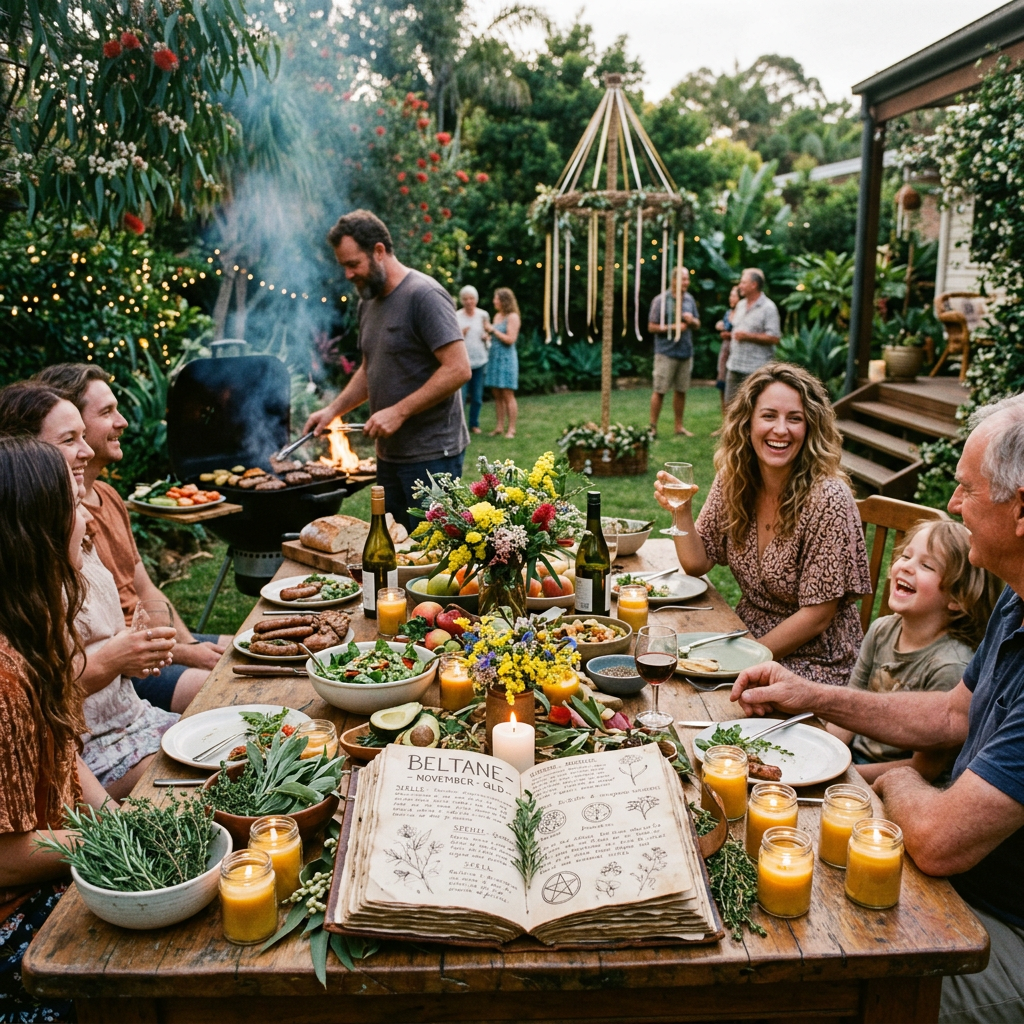
Beltane carries themes of vitality, passion, abundance, pleasure, connection, fertility, creativity and celebration. The growth of spring has reached a fuller, more energetic stage, and the approaching summer brings warmth, movement and a sense of life being lived more openly.
Vitality
Beltane is full of life. Plants are flourishing, insects are busy, birds are active and the increasing warmth seems to bring everything into motion.
Vitality can be felt in our own lives too. This is a season for using our energy rather than simply thinking about what we might do with it. Moving our bodies, working in the garden, getting outdoors, travelling somewhere new or spending time doing things that make us feel genuinely alive all fit naturally here.
Passion
Passion is one of Beltane’s strongest modern themes, but it reaches well beyond romance and sexuality. Passion is enthusiasm, desire, excitement and caring deeply about something.
It might appear through a relationship, a creative project, a hobby, work we care about or something we have always wanted to try. Beltane encourages us to notice what lights us up and give some of our time and energy to it.
Abundance
By Beltane, the tentative growth of early spring has become much more abundant. Gardens are fuller, flowers are plentiful and the natural world is busy producing, feeding, flowering and reproducing.
Abundance in everyday life can be found in far more than possessions. A table shared with friends, a garden full of flowers, enough food to share, a busy household, laughter, time, creativity and strong relationships can all be forms of abundance worth noticing and enjoying.
Pleasure
Pleasure has a natural place at Beltane. Good food, warm sunshine, music, dancing, touch, beautiful scents, flowers, swimming, laughter and long evenings outside all engage the senses.
There can be something wonderfully refreshing about doing things simply because they feel good. Beltane gives pleasure a place alongside productivity and responsibility, allowing enjoyment to be worthwhile in its own right.
Love and Connection
Beltane has become strongly associated with love, courtship and relationships within modern Pagan traditions. It can certainly be romantic, but love at Beltane can also include friendship, family, community and the people whose company makes life richer.
Gathering together suits this part of the Wheel particularly well. Share a meal, invite friends over, spend time with family, reconnect with someone you have missed or simply enjoy being around the people you love.
Fertility
Historically, Beltane was closely connected with livestock, protection and the agricultural year, while fertility became an increasingly prominent part of its symbolism. Within modern practice, fertility is often understood much more broadly than reproduction.
A fertile life is one in which things can develop and flourish. Gardens grow, ideas become projects, relationships deepen, creativity produces something tangible and the effort we have already invested begins to show results.
Creativity
The creative spark that appeared at Imbolc and began taking form through Ostara can be much more expressive at Beltane. Colour, music, flowers, movement, food and decoration all suit the lively character of the festival.
Make something bold. Wear something colourful. Cook for people. Arrange flowers, paint, dance, garden, decorate or put music on while you work. Creativity at Beltane can be playful, physical and enjoyed for the experience itself.
Celebration
Beltane is one of the more openly celebratory points on the Wheel. Historically, communal fires and seasonal customs marked an important transition into summer, while modern celebrations often include feasting, dancing, flowers and gathering together.
Celebration does not need a major event behind it. A beautiful day, people we enjoy, food on the table and the arrival of another season can be reason enough to make an occasion of something.
Together, these themes give Beltane its warmth and exuberance. This is a season for participating — enjoying what is flourishing, sharing it with others and making room for pleasure, connection and the things that bring energy into our lives.
Seasonal Invitation
Beltane invites us to enjoy being fully awake to the season.
The year has opened up considerably since Ostara. The days are warmer, the evenings are longer and there is a liveliness outside that makes staying tucked away indoors a little less appealing. Beltane is a good time to follow that energy and spend more of life out in the world.
Make plans that give you something to look forward to. Invite friends over for dinner, organise a picnic, head to the beach, visit somewhere you have been meaning to explore or take advantage of the long afternoon and go somewhere after work. Beltane has always carried a strong sense of gathering and celebration, and there is something especially fitting about sharing this part of the year with other people.
Give yourself permission to enjoy things as well. Put on music while you cook. Wear the dress you keep saving. Buy yourself flowers. Swim in the ocean. Dance around the kitchen. Sit outside with a cold drink at the end of the day. Cook something delicious simply because you feel like eating it. Pleasure does not always need to be earned or attached to an achievement.
This is also a lovely season to pay attention to what you feel passionate about. Not what you should be doing or what would look productive from the outside, but the people, interests, ideas and experiences that genuinely bring some spark into your life. Make more room for those things where you can.
Beltane’s association with love can be explored in all its forms. Spend time with your partner, organise something with friends, gather the family together or reach out to someone whose company you miss. Tell people you love them. Be affectionate. Laugh loudly. Stay at the table after dinner and keep talking.
There is a physical quality to this part of the Wheel too. Get your hands into the garden, walk barefoot on the grass, swim, stretch, dance, cook, make things and spend time outside. Notice the warmth on your skin, the scent of flowers, the sound of a storm approaching and the coolness that follows the rain.
And if life happens to be busy, difficult or simply not feeling particularly celebratory, Beltane does not demand that we manufacture joy. Pleasure can be quiet. Connection can be one person. Vitality can be found in an hour spent doing something we love.
So for Beltane, the question might be:
What makes me feel more alive?
Follow that answer somewhere. Make plans. Gather people around you. Enjoy something beautiful, delicious, funny, exciting or completely unnecessary.
There will be quieter turns of the Wheel again. Beltane is a lovely place to enjoy the noise.
Beltane Correspondences
These correspondences bring together traditional Beltane associations, later May Day customs and modern Pagan practice, along with Australian alternatives that reflect the plants and seasonal changes around us at this time of year.
Colours & Candles
Green — growth, fertility, abundance and vitality
Red — passion, fire, courage and desire
Pink — love, affection, friendship and pleasure
Yellow — sunlight, happiness, confidence and warmth
White — protection, clarity and blessing
Gold — solar energy, abundance and vitality
Orange — fire, creativity, enthusiasm and warmth
For candles, green, red, pink and gold are particularly suited to Beltane. Green reflects the flourishing season, red carries the festival’s strong connection with fire and passion, pink suits love and affection, and gold represents the increasing strength of the sun.
Crystals & Stones
Carnelian — passion, creativity, confidence and vitality
Garnet — desire, courage, warmth and energy
Rose Quartz — love, affection, compassion and connection
Green Aventurine — growth, abundance, opportunity and optimism
Emerald — love, fertility, growth and abundance
Moss Agate — nature, fertility, grounding and growth
Sunstone — vitality, confidence, joy and warmth
Clear Quartz — clarity, intention and amplification
Traditional Herbs, Plants, Flowers & Trees
Hawthorn — fertility, protection and May traditions
Rowan — protection, enchantment and seasonal folklore
Birch — renewal, fertility and new beginnings
Oak — strength, vitality and endurance
Primrose — protection, youth and spring
Marsh Marigold — protection, sunlight and Beltane traditions
Rose — love, passion and beauty
Daisy — innocence, joy and spring
Woodruff — sweetness, protection and spring celebrations
Nettle — protection, vitality and strength
Elder — protection, folklore and the Otherworld
Many of Beltane’s plant associations come from Irish and British customs surrounding May Day and the beginning of summer rather than from one single ancient Beltane tradition.
Australian Herbs, Plants, Flowers & Trees
Bottlebrush — vitality, abundance and adaptability
Grevillea — vitality, connection and abundance
Banksia — strength, resilience and regeneration
Eucalyptus — protection, cleansing and vitality
Tea Tree — protection, cleansing and restoration
Native Jasmine — love, beauty and sweetness
Lilly Pilly — abundance, growth and nourishment
Jacaranda — beauty, transformation and the late-spring landscape
Native Violet — affection, gentleness and connection
At Australian Beltane, flowers can be abundant, but what is blooming will depend greatly on location and climate. Using flowers and greenery gathered responsibly from your own garden or choosing locally grown seasonal flowers allows the celebration to reflect the landscape around you.
Animals
Cattle — protection, abundance, nourishment and traditional Beltane customs
Horses — vitality, movement and strength
Bees — fertility, pollination, abundance and community
Butterflies — transformation, beauty and change
Birds — courtship, communication, freedom and new life
Swallows — seasonal change, movement and returning warmth
Cattle have the strongest historical connection here, reflecting Beltane’s importance as the time livestock were moved towards summer grazing. Local birds, insects and other wildlife active during late spring can sit alongside these older associations.
Essential Oils
Rose — love, affection and beauty
Geranium — balance, connection and sensuality
Ylang Ylang — sensuality, pleasure and relaxation
Sweet Orange — joy, warmth and optimism
Bergamot — confidence, brightness and vitality
Lavender — harmony, calm and affection
Rosemary — protection, clarity and vitality
Cedarwood — grounding, strength and warmth
Essential oils should always be used appropriately and diluted when required. Some oils are unsuitable for certain people, pets or methods of use, so check the safety information for the individual oil.
Food & Drinks
Honey — sweetness, abundance and fertility
Oats — nourishment, abundance and traditional seasonal food
Dairy — nourishment and the importance of livestock
Bread — home, community and sharing
Fresh Berries — sweetness, pleasure and abundance
Cherries — love, sweetness and seasonal abundance
Fresh Herbs — vitality, flavour and flourishing growth
Edible Flowers — beauty, celebration and abundance
Spring Vegetables — nourishment, growth and the season
Cakes and Sweet Breads — feasting, hospitality and celebration
Symbols
Bonfires — protection, purification and the traditional Beltane fires
Flames — vitality, passion, warmth and transformation
Flowers — fertility, beauty and abundance
May Bush — celebration, protection and seasonal greenery
Maypole — community, celebration and later May Day traditions
Flower Crowns — beauty, celebration and the flourishing season
Ribbons — wishes, celebration and connection
Hawthorn — protection, fertility and May customs
Greenery — growth, abundance and vitality
Garlands — celebration, flowers and community
Tarot
The Lovers — love, connection, desire and meaningful choices
The Empress — fertility, creativity, pleasure and abundance
The Sun — vitality, warmth, joy and confidence
Strength — passion, courage and life force
Ace of Wands — desire, inspiration, creativity and energy
Three of Cups — friendship, gathering and celebration
Four of Wands — community, joy and shared occasions
Moon Phases
Beltane is not tied to a particular moon phase, but the moon occurring at the time can add another layer to personal ritual or reflection.
New Moon — desire, beginnings and intentions
Waxing Moon — growth, attraction and building momentum
Full Moon — passion, abundance and celebration
Waning Moon — release, adjustment and clearing space
Dark Moon — rest, reflection and reconnecting with yourself
Deities of Beltane
Beltane’s surviving historical traditions tell us far more about fire, livestock and seasonal customs than they do about the worship of particular gods and goddesses. Several deities are now associated with the festival, but some of these connections belong primarily to modern Pagan practice.
Belenus — A Celtic deity whose name appears in inscriptions across parts of ancient Europe and who is often interpreted as having associations with brightness, healing or the sun. Belenus is frequently linked with Beltane in modern sources, partly because of the similarity between the names, but there is no clear evidence that the Irish festival was historically dedicated to him.
Áine — An Irish goddess associated with sovereignty, the land, fertility and summer. Her strongest surviving seasonal traditions are connected with midsummer rather than Beltane, although her associations with fertility, warmth and the flourishing land have made her a natural addition to some modern Beltane practices.
Flora — The Roman goddess of flowers, blossoming and fertility. Her festival, Floralia, was celebrated in late April and early May in ancient Rome. Flora was not historically part of Irish Beltane, but her flowers, celebration and fertility associations fit closely with modern interpretations of the season.
Aphrodite — The Greek goddess of love, beauty and desire. She has no historical connection with Beltane, but is sometimes included in contemporary celebrations because love, sensuality and pleasure have become prominent themes of the modern festival.
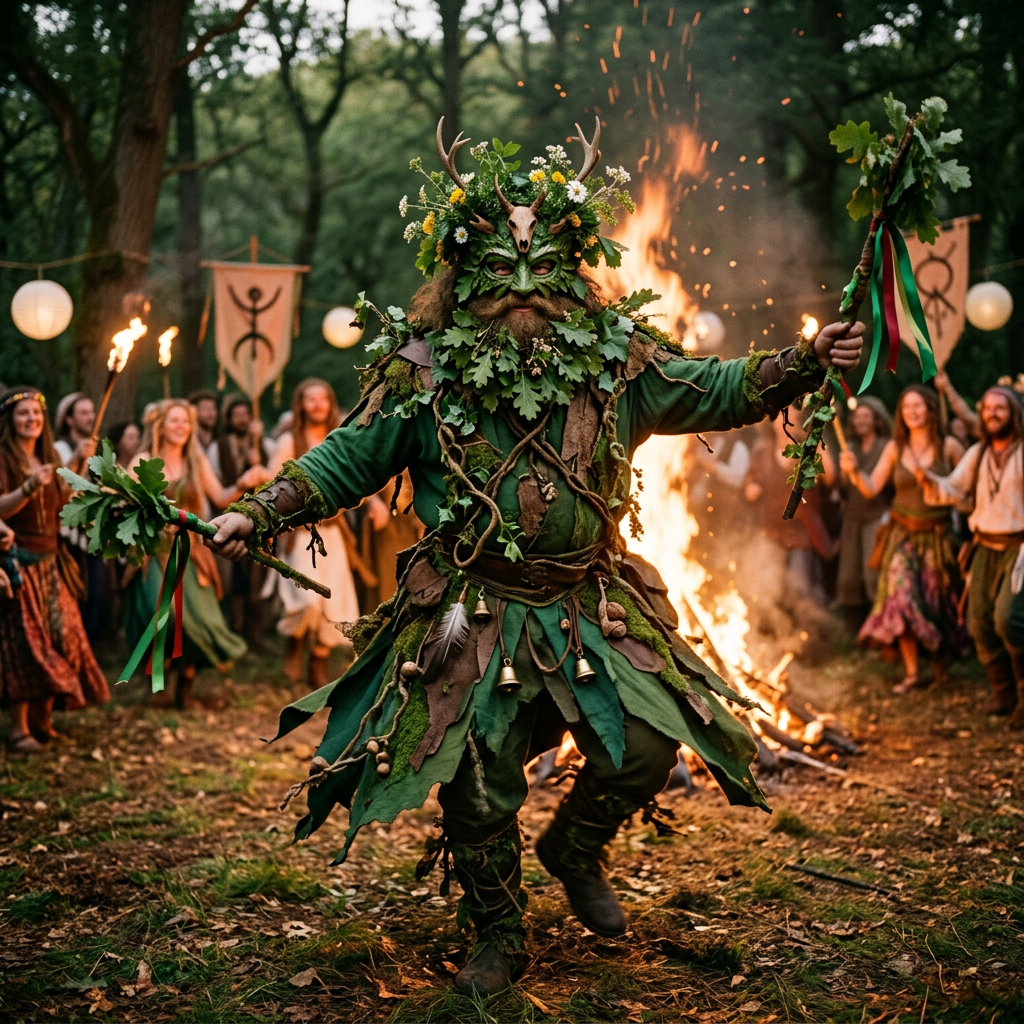
The Green Man — Not a single documented ancient Celtic god, despite claims sometimes made about him. The name is generally used for the leafy faces found in medieval architecture, while modern Pagan traditions have developed the Green Man into a figure representing vegetation, growth and the vitality of the natural world. This makes him a popular Beltane figure today, but the association is modern rather than an ancient Beltane tradition.
Bringing the Season Home
Beltane is a wonderful time to let the home feel lively, colourful and ready for the warmer months ahead. Where Ostara brought fresh spring colour and new growth indoors, Beltane can be fuller and a little more playful, with flowers, greenery, candlelight and spaces made ready for gathering and enjoying long warm evenings.
Seasonal Displays
Create a Beltane display using flowers, greenery and warm, vibrant colours. Red, pink, green, gold and orange candles work beautifully alongside fresh flowers, crystals, ribbons or a bowl of seasonal fruit.
Flowers can really take centre stage at Beltane. Fill a jug with whatever is blooming in the garden, arrange colourful flowers in mismatched bottles or place small bunches around the house. Jacaranda, bottlebrush, grevillea or other locally flowering plants can bring an Australian late-spring feel to the display.
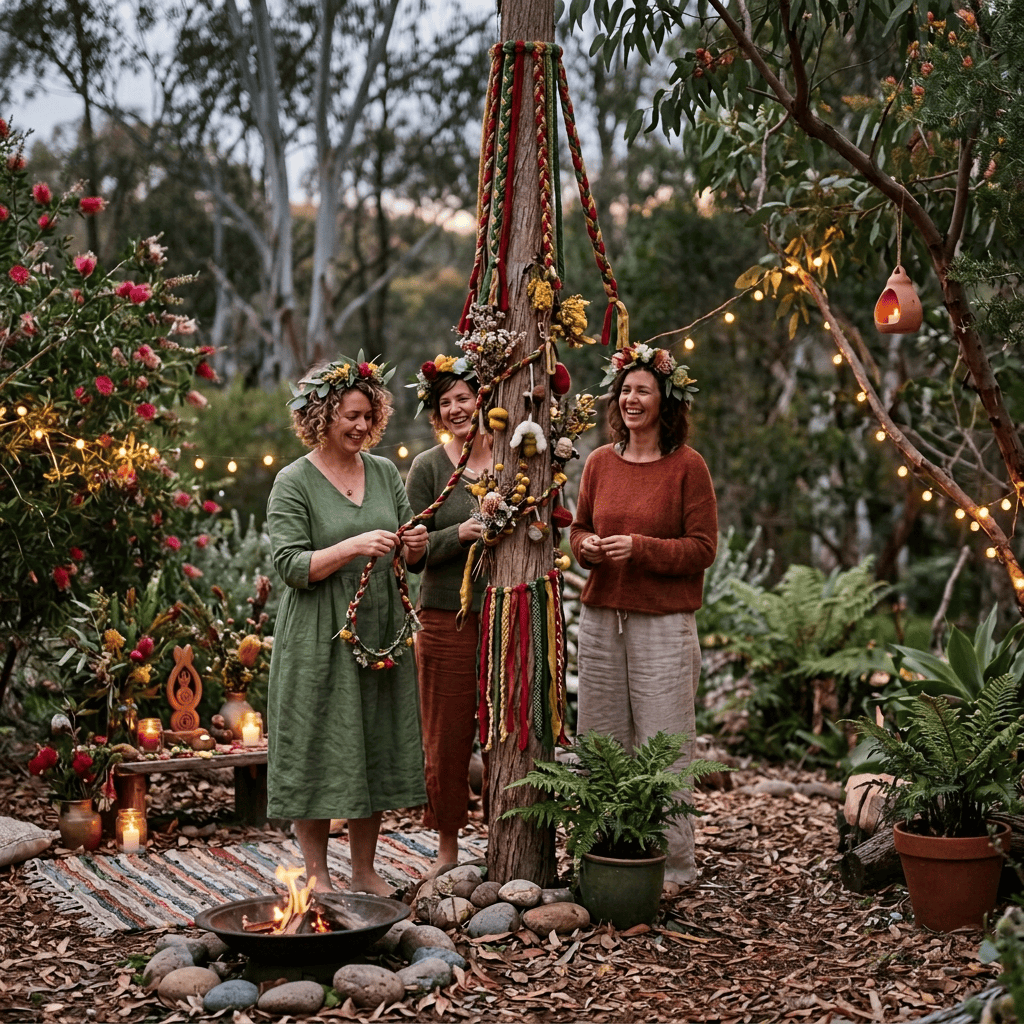
Ribbons and garlands are another lovely nod to Beltane and old May celebrations. Tie ribbons around a vase, candle holder or flower pot, hang a simple garland across a shelf or doorway, or add strips of fabric to a branch displayed in a large vase.
Fire is one of Beltane’s oldest symbols, so candlelight fits naturally here. A cluster of candles on the outdoor table or a lantern glowing as evening falls can bring that element into the home without needing an actual fire — particularly important as Australian summer approaches and fire restrictions become a consideration.
Creating a Seasonal Atmosphere
Beltane is a good time to prepare the spaces where you naturally gather. Clear the outdoor table, sweep the verandah, put out cushions, string up outdoor lights or create somewhere comfortable to sit as the evening cools. The home can begin expanding beyond its walls again.
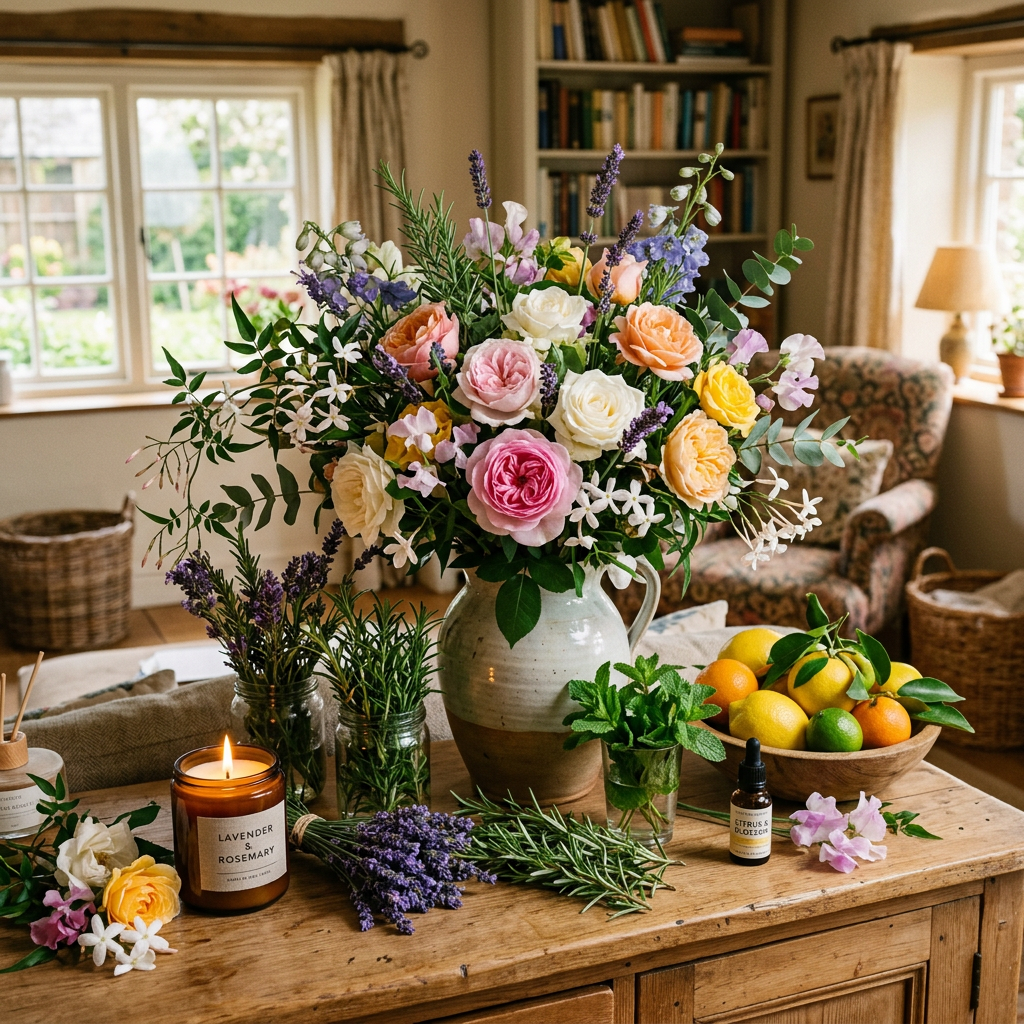
Bring plenty of scent into the season. Roses, jasmine, lavender, rosemary, citrus and other fragrant flowers and herbs can fill the house naturally, while candles, essential oils or a fresh floral arrangement can add another layer.
This is also a lovely season for making the table feel abundant. Keep a bowl of colourful fruit on the bench, fill a jug with flowers, use bright napkins or tablecloths and bring out serving dishes that make shared meals feel a little more festive.
As the days become hotter, lighter fabrics and natural textures suit the season beautifully. Linen, cotton, woven baskets, timber, glass and ceramics can create a relaxed feeling that works just as well indoors as it does outside.
And once the sun begins to go down, let the evening have its own atmosphere. Turn off some of the brighter indoor lights, light candles or lanterns, put on music and take dinner or drinks outside. Beltane is a season that feels particularly at home around a table after dark, with flowers nearby and people lingering long after the meal is finished.
Ways to Celebrate Beltane
Beltane is one of the liveliest points on the Wheel, arriving as late spring begins leaning towards summer. It is a season for getting outside, gathering with people, enjoying flowers and food, and making the most of the warmth and longer daylight.
Gather for an Outdoor Meal
Invite family or friends for lunch in the garden, an afternoon barbecue or dinner outside as the sun goes down. Fill the table with flowers, put on some music and serve food that can be passed around and shared.
Make a Flower Crown
Flower crowns fit beautifully with Beltane and its connection with flowers, celebration and later May Day traditions. Use flowers and greenery from the garden, florist flowers or a mixture of fresh and dried materials woven or wired onto a simple base.
Create a Beltane Fire
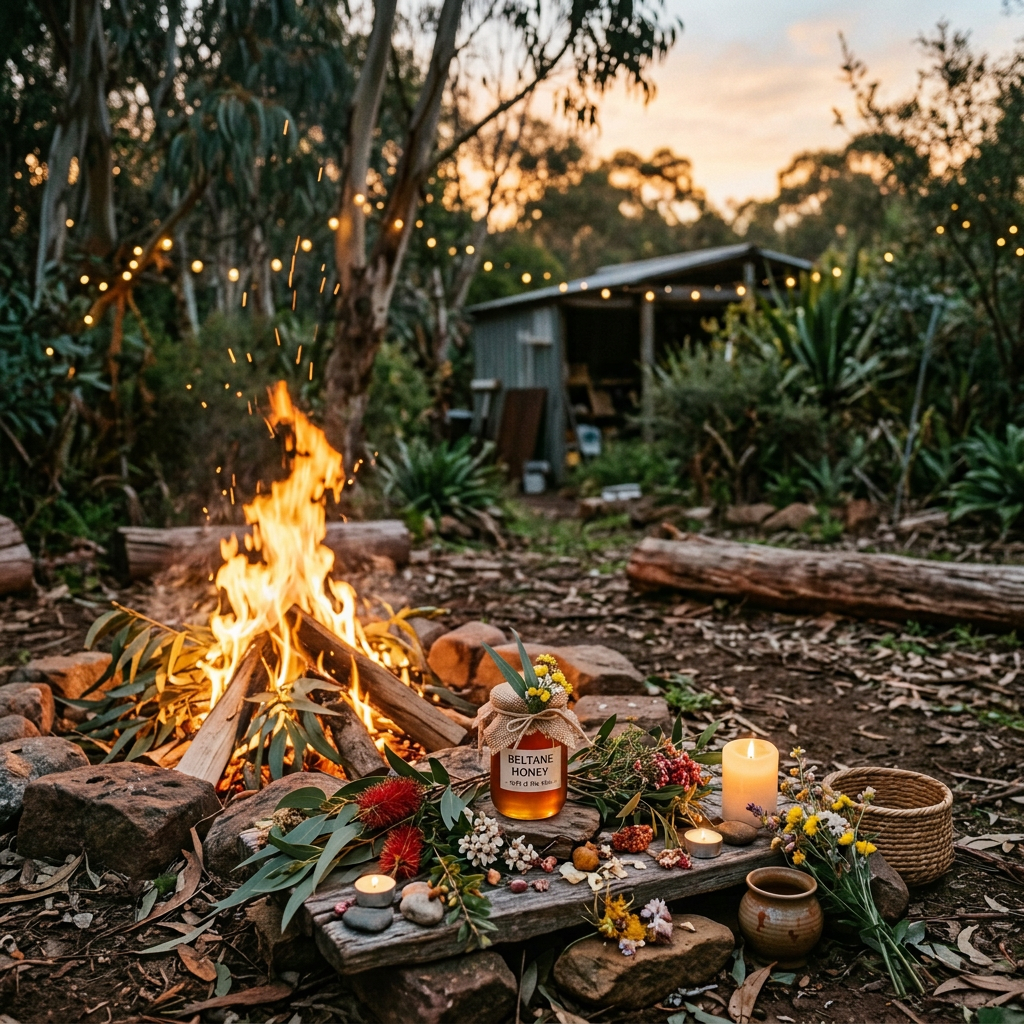
Where conditions allow, gather around a fire pit or outdoor fireplace as evening falls. Beltane’s traditional fires were associated with protection and the beginning of summer, making fire one of the oldest elements of the festival.
In Australia, always check local fire restrictions first. If lighting a fire isn’t appropriate, candles or lanterns can carry the symbolism just as easily.
Decorate a Beltane Branch
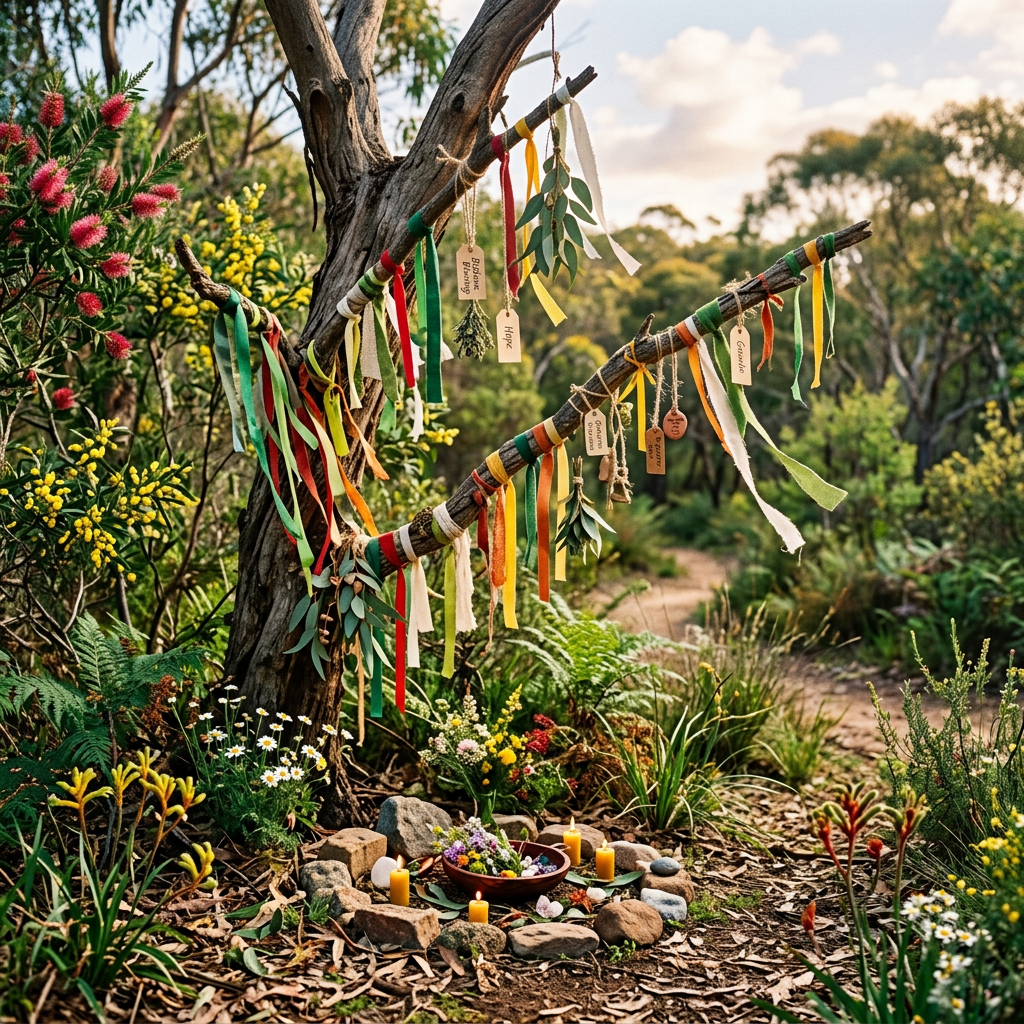
Bring a fallen branch into the garden or place one securely in a large pot and decorate it with ribbons, flowers and strips of colourful fabric. It gives a little nod to both the decorated May Bush and the colourful traditions surrounding the maypole without needing to build one in the backyard.
Go Somewhere Beautiful
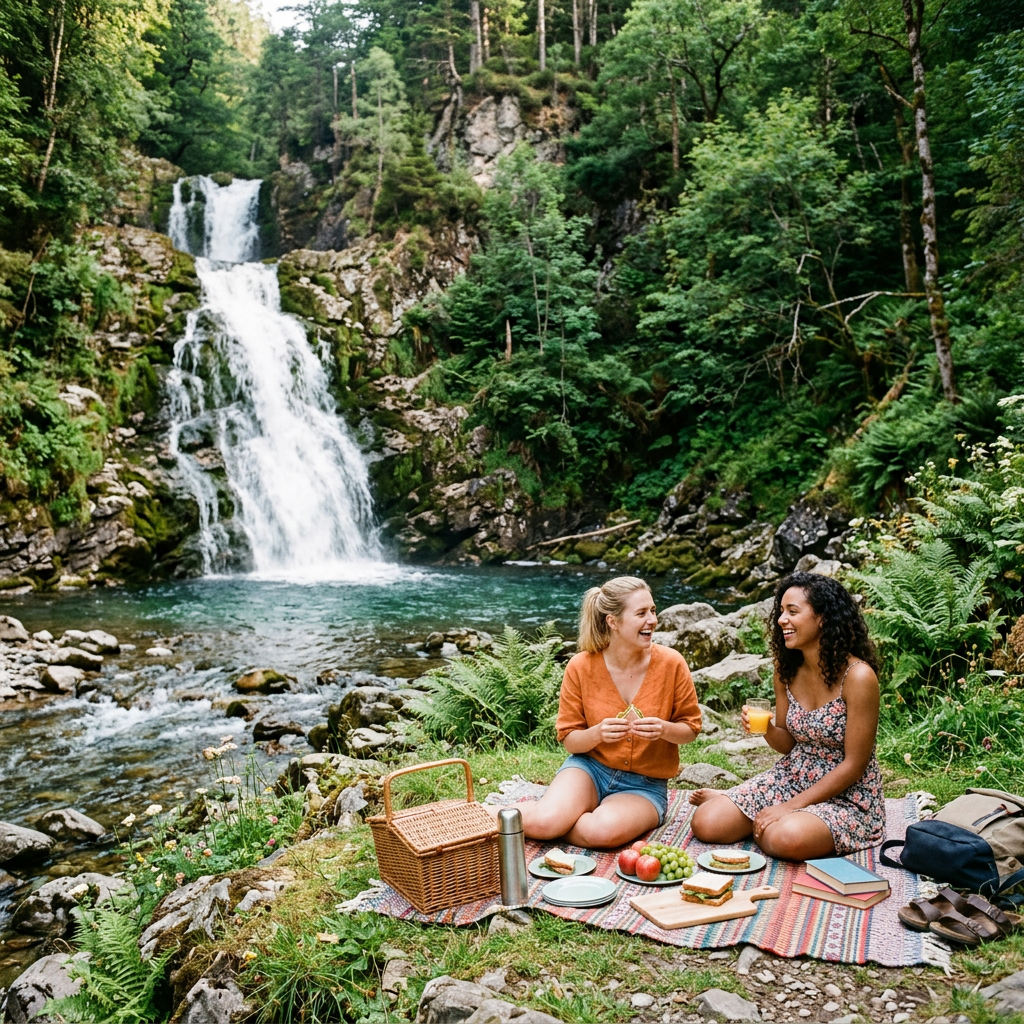
Take advantage of the long daylight and plan a day somewhere that feels especially alive at this time of year. Visit a botanical garden, walk through bushland, head to the beach, explore a waterfall or pack a picnic and spend the afternoon beside the water.
Make a Flower Garland
Gather flowers and greenery and turn them into a garland for the table, front door or outdoor entertaining area. Even a simple length of greenery with a few flowers tucked through it can bring Beltane’s abundance into a gathering.
Celebrate Love
Plan something with someone you love. Have a date night, cook dinner together, revisit somewhere meaningful, write a little love note or spend an afternoon together without filling it with jobs and errands.
Love at Beltane isn’t limited to romance either. Take your mum to lunch, organise a girls’ afternoon, invite the family over or catch up with a friend you haven’t seen enough of lately.
Make Something Delicious
Bake a honey cake, make fresh bread, put together a beautiful grazing platter or create a dessert covered in fruit and edible flowers. Beltane food can be generous, colourful and made for sharing.
Spend the Evening Outside
Take advantage of those warm late-spring evenings before the real summer heat arrives. Put some music on, light lanterns or candles, take a drink outside and stay there as the light fades.
Dance
Beltane has long been associated with communal celebration, and dancing fits its energy beautifully. Go somewhere with live music, dance with friends or simply turn the music up at home and dance around the kitchen while making dinner.
Wear Flowers or Something Colourful
Put flowers in your hair, wear a floral dress, choose bright jewellery or pull out something colourful that makes you feel good. Beltane is one of those festivals where a little exuberance feels entirely appropriate.
Do Something Purely for Pleasure
Give part of the day to something you enjoy without needing it to achieve anything. Read outside, swim, garden, browse the markets, eat something delicious, lie in the sun, make something, listen to music or spend the afternoon with people who make you laugh.
Beltane has a joyful, social quality that makes it quite different from many of the quieter points on the Wheel. Flowers, food, fire, music, affection and good company all belong here — a celebration of late spring while the days are long and summer is waiting just ahead.
Beltane Reflections
Beltane is a good point on the Wheel to turn our attention towards what brings warmth, energy and enjoyment into our lives. These prompts are less about fixing or changing anything and more about noticing what is flourishing, what we want more of and where life feels particularly alive.
Journal Prompts
What has grown in my life since the beginning of spring?
What brings me genuine pleasure, and do I make enough room for it?
Which people, places or activities leave me feeling energised and connected?
What am I passionate about at the moment?
What would I love to experience, create or enjoy before the Wheel turns towards winter again?
Five-Card Beltane Tarot Spread
1. What is flourishing?
Something in your life that is growing, strengthening or beginning to thrive.
2. Where is my fire?
A passion, desire or source of energy that deserves your attention.
3. What wants to be enjoyed?
Something you may be overlooking because you are too busy planning, working or looking ahead.
4. Where can I invite deeper connection?
A relationship, friendship, community or part of yourself that would benefit from more time and presence.
5. What am I ready to embrace?
Guidance for stepping more fully into the warmth, possibility and abundance of the season.
A Small Beltane Gift
A Little Jar of Honey
A small jar of honey makes a lovely Beltane gift, tying beautifully into the season’s associations with sweetness, abundance, bees and pleasure.
Choose small jars of local honey and dress them simply with a piece of fabric or paper over the lid, tied with ribbon or twine. Add a tiny sprig of rosemary, lavender or another herb from the garden if you have some available.
Add a handwritten tag with something simple such as:
A little sweetness for Beltane.
If you are making several gifts, small jars can be filled from one larger jar of honey, making this an easy one to prepare in bulk for friends, family or neighbours.
Beltane Rituals & Seasonal Magic
Lighting the Beltane Flame
A Simple Beltane Ritual
Fire has been at the heart of Beltane for centuries, making a simple flame a lovely way to mark the festival without needing a bonfire.
Choose a red, orange, gold or green candle and place it somewhere safe. If you like, surround it with a few flowers or pieces of greenery from the garden.
Light the candle and take a moment to think about the things that are bringing energy into your life right now — the people you love, something you are excited about, something that is growing well or simply something that makes you happy.
Then think about what you would like to carry with you into the approaching summer. Rather than making a long list of intentions, choose one word that captures the feeling you want more of. It might be joy, courage, connection, adventure, creativity, love, confidence or freedom.
Write your word on a small piece of paper and place it beneath or beside the candle.
As you watch the flame, say:
May I follow what lights me up,
make room for what brings me joy,
and carry this fire with me
into the season ahead.
Leave the paper somewhere you will come across it again over the next few months — tucked into a journal, pinned to a noticeboard or kept on your seasonal display.
A Simple Beltane Spell
A Spell for Joy and Abundance
Beltane is a beautiful time for magic centred around welcoming more of what makes life feel rich, enjoyable and full.
You will need a small bowl, a few fresh flower petals, a spoonful of honey and a small piece of paper.
On the paper, write three things you would like more of in your life over the coming season. Keep them simple and personal — perhaps laughter, friendship, creativity, adventure, confidence, affection, opportunity or time spent doing something you love.
Place the paper beneath the bowl.
Add the flower petals one at a time, thinking about each of the things you have written. Finally, drizzle a little honey over the petals as a symbol of sweetness and abundance.
Say:
As the season grows warm and full,
may there be sweetness in the days ahead.
May what brings me joy grow freely,
and may I recognise abundance
when it finds its way to me.
Leave the bowl on your Beltane display for the day, then return the flowers to the garden or compost them. Keep the paper somewhere safe until the Summer Solstice, when you can read it again and see what has unfolded.
A Beltane Blessing
May the warmth of the season find you,
and the long days bring you somewhere beautiful.
May there be flowers on your table,
good food to share,
music that makes you move
and people who make you laugh.
May you have the courage to follow what excites you,
the freedom to enjoy what you love
and enough space in your days for pleasure as well as purpose.
May your relationships be warm,
your creativity abundant
and your life filled with the things that make you feel most alive.
And as the Wheel turns towards summer,
may you carry a little Beltane fire with you —
bright, joyful and entirely your own.
Seasonal Self-Care
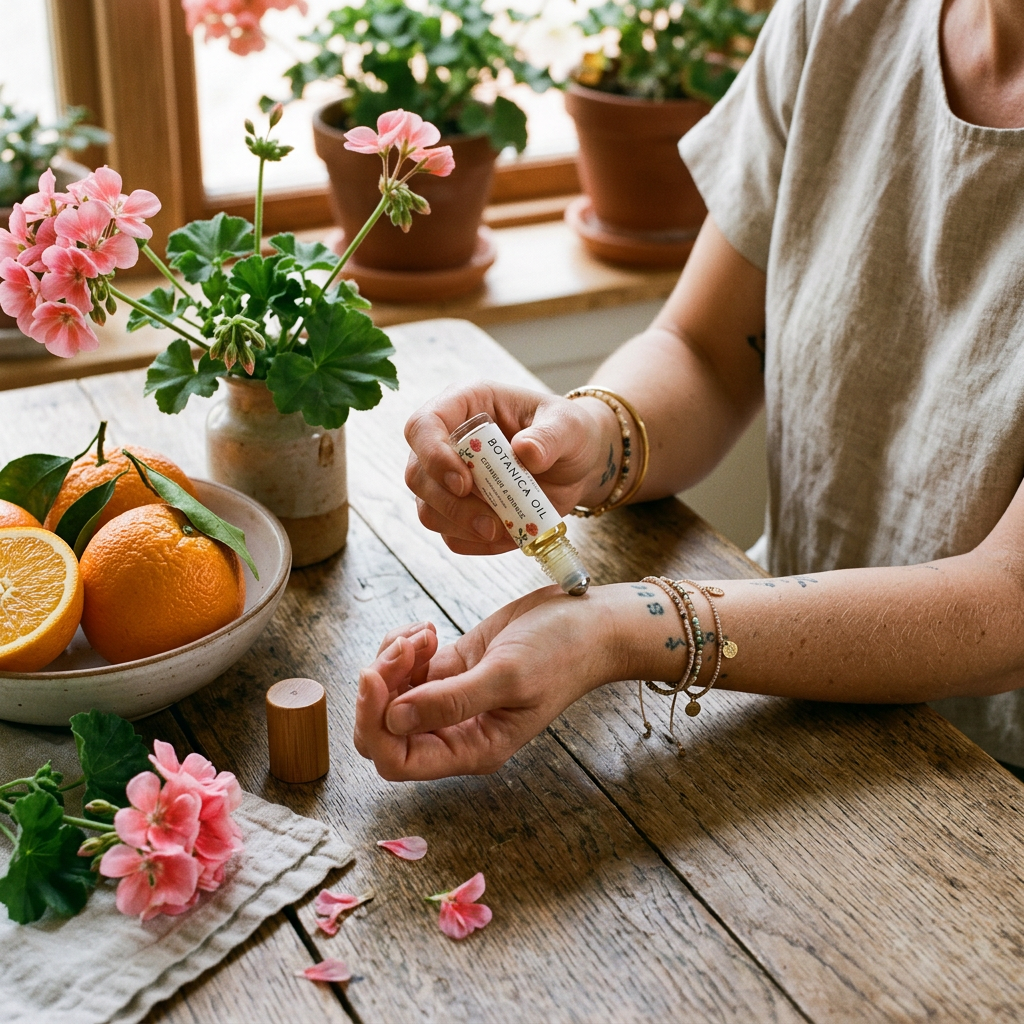
Beltane Joy & Vitality Essential Oil Roll-On
A little essential oil roll-on is easy to make, easy to keep in your bag and fits Beltane’s bright, energetic mood beautifully. Use it on pulse points when you want a fresh, uplifting scent or simply as a small sensory reminder to enjoy the season.
You Will Need
10 ml glass roller bottle
Jojoba oil or fractionated coconut oil
2 drops sweet orange essential oil
1 drop bergamot essential oil
1 drop geranium essential oil
Add the essential oils to the roller bottle, then fill the remainder with your carrier oil. Replace the roller top and gently roll the bottle between your hands to combine.
Apply lightly to your wrists or other pulse points and take a moment to enjoy the scent. Sweet orange brings brightness and warmth, bergamot adds a fresh citrus note, and geranium gives the blend a soft floral quality without making it overly sweet.
You could decorate the bottle with a tiny label, ribbon or pressed-flower sticker and write Beltane Joy, Summer is Coming or simply Beltane on the front.
A note on essential oils: Keep the blend for personal use, avoid the eyes and broken or irritated skin, and patch test before using more widely. If using bergamot, choose a bergapten-free/FCF bergamot for a leave-on skin product, as expressed bergamot oil can make skin more sensitive to sunlight.
Practical Magic for the Season
Beltane Floral Room & Linen Spray
Beltane is filled with flowers, warmth and the return of long days spent with windows and doors open, so a fresh floral spray is a lovely way to bring some of that energy into everyday life.
You Will Need
100 ml spray bottle
90 ml distilled water
10 ml witch hazel or high-proof alcohol
6 drops lavender essential oil
4 drops geranium essential oil
3 drops sweet orange essential oil
2 drops rosemary essential oil
Pour the witch hazel or alcohol into the bottle and add the essential oils. Swirl together, then add the distilled water and shake well.
Use it to lightly mist bed linen, curtains or other suitable washable fabrics, or simply spray a little into the room when you want to freshen the space. Shake well before each use and test on an inconspicuous area before spraying fabrics.
The blend is fresh and floral without being too heavy. Lavender and geranium bring the flowers, sweet orange adds brightness and rosemary gives it a fresh green edge that stops it becoming overly sweet.
You could make it part of your Beltane clean-up too — open the windows, tidy the room, change the sheets and finish with a light mist of the spray.
A note on essential oils: Avoid spraying around pets, babies or anyone sensitive to fragrance, and don’t spray directly onto skin, polished surfaces or anywhere pets sleep or groom themselves.
A Family Tradition
The Beltane Wish Tree
A Beltane wish tree is a lovely tradition to return to each year, especially because everyone can take part and the tree becomes a colourful little record of the things your family is hoping for as summer approaches.
Choose a tree or sturdy branch in the garden, or use a large fallen branch secured in a pot if you don’t have a suitable tree. Cut lengths of ribbon, cotton tape or strips of natural fabric in bright Beltane colours.
Give everyone a ribbon and ask them to think of something they would like to welcome into the coming season. It might be something they hope to do, somewhere they would like to go, something they want to learn, or simply a word such as happiness, adventure, friendship, confidence, creativity or fun.
Write the word or wish onto the ribbon, then gather outside and tie the ribbons onto the tree together. Add flowers or greenery if you like, put some music on and make an afternoon or evening of it with drinks and something good to eat.
Over the following weeks, the ribbons can stay as a cheerful reminder of the wishes everyone made. Before the Summer Solstice, gather together again to take them down and see whether anything has already begun to happen.
Use natural fibres where possible, tie everything securely and remove the ribbons before they deteriorate or become a hazard to wildlife.
Over the years, decorating the Beltane wish tree can become one of those simple things the family knows happens every Beltane — new ribbons, new wishes and another summer about to begin.
 The Wheel at Home